

Pull Up Leather Jacket Buyers: Ages in Weeks, What Makers Check

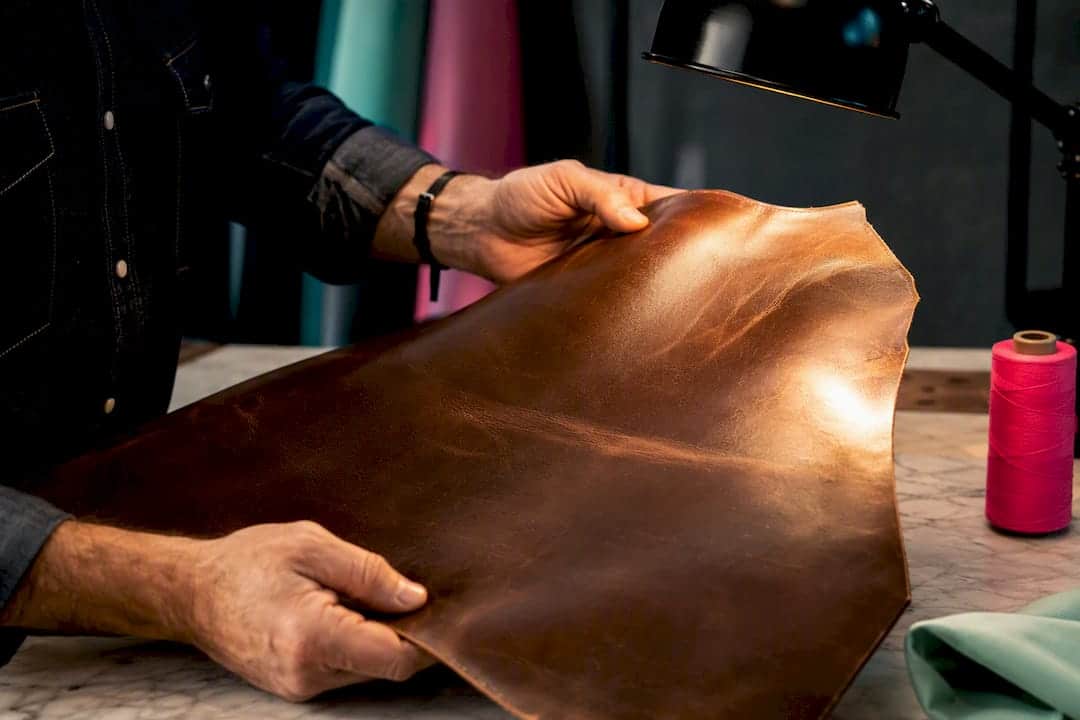
A pull up leather jacket is full-grain or top-grain hide finished with oils and waxes so the color lightens where it bends, then settles back into a deep, uneven glow. Choose it if you want a jacket that softens fast, ages into a vintage look within weeks, and hides scuffs better than smooth, painted leather. Skip it if you want a flawless, uniform finish that never shows a mark.
TL;DR:
- Full-grain or top-grain hides are ideal for pull up leather, as quality begins with the underlying material, not just the finish.
- The hot stuffing process is crucial, as it infuses oils and waxes deep into the hide, creating the characteristic color shift when stretched or bent.
- Genuine pull up leather naturally shows varying tones, creases, and patina over time, which many buyers value as part of its character.
- Care involves light maintenance, such as gentle cleaning, sparing conditioning, and avoiding heat or direct sunlight, to preserve the internal oils.
- Authentic quality is indicated by specific production details like hot stuffed treatment and proper stitching, rather than vague marketing claims.
Table of Contents
- What Pull Up Leather Actually Means (Finish, Not Grade)
- How Manufacturers Make Pull Up Leather
- What the Patina Actually Looks Like Over Time
- How to Judge Quality on a Pull Up Jacket Listing
- Caring for Pull Up Leather Without Losing the Patina
- Breaking In a New Pull Up Leather Jacket
- Maker’s Perspective: What We Look for Before We Approve a Hide
- Order a Custom Pull Up Leather Jacket Built Around You
- Sources
- FAQ
What Pull Up Leather Actually Means (Finish, Not Grade)
Pull up leather is a finish, not a grade of hide. That distinction trips up more buyers than almost anything else in a leather jacket listing. A “grade” describes the layer of the hide used, like full-grain or top-grain. A “finish” describes what happens to that hide after tanning, and pull up is one specific treatment: hides get infused with oils and waxes that sit inside the fibers rather than coating the surface.
That oil and wax content is what causes the actual pull up effect. Bend the leather, stretch it over an elbow, or pull it taut across your shoulder, and the color visibly lightens along the stress point. Relax the leather, and the oils redistribute, letting the color darken again. It is a genuinely different visual experience from most leather you have handled.
Here is how pull up stacks up against its closest relatives:
- Full-grain leather: the outermost hide layer with the grain intact; pull up is usually a finish applied on top of full-grain.
- Top-grain leather: sanded slightly to remove imperfections, then refinished; also used as a pull up base, just less durable long-term than full-grain.
- Nubuck: full-grain leather buffed on the surface for a suede-like nap; it does not pull up the same way because the fibers are raised, not oil-saturated.
If a listing says “pull up leather” without naming the underlying grade, that is worth asking about before you buy.
How Manufacturers Make Pull Up Leather
The process starts with a tanned hide and a decision about how much oil and wax it can hold. Three steps generally define pull up leather production:
- Hot stuffing. Tanneries submerge or drum the hide in heated oils and waxes so the fats penetrate deep into the fiber structure rather than sitting on top. This step is what creates the pull up behavior in the finished material.
- Dyeing. Most pull up leather uses aniline or semi-aniline dye, which soaks into the hide instead of forming an opaque layer over it. Less surface coating means the natural grain, and the oil movement underneath, stays visible.
- Light finishing. Instead of heavy lacquer or pigmented topcoats, pull up leather gets a thin protective layer at most, sometimes nothing beyond the wax already worked in during hot stuffing.
The result is leather that breathes, flexes, and shows its internal oil content on the surface. Manufacturer quality varies here more than shoppers expect. Some brands hot stuff generously and use true aniline dye; others apply a thinner oil pass and lean on semi-aniline or pigmented coatings to fake the look. A product description that names the specific process (hot stuffed, aniline, full-grain) is a far stronger signal than one that just says “pull up” and stops there.
What the Patina Actually Looks Like Over Time
Fresh off the rack, pull up leather has a slightly waxy sheen with visible depth. Hold it under a light and you will notice two-tone highlighting, lighter streaks near seams and stress points, darker pooling everywhere else. That is not a flaw. It is the oil distribution doing exactly what it is supposed to do.
The timeline moves faster than most people assume. Within the first weeks of regular wear, elbows, cuffs, and the collar fold start showing consistent lightening. Over time, you get a jacket with genuine character: creases that look intentional, a sheen that shifts depending on the light, color variation that no dye job could replicate on command. Buyers who like an aged look without waiting a decade tend to prefer pull up over raw, untreated full-grain, which ages more slowly and unevenly.
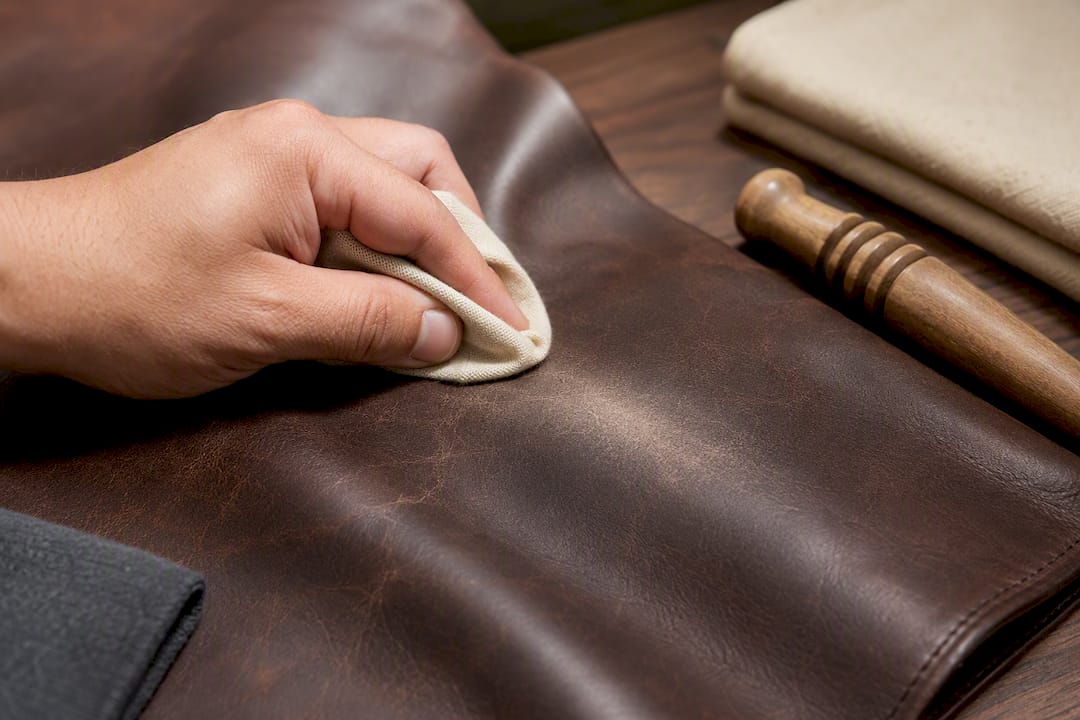
Scratches and scuffs behave differently on pull up leather than on smooth, pigmented leather. A light scuff, the kind from brushing against a rough surface, often fades when you rub the area with a warm finger or a soft cloth, because the friction redistributes the oils sitting just under the surface. A deeper scratch that actually breaks the grain will not disappear that way. It becomes part of the leather’s permanent texture instead, which most pull up owners come to see as part of the jacket’s story rather than damage to hide.
How to Judge Quality on a Pull Up Jacket Listing
You cannot run your hand over a hide before you buy online, so the listing itself has to do the convincing. Here is what actually separates a well-made pull up jacket from a thin imitation:
- Base hide matters most. Full-grain is the stronger long-term bet; top-grain is acceptable if the listing says so plainly, since it is still a real leather layer, just sanded and slightly less durable.
- Finish language should be specific. Look for “hot stuffed,” “oil and wax finished,” or “aniline/semi-aniline dyed” rather than a vague “genuine leather, pull up style.”
- Stitching and seams tell you about construction quality. Even, tight stitch lines along stress points (shoulders, underarms, cuffs) usually mean the maker cared about durability beyond the surface finish.
- Lining quality affects comfort and longevity. A jacket with a thin, cheap lining will wear out from the inside long before the leather does.
- Hardware, zippers, snaps, buckles, should feel solid, not hollow or loose, since cheap hardware fails faster than the leather ever will.
- Weight in ounces, when listed, gives you a real number to compare. Heavier pull up leather (around 2 to 3 ounces per square foot for jackets) tends to hold shape and resist wear better than thin, lightweight leather jacket options marketed mainly on price.
Service details matter almost as much as the leather itself. A brand offering a fair return policy, detailed photo galleries showing actual grain and finish, and customization or tailoring options is signaling confidence in what it sells. Comparing full-grain against top-grain before you commit to a specific listing will make every other spec on the page easier to evaluate.
Pro Tip: Zoom into product photos as far as the site allows. Real pull up leather shows natural grain irregularity and visible oil pooling in creases; a flat, uniformly smooth surface in every photo usually means a coated or synthetic finish dressed up with pull up language.
Caring for Pull Up Leather Without Losing the Patina
Pull up leather rewards light, consistent care over aggressive cleaning. Follow this basic rhythm and the jacket will keep developing character instead of drying out:
- Wipe down after heavy wear. A soft, dry cloth removes surface dust and light grime before it settles into the grain.
- Condition sparingly, a few times a year. Use an oil or wax-based conditioner rather than a silicone or synthetic product, since the internal oil content is what gives pull up leather its entire personality. A leather conditioner built for this job is worth the small investment.
- Let it air dry after rain. If the jacket gets wet, hang it away from direct heat and let it dry slowly at room temperature; never use a hair dryer or radiator, since fast heat pulls moisture and oil out unevenly and can crack the surface.
- Rub out light scuffs by hand. Warmth and friction from your palm or a soft cloth often redistributes the oils enough to fade superficial scuff marks within a minute or two of steady rubbing.
- Store it on a wide hanger, away from sunlight. UV exposure and heat both dry out the oils that make pull up leather what it is, so a closet away from a window beats a hook by a sunny door.
Pro Tip: If you notice a scuff that will not fade with rubbing, stop and check whether the grain itself is broken. Surface scuffs respond to warmth; actual scratches through the grain need a proper repair, not more rubbing.
Deeper damage, tears, gouges, or a section that has lost its color entirely, calls for a professional. Trying to force a fix with heavy conditioner or heat almost always makes things worse. For anything short of that, a maintenance routine built around long-term wear will keep the jacket looking better every year instead of worse, and a guide on repairing light scratches covers the in-between cases.
Breaking In a New Pull Up Leather Jacket
A brand-new pull up jacket almost always feels stiffer than it will after a few months of wear, and that stiffness is temporary, not a sign of a bad fit. The fastest way through it is frequent, short wear rather than one long session. Put it on for an hour here, an afternoon there, and let ordinary movement, reaching, sitting, driving, do the work of flexing the fibers loose.
- Wear it over lighter layers at first so your body’s motion actually flexes the leather instead of fighting a bulky sweater underneath.
- Focus movement on the elbows and shoulders, the two spots that take the longest to soften.
- Rub problem areas gently with your palm to warm the leather and encourage oil movement, but avoid heavy conditioner in the first few wears since over-oiling too early can slow the natural break-in.
- If a jacket is tight everywhere, not just stiff, that is a fit issue, not a break-in issue, and it is worth exchanging rather than forcing.
A guide on softening a stiff leather jacket walks through the process in more detail if the stiffness is lasting longer than expected.
Maker’s Perspective: What We Look for Before We Approve a Hide
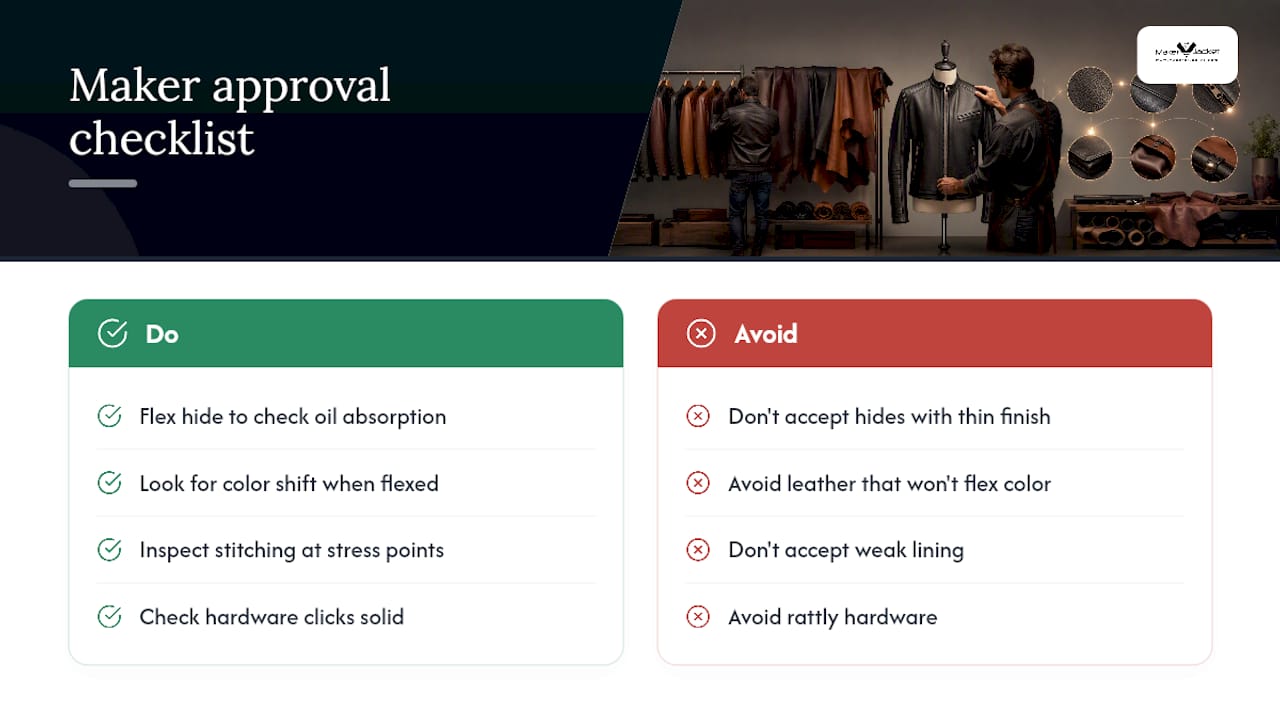
Sourcing pull up leather comes down to one question we keep asking: does this hide actually take oil the way it should, or is someone dressing up a thinner finish with the right vocabulary? A hide that hot stuffs properly shows real color shift when you flex it in your hands, right in the workshop, before it ever becomes a jacket.
Construction gets the same scrutiny. Stitching along stress points, a lining that will not give out before the leather does, and hardware that clicks solid rather than rattles, these details separate a jacket that lasts a decade from one that looks fine in a photo and disappoints in person. That is the standard we hold every pull up piece to before it reaches a customer.
— Maker
Order a Custom Pull Up Leather Jacket Built Around You
Some custom jacket makers give you a say in the hide, the fit, and the details before anything gets cut. With custom jackets, you pick the leather finish, the sizing, and the customization details up front, so the jacket you get is the one you actually asked for.
Start by browsing the custom jacket ordering page, where you choose your base leather, finish, and fit before placing an order. Size guidance and a full product gallery walk you through what to expect from the finished piece, and returns are straightforward if something is not right. If you want a specific silhouette already built around a pull up-friendly finish, the Leather Voyage Hooded Moto is a solid starting point to compare against a fully custom order. Once your jacket arrives, our leather care guide covers exactly how to keep that patina developing the way you want.
Sources
- Full Grain vs Pull-Up vs Nubuck Leather: The Differences – Leather Insights
- Pull-Up Leather vs Full-Grain Leather: What’s the real difference? – Leather Advice
- What is pull-up leather? – Cheaney Shoes Journal
FAQ
Is pull up leather good quality?
Yes, when it starts from a full-grain or top-grain hide and uses genuine hot stuffing with oils and waxes; the finish itself signals a hide that was treated to age well and resist minor wear, not a shortcut around quality.
What does “pull up leather” mean?
It refers to a finish, not a grade, where hides are infused with oils and waxes so the color visibly lightens when the leather is bent or stretched and darkens again once relaxed.
How do you loosen up a leather jacket?
Wear it in short, frequent sessions so ordinary movement flexes the fibers, focus attention on the elbows and shoulders, and use warmth and gentle rubbing rather than heavy conditioner during the first few wears; Makerofjacket’s softening guide covers the full process.
Are leather jackets not cool anymore?
Leather jackets, especially pull up styles with visible patina and texture, remain a staple across biker, casual, and heritage fashion; the look has shifted toward character-driven finishes like pull up rather than the glossy, uniform leather that dominated past decades.


