

Remove Leather Jacket Smell Safely Using Charcoal and Sachets

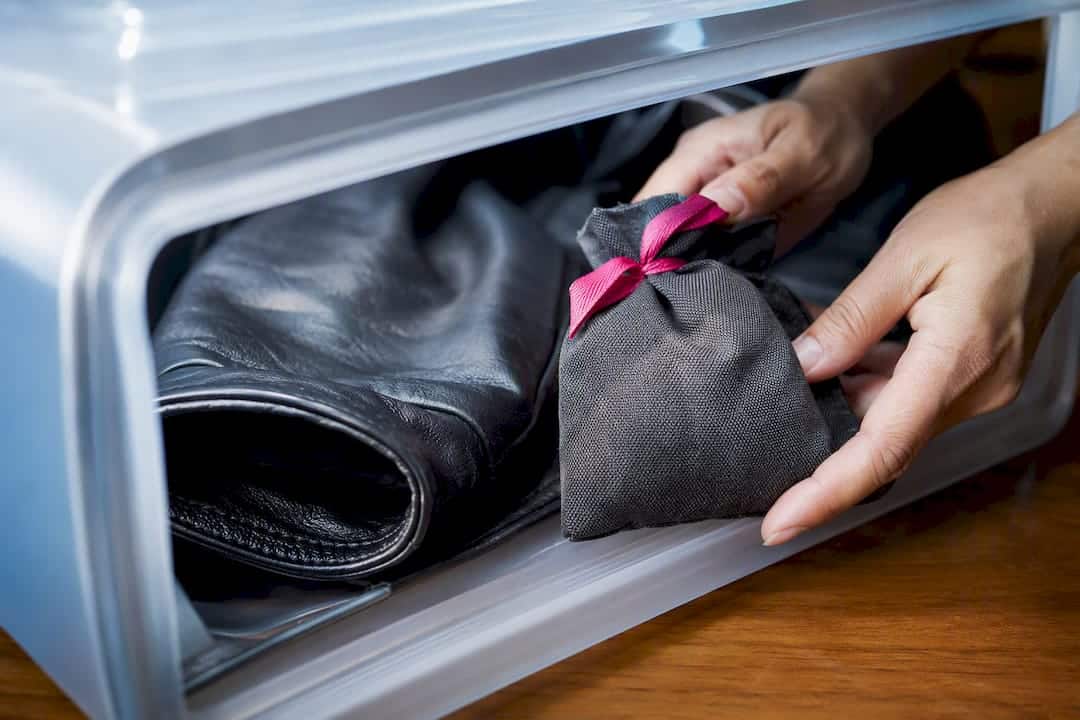
The fastest safe fix is airing leather in a shaded, ventilated spot while a sealed sachet of baking soda or a contained batch of activated charcoal draws odor out from the inside. New-leather chemical smell usually fades within a few weeks, according to the American Lung Association; smoke or mold damage often takes longer and sometimes needs a professional, a step some care guides also recommend when odors persist.
TL;DR:
- Airing leather in a shaded, ventilated space for several days effectively reduces new leather odors and prevents prolonged scent issues.
- Placing sealed sachets of baking soda or activated charcoal inside or near the leather can absorb embedded odors, especially smoke or mold, if left for 12 hours to several days.
- Avoid using direct heat, sprays, or soaking with bleach or alcohol, as these can damage or discolor leather and worsen odor problems.
- Conditioning the leather after odor removal restores moisture and natural oils depleted during airing and absorption processes.
- Persistent or severe odors, mold, or damage may require professional cleaning and restoration, especially for smoke-saturated or mold-infested leather items.
Table of Contents
- Quick Fixes to Try Tonight
- Step-by-Step Methods That Actually Work
- Mistakes That Make Leather Smell Worse
- Conditioning and Storage After Treatment
- When a Smell Needs a Professional
- Our Take on DIY Leather Odor Removal
- Ready for a Fresh Jacket or Just Better Care Habits?
- Sources
- FAQ
Quick Fixes to Try Tonight
Before reaching for anything stronger, run through these low-risk steps in order:
- Air it out. Hang the item in a shaded, ventilated room, away from a closed closet. Moving air carries odor molecules away faster than a still room, and it’s the first-line recommendation for volatile organic compounds released by new leather.
- Set up a passive absorber. Tuck a sealed sachet of baking soda or a breathable pouch of activated charcoal inside the bag, boot, or jacket sleeve, near the leather but not pressed against it.
- Pull out linings and insoles. Removable inserts trap sweat and moisture that leather itself doesn’t hold. Dry them separately before you treat the outer shell.
Give this combination a full overnight cycle before judging results. Some odors lift almost immediately; others need a few rounds.
Step-by-Step Methods That Actually Work
Different smells call for different fixes. Matching the method to the source of the odor, whether it’s fresh tannins, mildew, or smoke, saves you time and spares the leather unnecessary handling, a point Leather Craft Haven makes clear when comparing remedies.
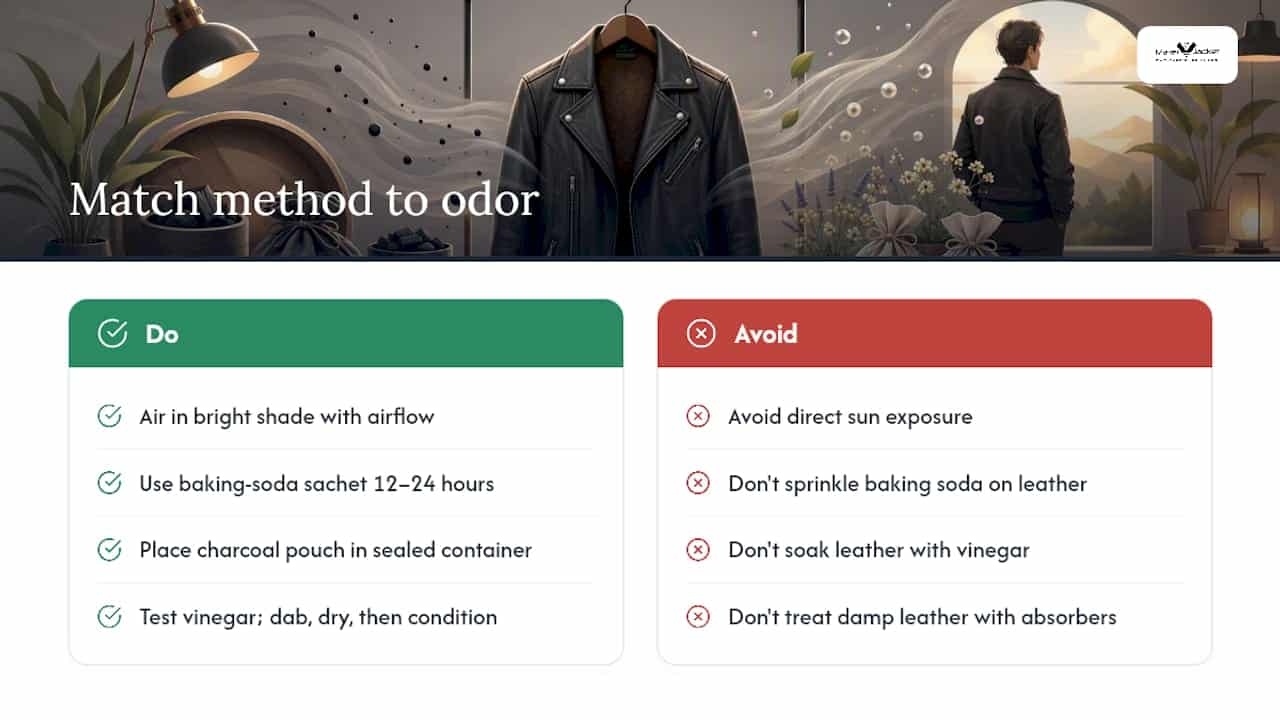
Airing. Choose bright shade over direct sun. Sunlight fades dye and dries out hides faster than it kills odor, so a covered porch or a room with an open window beats a windowsill. Several days of steady airflow, helped along by a fan pointed nearby rather than straight at the item, resolves most new-leather smell.
Baking soda. Skip direct sprinkling on dyed or vegetable-tanned finishes, since the powder can sit in seams and grit against the surface. Fill a clean cotton sock or a fabric sachet instead, and leave it inside the item for 12 to 24 hours. Baking soda pulls odor efficiently but it’s also drying and mildly abrasive, so use it in moderation and condition afterward to keep the leather from stiffening.
Activated charcoal. For smoke damage or deeply embedded odors, this is the stronger tool. Place charcoal in a breathable pouch inside a sealed container with the leather item, close the lid, and let it sit for several days depending on severity. Swap in fresh charcoal halfway through if the smell is stubborn. Passive absorbers like charcoal avoid direct chemical contact, which protects the finish while still drawing odor out.
Diluted white vinegar. For mildew or a musty smell with visible mold flecks, mix vinegar with water at a 1:1 ratio or weaker. Test it on a hidden patch first, then dab it on with a barely damp sponge, never soak the leather, and dry the spot immediately with a soft cloth. Repeat only if needed, and always follow with conditioning since vinegar applied carefully and dried thoroughly handles mildew without stripping the surface.
Coffee or tea grounds. A gentler, slower alternative to charcoal. Dried, spent grounds in a sachet absorb odor without the drying effect of baking soda, though they work more slowly and can leave a faint coffee or tea scent behind if left on too long.
Spot-cleaning linings. Removable fabric parts tolerate more moisture than the leather shell. A mild soap solution and minimal dampness, followed by full air-drying, clears sweat odor from linings without risking the exterior.
Pro Tip: Dry leather completely before deodorizing it. Treating damp leather with baking soda or charcoal traps moisture inside instead of pulling odor out, which can make the smell worse, not better.
Mistakes That Make Leather Smell Worse
A few common shortcuts do more harm than the smell itself:
- Masking with sprays or heavy fragrance. These trap moisture underneath the scent, and the original odor often returns once the perfume fades.
- Direct sun or a hair dryer to speed things up. Fast heat cracks and fades leather; UV also dries out natural oils the material needs.
- Sprinkling baking soda straight onto the leather. Left too long, it draws out too much moisture and stiffens the surface. Baking soda’s alkaline nature is drying and mildly abrasive, so always test first and condition after.
- Bleach, undiluted alcohol, or soaking the item. All three strip natural oils and can permanently discolor or warp leather.
Conditioning and Storage After Treatment
Once the leather is fully dry and the smell has lifted, restore what the drying process took out:
- Apply a pH-balanced conditioner once the item is completely dry, never right after a vinegar or baking soda treatment. Conditioning replaces oils that ventilation and absorbers pull out along with the odor, following the same logic behind Maker of Jacket’s leather conditioning guide.
- Store it in a breathable dust bag, not sealed plastic, with a silica gel packet nearby to manage humidity.
- Rotate jackets and shoes instead of wearing the same one daily, and pull out anything damp the moment you take it off.
Pro Tip: If the leather feels slightly stiff after treatment, that’s usually a sign it needs conditioning, not a second round of baking soda.
When a Smell Needs a Professional
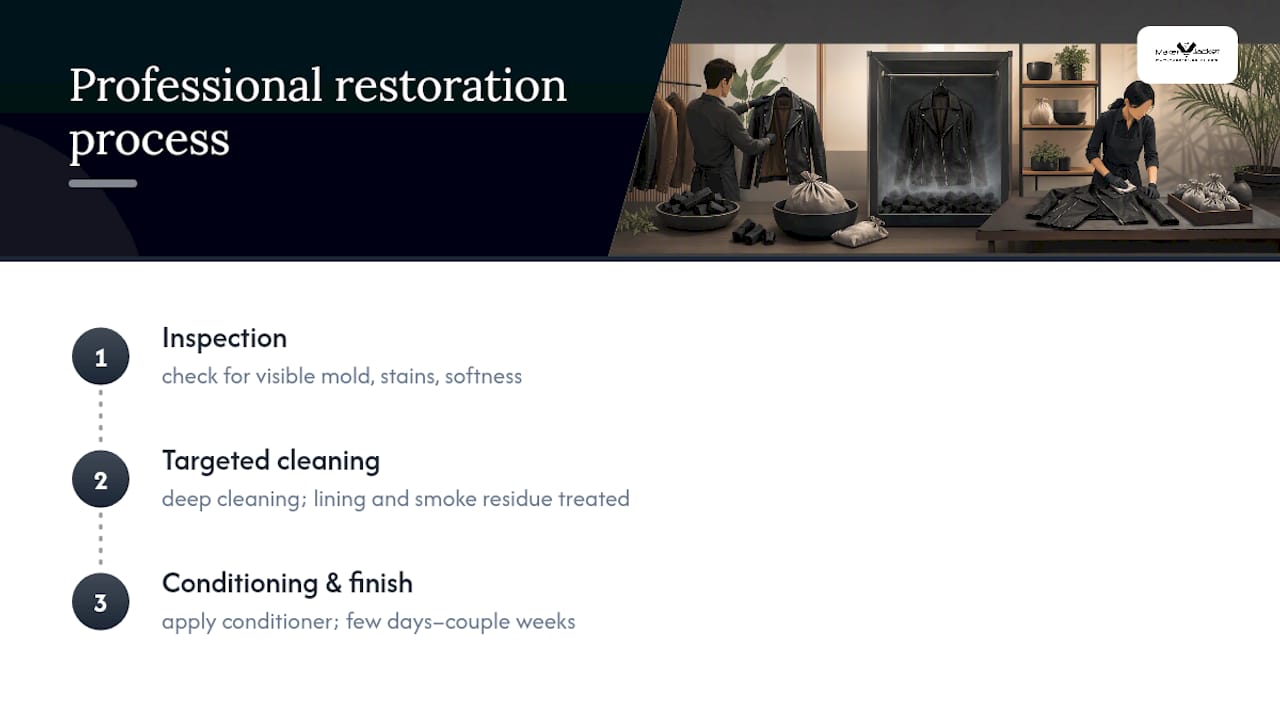
Visible mold, staining, or leather that’s gone soft or crumbly is past the point of home fixes. If a sealed charcoal treatment and thorough airing haven’t cleared the smell after two full cycles, that’s your signal too. Smoke-saturated jackets in particular often need repeated charcoal passes plus a professional cleaning of the lining, since smoke residue sits deeper than surface odor. A restoration specialist will typically inspect the piece, run a targeted cleaning, and finish with conditioning, a process that can take anywhere from a few days to a couple of weeks depending on damage.
Our Take on DIY Leather Odor Removal
Maker of Jacket has spent years writing hands-on care content, from mold removal to softening stiff hides, and the pattern holds across every method: patience beats intervention. The instinct to scrub, spray, or blast heat at a smelly jacket almost always backfires, while the boring combination of shade, airflow, and a sachet of charcoal quietly does the job over a few days. If you’re working on a jacket specifically, our leather cleaning guide walks through the finish-specific steps this article couldn’t cover in full.
— Maker
Ready for a Fresh Jacket or Just Better Care Habits?
Sometimes airing and charcoal fix the smell, and sometimes a jacket is too far gone, cracked, stiff, or permanently smoke-damaged, to save. Customizable leather jackets built from scratch are available, so if yours needs replacing rather than reviving, you can choose a fit and finish tailored to you instead of settling for what’s available off the rack.

Our leather care guide covers the maintenance habits that keep a new jacket from developing the same musty issues down the road, ventilation, conditioning schedules, and storage, all in one place. If you’re ready to start fresh, browse the custom leather jacket builder and pick a style, color, and fit that’s actually yours from day one.
Sources
- American Lung Association — Volatile organic compounds (VOCs)
- How to Get Smell Out of Leather – Leather Craft Haven
- Is Baking Soda Safe For Leather? Facts And Myths Debunked | CySoda
FAQ
Does Leather Smell Go Away on Its Own?
Yes, in most cases. New-leather chemical smell from tannins and residual VOCs typically fades within days to a few weeks with regular airing, though smoke or mold odors often need active treatment.
What Is the Best Odor Remover for Leather?
Activated charcoal in a sealed container works best for smoke and deeply embedded smells, while a baking soda sachet handles lighter, general odors. Both are passive absorbers that pull odor out without wetting or damaging the finish, a method Maker of Jacket’s care guides also favor over sprays.
Does Febreze Work on Leather?
Spraying fragrance products on leather masks the smell temporarily but can trap moisture underneath and leave the original odor to resurface. Airing and passive absorbers address the source instead of covering it up.
What Neutralizes a Musty Smell?
Diluted white vinegar handles mildew-driven mustiness when applied lightly with a sponge, spot-tested first, and dried immediately afterward. For general mustiness without visible mold, a baking soda sachet or activated charcoal usually resolves it within a few days.


