

Stop Rain for 20 Minutes: Trench Storm Flaps, History and Maker Tips

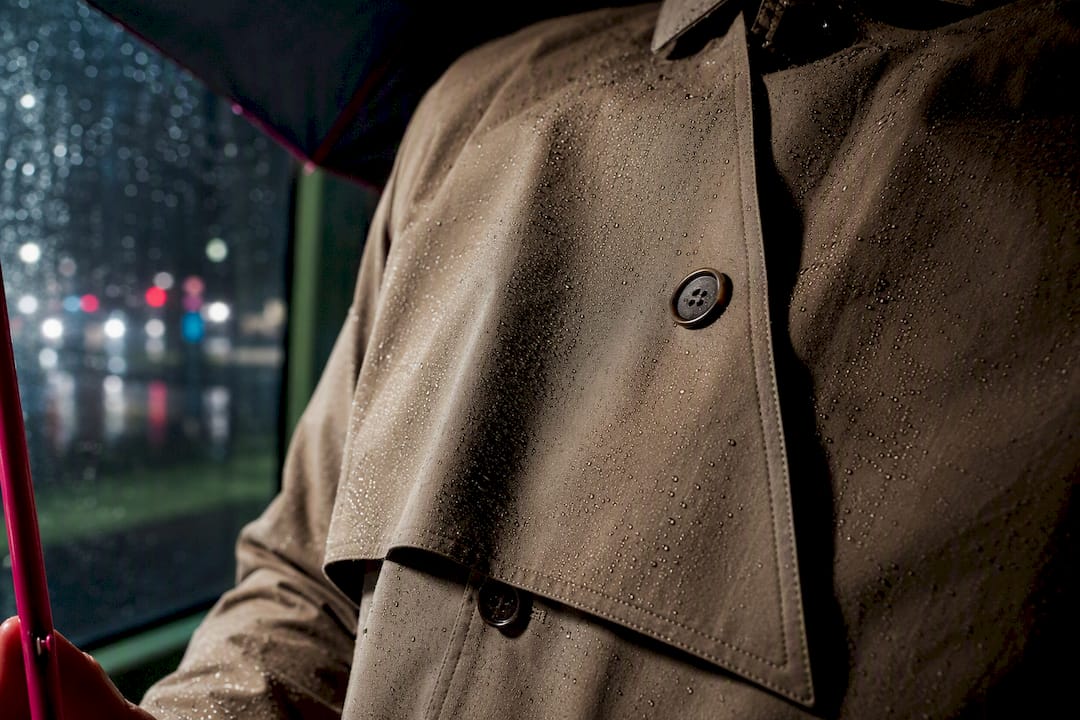
A storm flap is the reinforced panel across the chest or upper back of a trench coat, built to redirect rain away from buttons, seams, and shoulder openings. You’ll see it called a gun flap at the chest and a storm shield or back yoke when it sits between the shoulder blades. Both trace back to battlefield gear, not runway styling, and that origin still separates a coat that survives a downpour from one that just looks like it could.
TL;DR:
- Properly functioning storm flaps have enough overlap to fully cover the button line and are secured with fastenings that allow water to shed effectively.
- Genuine back yokes or storm shields feature a slight gap from the coat’s body, facilitating water runoff and ventilation, unlike decorative flaps stitched flush.
- The original purpose of storm flaps was practical, designed for waterproofing and durability during WWI trench conditions, with later adaptations for civilian use often sacrificing function for style.
- Fabric choices such as gabardine and waxed cotton remain essential for water-resistant storm flaps, complemented by construction details like seam taping and float allowances.
- When selecting a trench coat, prioritize features like adjustable overlap, quick-fastening methods, and float design to ensure real weather protection over mere aesthetic replication.
Table of Contents
- Storm Flap Trench Function: How Chest and Back Panels Work in the Rain
- Historical Origin: Why Trenches Created This Design
- Gun Flap vs Storm Flap: Clearing Up the Names
- How to Tell If a Storm Flap Is Functional or Decorative
- Materials, Pattern, and Sewing Details for Makers
- Choosing Between Function and Fashion, and Keeping Flaps Working
- Maker of Jacket’s Take on Building a Real Storm Flap
- Ready to Build Your Own Functional Trench
- Sources
- FAQ
Storm Flap Trench Function: How Chest and Back Panels Work in the Rain
The chest flap and the back panel do different jobs, even though both get lumped under the same “storm flap” label.
The gun flap sits over the button line on one or both sides of the chest. Its original job was twofold: cushion the recoil of a rifle slung across the body, and stop water from working its way in around the button closures during sustained exposure. On a modern coat, the recoil padding is irrelevant, but the water-blocking function still matters if you’re standing at a bus stop in wind-driven rain for twenty minutes.
The back storm shield, sometimes called the yoke, does something different. It floats slightly away from the coat body across the upper back, creating a channel that lets water run off the shoulders instead of pooling into the seam. That gap doubles as ventilation, which is why the dual role of a gun flap and storm shield shows up again and again in trench-coat literature.
Situations where this stops being theoretical:
- Standing outside in steady rain for more than a few minutes
- Riding a bike or motorcycle where wind drives moisture sideways into seams
- Field use where you need your arms free, such as holding binoculars or a camera
Historical Origin: Why Trenches Created This Design
The storm flap wasn’t a design flourish. It was a response to the conditions British officers faced in WWI trenches, where standing water, mud, and constant drizzle made ordinary wool coats useless within days.
Officers needed a garment that stayed waterproof without becoming a liability in the field. Burberry and Aquascutum answered that need by adapting gabardine, a tightly woven cotton fabric, into coats with epaulettes, D-rings, and storm flaps built for function rather than appearance. Both houses helped standardize these trench elements as practical military gear rather than fashion statements.
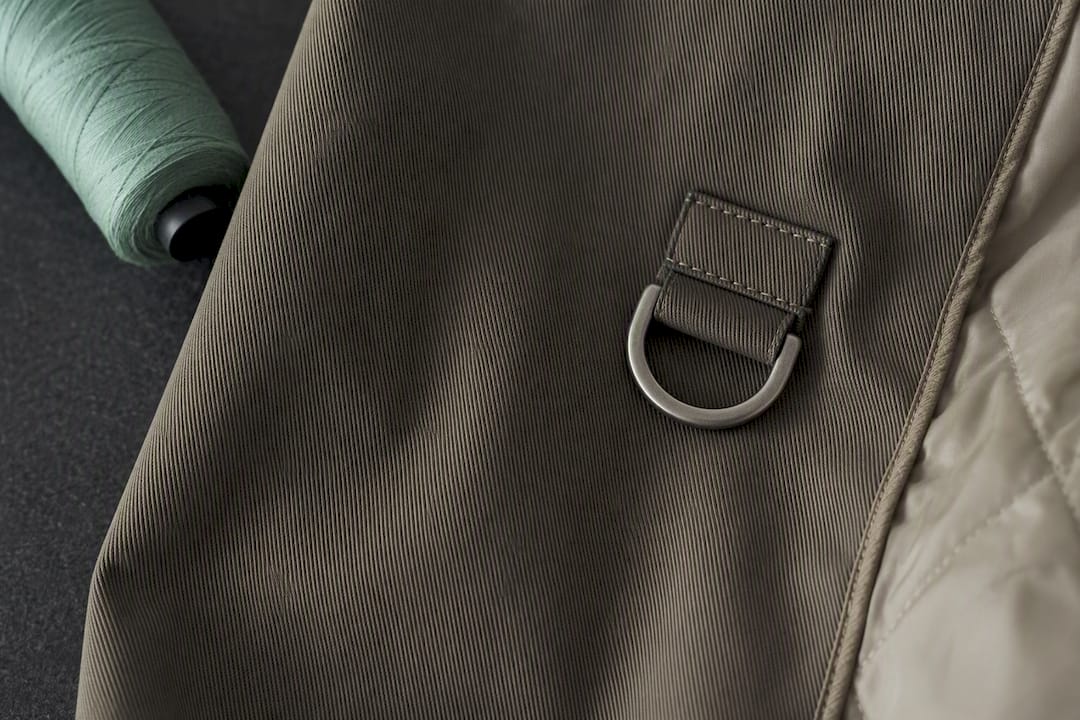
D-rings on the belt, for instance, were meant to hold equipment and map cases, not just cinch a waist. Some wartime coats even shipped with detachable liners and hardware built for multiple uses in the field, a level of functional layering that most fashion trenches never bothered to replicate once the war ended and the coat migrated into civilian closets.
Gun Flap vs Storm Flap: Clearing Up the Names
Retail listings mix these terms up constantly, which makes shopping harder than it should be.
Here’s the distinction that actually matters:
- Gun flap: the chest panel, historically placed on the dominant shoulder side for rifle access, now often mirrored on both sides for symmetry
- Storm shield or yoke: the back panel between the shoulders, built to shed water and ventilate
- “Storm flap” as a catch-all: many retailers use this term loosely to describe either feature, or sometimes both
If a product description says “storm flap” without specifying chest or back, check the photos. A trench coat’s construction and trims are usually visible enough in a detail shot to tell you which one you’re actually getting, and whether it’s stitched down flat or built to move.
How to Tell If a Storm Flap Is Functional or Decorative
Most of the trenches sold today keep the silhouette of a storm flap without the construction that makes it work. Here’s how to check which one you’re looking at.
- Check the overlap. A functional gun flap extends far enough to cover the button line completely, even when you move your arms. A decorative one is often shorter, more of a suggestion than a barrier.
- Look at the attachment. Functional flaps are usually secured with a button or snap, sometimes tacked at just a few points, leaving room for the flap to lift and shed water. Decorative flaps are typically stitched flat around the entire edge, which locks water into the seam instead of letting it run off.
- Inspect the seam finishing. Taped or bound seams under the flap indicate someone thought about water ingress. Raw or simply overlocked seams usually mean the flap is there for the look.
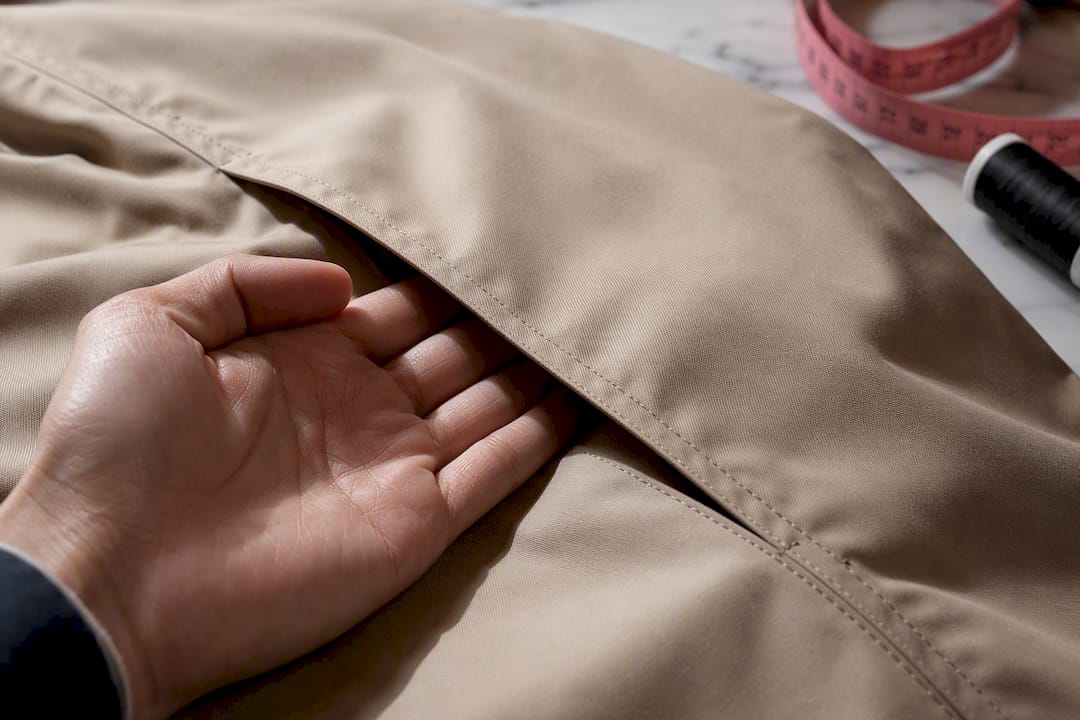
- Test the back yoke. Lift the yoke gently. A functional one has a small float, a slight gap from the body of the coat, letting it act as a channel. If it’s tacked flush against the back, it’s decorative.
This matches what garment writers have long pointed out: many contemporary trenches keep the flap shape purely for aesthetics, while skipping the button closures and overlap that would make it actually repel water.
Pro Tip: Run your hand under the back yoke before buying. If you can slide two fingers between the yoke and the coat body, it’s built to float and shed water. If it’s flush, you’re paying for the look of a storm shield, not the function.
Materials, Pattern, and Sewing Details for Makers
Fabric choice decides whether a storm flap has anything to protect against in the first place. Gabardine and tightly woven cottons remain the standard for functional trenches because their density sheds water before it soaks through, and waxed cotton pushes that resistance even further for wetter climates.
A few construction details that separate a working flap from a costume one:
- Add interfacing at the flap’s leading edge so it holds shape and doesn’t curl after repeated wetting
- Leave a float allowance of roughly 6 to 12 millimeters at the lower edge of the back yoke, stitching only the top seam so the panel can lift
- Position buttonholes on the flap slightly higher than the visible button line, so the flap covers the closure even when the coat shifts
Pro Tip: Test a prototype with a garden hose at shoulder height while the wearer raises both arms and walks a few steps. Watch exactly where water tracks into the seams, then adjust the flap’s overlap or fastening position before cutting the final pattern.
Choosing Between Function and Fashion, and Keeping Flaps Working
If you’re buying for actual weather protection, prioritize overlap, functional fastenings, and a floated yoke over a slim silhouette. A truly functional flap adds a bit of bulk to the chest and shoulders, a fair trade if you’re commuting through real rain rather than styling for dry sidewalks.
For care, brush off dirt before it embeds in the weave, reproof waxed or treated cotton periodically, and store the coat on a wide hanger so the yoke keeps its shape. If buttons or snaps on the flap loosen, reinforcing leather trims and closures early prevents a small repair from becoming a full re-stitch later.
Maker of Jacket’s Take on Building a Real Storm Flap
Most trenches on the market treat the storm flap as decoration first. Some manufacturers build the storm flap starting from the closure and overlap a customer actually needs, then shape the silhouette around that. When requesting a custom trench coat, specifying functional fastenings and a floated yoke can determine whether the finished coat performs in real weather or just resembles one that would.
*— Maker
Ready to Build Your Own Functional Trench
You’ve seen what separates a working storm flap from a decorative one. The next step is deciding how you want yours built. Some custom jacket providers let you specify overlap length, fastening type, and yoke construction directly during the ordering process, instead of guessing from a size chart and hoping the flap holds up in real rain.

Custom trench coats are often designed based on how the wearer plans to use the coat, whether for commuting, motorcycle riding, or standing outside for extended periods. This approach contrasts with ordering off the rack, where the chest flap and back yoke may not be tailored to specific fastening and overlap needs.
A few ways to move forward:
- Browse the custom jacket ordering page to see construction and customization options
- Review trench coat selection guidance before you specify flap details
- Reach out with your fastening and overlap preferences before your order goes into production
Start your custom trench coat order with the flap construction you actually need, not the one that just looks the part.
Sources
- From Shackleton to Stardom: The History of Burberry’s Trench Coat
- Fabric, fit and all the flaps: how to pick a trenchcoat that looks great and lasts
- Trench Coat Guide: History, How to Wear, & Where to Buy
FAQ
What is the storm flap for on a trench coat?
It diverts rainwater away from button closures and shoulder seams, keeping water from working its way into the coat during sustained exposure to rain or wind.
What is the flap on a trench coat called?
The chest panel is called a gun flap, and the back panel is called a storm shield or yoke; retailers sometimes use “storm flap” loosely for either.
What is the purpose of the flap on the back of a trench coat?
The back storm shield channels water off the shoulders through a slight float or gap from the coat body, and that same gap allows some ventilation.
Are trench coats still in style for 2026?
Yes, trench coats remain a staple outerwear piece; the difference between a fashion version and a functional one comes down to whether the flaps and closures are built to actually work, a detail Makerofjacket builds into custom orders on request.


