

Understanding Fashion Mistakes to Avoid for Leather Enthusiasts


Leather fashion looks bold and powerful. Some think throwing on a leather jacket means instant style and confidence. But research shows that clothing trends cycle every 20 to 30 months and simple mistakes can make even the best leather outfit fall flat. The real secret is mastering subtle choices like fit, proportion, and color because these are what set apart true timeless looks from forgettable fashion flops.
Table of Contents
- What Are Common Fashion Mistakes And Why To Avoid Them?
- The Impact Of Fashion Errors On Personal Style And Image
- Understanding Color Coordination In Leather Fashion Choices
- How Fit And Proportions Influence Leather Clothing Choices
- Identifying Fashion Trends Vs. Timeless Style In Leather Wear
Quick Summary
| Takeaway | Explanation |
|---|---|
| Balance outfits with leather pieces | Treat leather as a focal point, ensuring overall harmony with clean silhouettes and coordinated colors. |
| Understand leather fit and behavior | Recognize that leather doesn’t stretch evenly; opt for snug fits that allow for slight stretching without compromising comfort. |
| Color coordination is vital | Choose colors that complement your skin tone and the occasion, knowing how shades communicate different messages. |
| Beware of fashion trends | Distinguish between fleeting trends and timeless styles to make wiser, long-lasting fashion investments in leather wear. |
| Personal style impacts perception | Fashion choices affect confidence and how others perceive you; choose outfits that align with your identity and professionalism. |
What Are Common Fashion Mistakes and Why to Avoid Them?
Leather fashion demands precision and thoughtful styling. Understanding common fashion mistakes helps enthusiasts elevate their wardrobe and maintain a sophisticated appearance. The world of leather apparel is nuanced, requiring careful consideration beyond simply throwing on a jacket.
Overcomplicated Styling Approaches
Many leather fashion enthusiasts make the critical error of treating their leather pieces as standalone statements without considering overall ensemble harmony. Research from fashion psychology studies reveals that successful leather outfit integration requires balanced proportions and strategic color coordination.
Key considerations for avoiding overcomplicated styling include:
- Maintaining a clean visual silhouette
- Selecting complementary base layers
- Avoiding excessive accessories that compete with leather pieces
Professional stylists recommend treating leather garments as focal points rather than overwhelming visual elements. The goal is creating a cohesive look that highlights the leather piece’s inherent sophistication.
Material and Fit Misconceptions
Leather garments are not universal in fit or maintenance. Enthusiasts frequently misjudge sizing, assuming leather stretches uniformly or believing all leather behaves identically. Quality leather adapts uniquely based on cut, leather type, and construction.
Understanding proper fit means recognizing that leather jackets should feel snug initially, with minimal but strategic room for potential slight stretching. Overly loose leather loses its structured aesthetic, while excessively tight pieces restrict movement and compromise comfort.
For those wanting to explore functional fashion approaches, selecting leather pieces that balance style and practical wearability remains paramount. This requires careful measurement, understanding personal body structure, and investing in pieces tailored to individual proportions.
Mastering leather fashion is about subtlety, understanding material characteristics, and creating harmonious visual compositions that showcase individual style without overwhelming the overall aesthetic.
The Impact of Fashion Errors on Personal Style and Image
Personal style represents more than clothing selections. It communicates an unspoken narrative about individual identity, confidence, and professional perception. Fashion mistakes can significantly disrupt this narrative, transforming potential sartorial elegance into visual confusion.
Psychological Dimensions of Fashion Perception
Research from Harvard Business Review demonstrates that clothing choices profoundly influence interpersonal perceptions and self confidence. Fashion errors are not merely aesthetic missteps but psychological signals that can undermine personal credibility.
Key psychological impacts include:
- Diminished professional perception
- Reduced personal confidence
- Potential misalignment with social expectations
People unconsciously evaluate others through clothing choices, making each fashion decision a strategic communication tool. A misaligned leather jacket or poorly coordinated ensemble can inadvertently broadcast unintended messages about competence and self awareness.
Professional and Social Implications
In professional environments, fashion mistakes carry substantial weight. Leather garments, when incorrectly styled, can transition from sophisticated statements to potential career limiting selections. Context matters immensely in fashion interpretation.
Understanding nuanced styling helps individuals navigate leather wardrobe tips with greater precision. Professional image management requires strategic clothing selections that balance personal expression with contextual appropriateness.
Authentic personal style emerges not from strict adherence to rules but from understanding underlying principles of visual communication. By recognizing how fashion choices interact with psychological perceptions, individuals can craft more intentional and impactful personal presentations that reflect genuine personality while maintaining professional sophistication.
Understanding Color Coordination in Leather Fashion Choices
Color coordination transcends basic matching. In leather fashion, strategic color selection communicates personal style, mood, and professional sophistication. Understanding color dynamics transforms leather garments from mere clothing items into powerful style statements.
The Science of Color Psychology
Color theory research from MIT reveals that color interactions profoundly influence human perception and emotional responses. Leather garments amplify these psychological nuances through their unique texture and reflective qualities.
Key color coordination principles include:
- Understanding complementary color relationships
- Recognizing undertones and color temperature
- Balancing visual weight and intensity
Professional stylists emphasize that successful leather color coordination requires more than random color selection. It demands a sophisticated understanding of how different hues interact and complement individual skin tones and personal aesthetics.
Contextual Color Selection Strategies
Leather color choices vary dramatically across different environments. A deep burgundy leather jacket communicates entirely different messages in professional versus casual settings. Subtle variations in shade and tone can transform a leather piece from inappropriate to impeccable.
When exploring brown leather jacket styling, understanding neutral palette integration becomes crucial. Browns offer remarkable versatility, serving as foundational colors that seamlessly blend with multiple outfit combinations.
Mastering color coordination in leather fashion requires nuanced judgment. It is not about following rigid rules but developing an intuitive understanding of how colors communicate personal narrative, professional image, and individual style sensibilities.
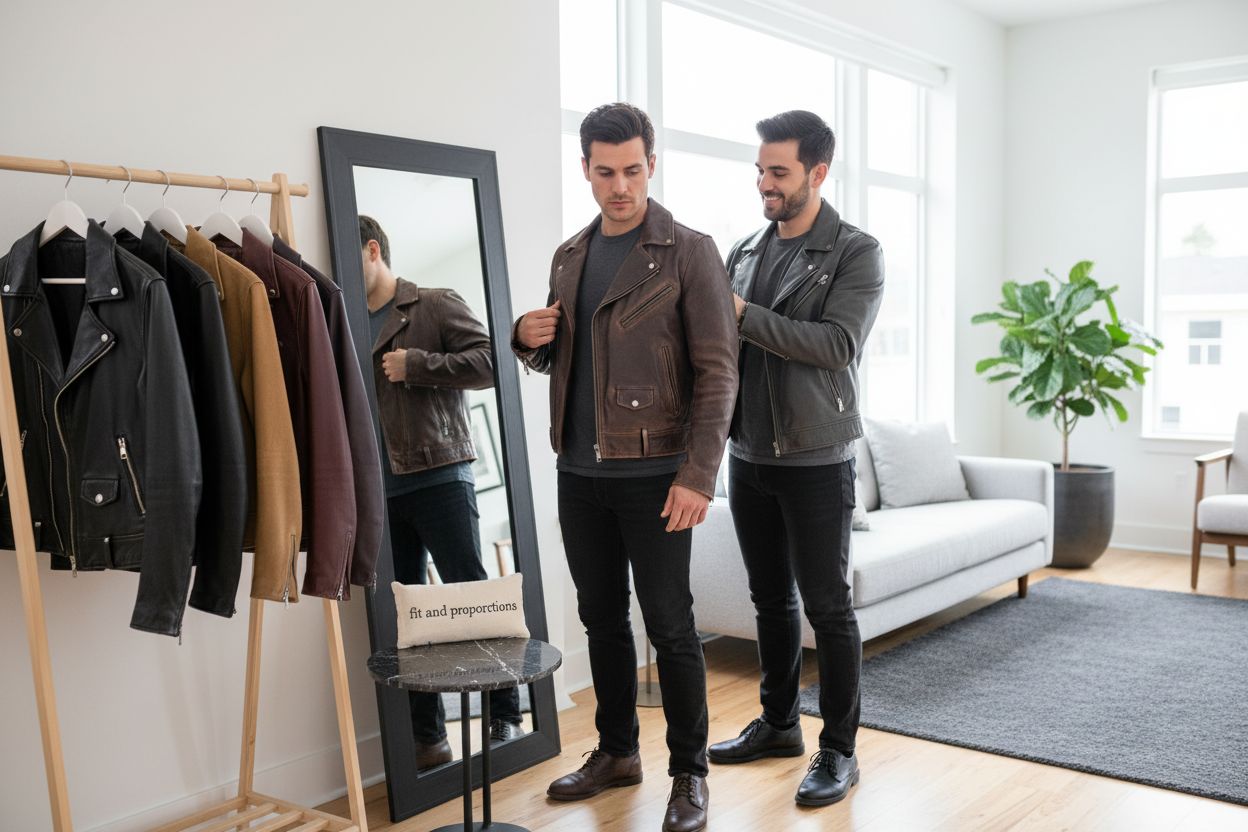
How Fit and Proportions Influence Leather Clothing Choices
Leather clothing represents more than aesthetic expression. It embodies a complex interaction between personal physique, garment design, and individual style. Understanding how fit and proportions impact leather apparel transforms purchasing decisions from random selections to strategic investments.
Anatomical Considerations in Leather Wear
Research from human biomechanics studies reveals that body proportions significantly influence clothing comfort and visual appeal. Leather garments demand precise measurements to ensure optimal performance and aesthetic harmony.
Critical fit considerations include:
- Shoulder alignment and jacket width
- Sleeve length relative to arm proportions
- Torso tapering that complements individual body shape
Professional stylists emphasize that successful leather clothing selection transcends standard sizing. Each leather piece requires nuanced evaluation of individual body architecture, movement requirements, and personal style narrative.
Proportion Management Strategies
Effective leather wear involves strategic proportion management. Oversized jackets can overwhelm smaller frames, while excessively tight pieces restrict movement and create unflattering silhouettes. The goal is achieving a balanced visual presentation that enhances natural body lines.
For individuals seeking comprehensive leather wear guidance, understanding personal body geometry becomes paramount. Different leather jacket styles complement varying body types uniquely, making personalized selection crucial.
Ultimately, mastering leather clothing fit requires developing an intuitive understanding of how garment proportions interact with individual physique. It is not about conforming to rigid fashion rules but creating a harmonious visual language that celebrates personal style and physical individuality.
Identifying Fashion Trends vs. Timeless Style in Leather Wear
Leather fashion exists in a delicate balance between ephemeral trends and enduring style principles.
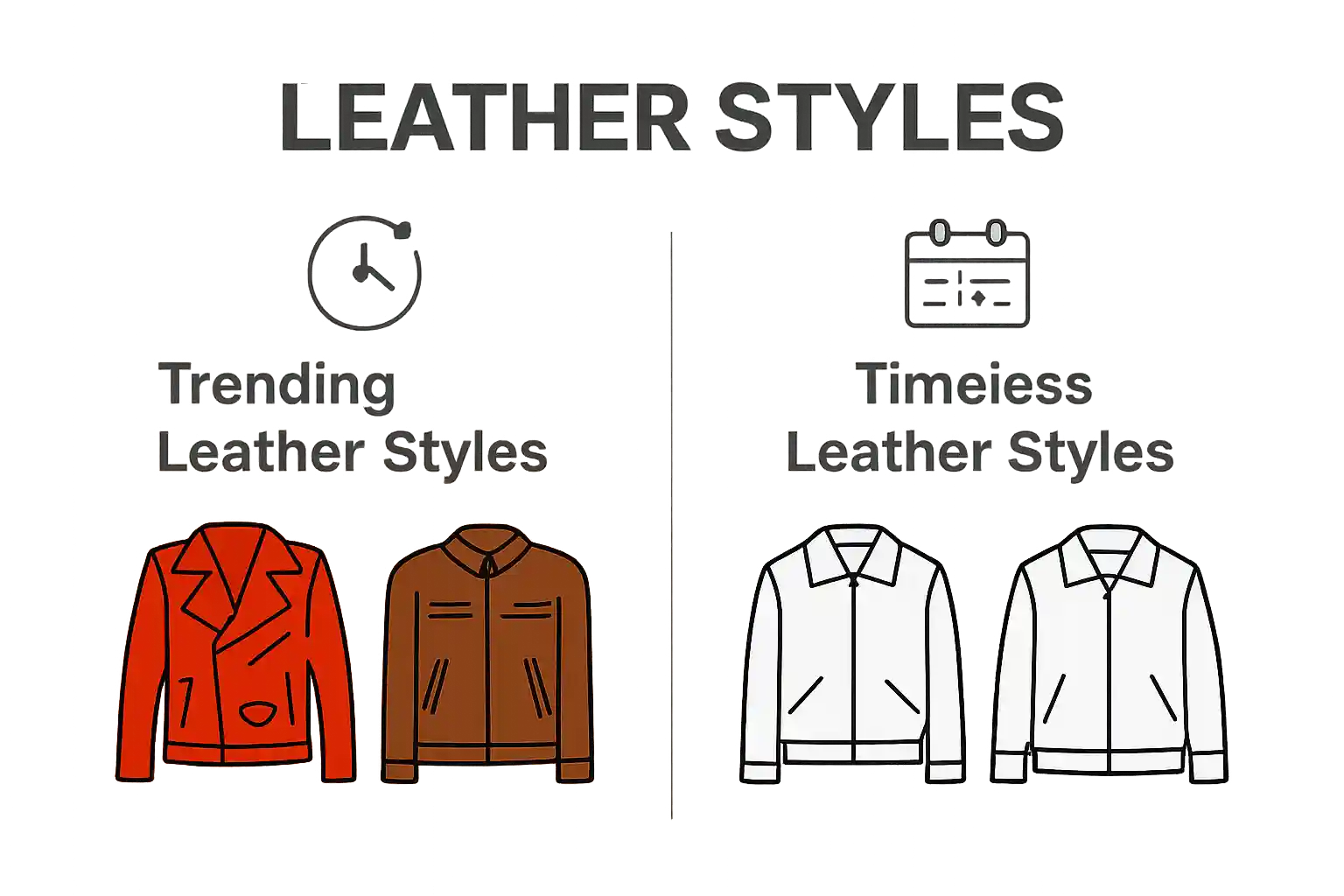 Understanding this dynamic helps enthusiasts make intelligent wardrobe investments that transcend seasonal fluctuations and maintain long term aesthetic relevance.
The Transient Nature of Fashion Trends
Contemporary fashion research from Stanford University demonstrates that clothing trends typically cycle every 20 to 30 months. Leather wear, however, operates with more nuanced evolutionary patterns, requiring deeper analytical insight.
Key trend identification principles include:
- Recognizing cyclical design resurrections
- Distinguishing between momentary novelty and sustained appeal
- Understanding cultural and generational style influences
Professional fashion analysts emphasize that true style transcends fleeting visual modifications. Leather garments represent significant financial and aesthetic investments demanding strategic selection beyond immediate visual appeal.
Characteristics of Timeless Leather Style
Timeless leather pieces embody certain universal design characteristics. Clean lines, classic silhouettes, and neutral color palettes create enduring wardrobe foundations that resist rapid aesthetic obsolescence. These garments communicate sophisticated understated elegance.
For enthusiasts seeking comprehensive fashion trend insights, understanding the distinction between transient design elements and fundamental style principles becomes crucial. A well selected leather jacket can serve as a versatile style statement spanning multiple seasons and social contexts.
Below is a comparison table summarizing the differences between fashion trends and timeless leather style, as discussed in the article.
| Aspect | Fashion Trends | Timeless Leather Style |
|---|---|---|
| Duration | 20-30 months cycle | Spans multiple seasons and years |
| Core Design Elements | Novelty, unique features | Clean lines, classic silhouettes |
| Color Palette | May include bold or seasonal colors | Neutral colors (e.g., black, brown) |
| Investment Value | Lower longevity, trend-based | Higher, due to lasting aesthetic relevance |
| Style Adaptability | Susceptible to rapid changes | Remains relevant, resists obsolescence |
| Influence Factors | Cultural/generational influences | Universal appeal |
| Wardrobe Role | Short-term statement pieces | Foundation pieces |
Mastering leather fashion requires developing a discerning eye that simultaneously appreciates contemporary design innovations while maintaining respect for classic aesthetic principles. The most sophisticated leather enthusiasts create personal style narratives that blend trend awareness with individual authenticity.
Avoid Fashion Mistakes and Upgrade Your Leather Game
Struggling with leather fashion mistakes or worried about fit, style, and color choices ruining your look? Many enthusiasts find that misunderstanding fit, overcomplicating an outfit, or choosing the wrong leather piece leads to frustration and diminished confidence. The good news is you can step up your wardrobe with guidance and reliable options all in one place. Explore the thoughtfully curated Maker of Jacket’s collection made for those who value sophistication and want to avoid fashion pitfalls.
You deserve to wear leather with confidence and flair. Visit Maker of Jacket today and browse our customizable jackets that fit your style and physique perfectly. Ready to make a change? Shop now to discover leather fashion that supports your personal expression, eliminates guesswork, and helps you look your best in every setting. For extra inspiration on combining pieces and achieving stylish harmony, check out our leather pants collection today.
Frequently Asked Questions
What are some common fashion mistakes leather enthusiasts make?
Many leather enthusiasts overlook the importance of ensemble harmony, leading to overcomplicated styling. This includes treating leather pieces as standalone statements without considering overall balance and proportion.
How does fit affect the appearance of leather garments?
Fit is crucial in leather apparel. Leather jackets should feel snug initially and allow for slight stretching. Overly loose jackets can lose their structured aesthetic, while tight ones can restrict movement and comfort.
What role does color coordination play in leather fashion?
Color coordination is essential as it communicates personal style and professional sophistication. Understanding complementary color relationships and balancing visual weight is key to creating impactful leather looks.
How can I distinguish between fashion trends and timeless style in leather wear?
To differentiate between trends and timeless style, consider the cyclical nature of fashion and focus on classic design characteristics such as clean lines and neutral colors. Timeless leather pieces remain relevant beyond fleeting trends.


