

Sustainable Leather Explained: What You Need to Know

TL;DR:
- Sustainable leather is animal-derived leather produced with responsible tanning, responsible hide sourcing, and long-lasting durability. It outperforms synthetic alternatives by minimizing chemical use, water consumption, and waste, emphasizing lifecycle considerations. While bio-based leathers show promise, most currently rely on plastic binders, and true sustainability requires transparent standards and certification.
Sustainable leather is defined as animal-derived leather produced through environmentally responsible processes that reduce chemical use, water consumption, and waste compared to conventional tanning methods. The term covers a spectrum of practices, from vegetable tanning and low-impact chrome tanning to sourcing hides exclusively as food industry by-products. Standards like UNI 11427:2011 formalize what qualifies as eco-leather, giving buyers a benchmark beyond marketing language. Understanding what sustainable leather actually means separates informed purchasing from greenwashing, and that distinction matters more than ever as bio-based and vegan alternatives crowd the market with competing claims.
What is sustainable leather and how is it made?
Sustainable leather production is not defined by a single ingredient swap. According to holistic process assessment, true sustainability covers the full system: water use, energy consumption, chemical management, and waste treatment across every stage of production. Focusing only on the tanning method misses most of the picture.
Two tanning approaches dominate the conversation. Vegetable tanning uses plant-derived tannins from oak bark, chestnut, or mimosa, producing leather with a lower chemical footprint and natural biodegradability. Chrome tanning, which accounts for roughly 80% of global leather production, uses chromium salts and is faster and cheaper, but responsible chrome tanning facilities now use closed-loop water systems and chrome recovery technology that dramatically reduce pollution. Neither method is automatically sustainable or unsustainable. The facility’s waste management and energy source matter just as much.
Eco-leather is a specific term for real animal leather tanned with low-impact processes that meet recognized environmental standards, including UNI 11427:2011. It is not synthetic, not vegan, and not faux leather. Confusing these terms leads consumers to make purchases based on false assumptions.
Sourcing also shapes sustainability. Hides used in responsible leather production come primarily as by-products of the meat and dairy industries. Using these hides prevents waste that would otherwise go to landfill. A hide that would be discarded becomes a durable product with a 20 to 30-year lifespan, which is a strong argument for leather’s lifecycle credentials when compared to short-lived synthetic alternatives.
Key production factors that determine whether leather qualifies as sustainable:
- Tanning chemistry: Vegetable tanning or certified low-impact chrome tanning with chrome recovery
- Water systems: Closed-loop or recycled water use to minimize effluent
- Hide sourcing: By-product hides from food industry supply chains, not dedicated slaughter
- Energy use: Renewable or low-carbon energy powering the tannery
- Waste treatment: On-site treatment of chemical waste before discharge
- Durability: Finished leather that lasts decades, not years
Pro Tip: When a brand labels a product “eco-leather,” ask whether it meets UNI 11427:2011 or a comparable standard. Vague claims without certification are a red flag, not a selling point.
How does sustainable leather compare to vegan and faux leather?
The comparison between sustainable animal leather and vegan or faux leather alternatives is more complicated than most brands admit. Most vegan leathers are polyurethane (PU) or PVC coatings bonded to fabric backings, meaning they are fundamentally petroleum-based plastics. That origin creates real environmental problems: limited recyclability, microplastic shedding during use and washing, and a lifespan far shorter than quality animal leather.
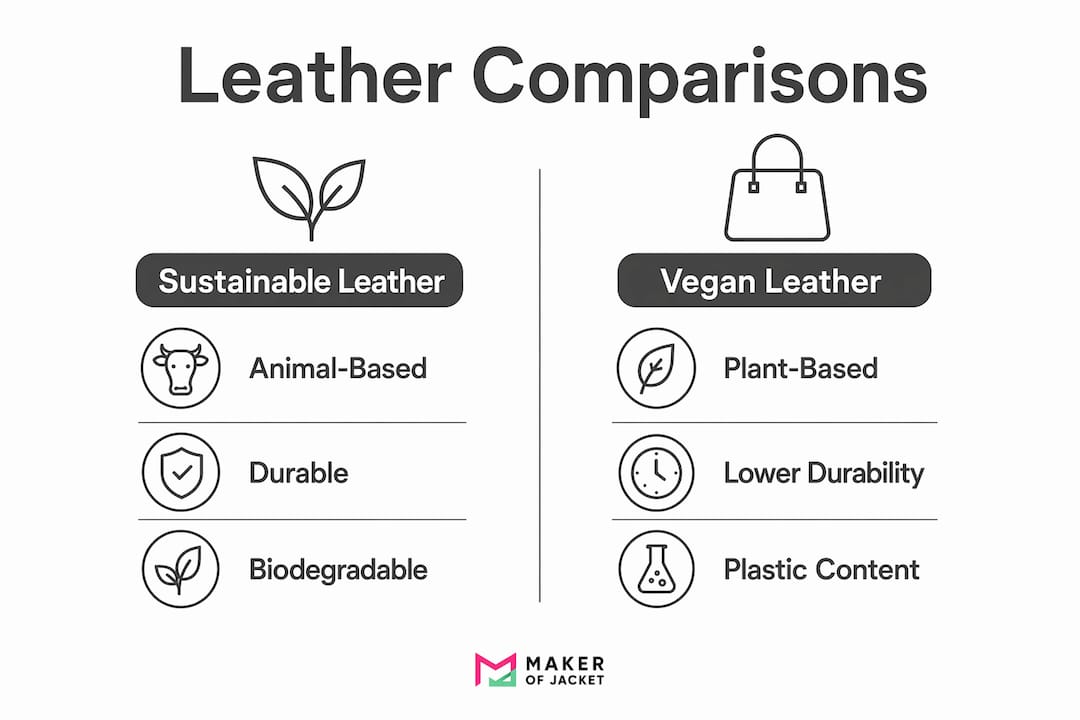
The word “vegan” signals no animal use, not environmental responsibility. Sustainability requires lifecycle evidence, covering production inputs, durability, end-of-life recyclability, and carbon footprint. A PU jacket that cracks and peels within three years generates more waste than a vegetable-tanned leather jacket worn for two decades. That math rarely appears in brand marketing.
Plant-based vegan leathers from pineapple fiber (Piñatex), cactus (Desserto), and apple waste represent a genuine step forward. However, plant-based materials bonded with plastic resins cannot currently be composted or recycled effectively, because the plastic binder negates the biodegradability of the plant fiber. The marketing often highlights the plant origin while omitting the plastic component entirely.
For consumers weighing faux leather vs real leather, the comparison table below cuts through the noise:
| Material | Source | Durability | Biodegradability | Key concern |
|---|---|---|---|---|
| Sustainable animal leather | Food by-product hides | 20 to 30 years | Yes (vegetable-tanned) | Animal welfare perception |
| PU/PVC vegan leather | Petroleum-based plastics | 3 to 5 years | No | Microplastics, short lifespan |
| Plant-based vegan leather | Agricultural by-products + plastic binder | 5 to 10 years | Partial | Plastic binder limits compostability |
| Bio-based leather (mycelium, SCOBY) | Fungi or bacterial cellulose | Emerging | Potentially yes | Durability and scalability gaps |
The practical takeaway: “vegan” and “sustainable” are not synonyms. Choosing based on the vegan label alone can result in a product with a worse environmental footprint than responsibly sourced animal leather.
What are the latest innovations in bio-based leather alternatives?
Bio-fabricated leathers represent the most promising frontier in sustainable leather alternatives, and the 2026 research picture is both exciting and sobering. Mycelium composites grown from fungal root networks are nearing industrial production standards in terms of texture and appearance, but still fall short on tensile strength and water resistance compared to animal leather. Bolt Threads and Ecovative Design have brought mycelium leather to commercial prototypes, yet scaling without synthetic adhesives remains an unsolved challenge.
Bacterial cellulose, grown from SCOBY cultures (the same base used in kombucha fermentation), produces a thin, flexible sheet material with leather-like properties. The process requires no animals and minimal land use. The limitation is production speed: growing enough material for commercial volumes takes significantly longer than conventional tanning cycles.
Desserto, made from nopal cactus fiber in Mexico, and Piñatex, made from pineapple leaf fiber in the Philippines, have both reached commercial retail. Both use agricultural waste streams, which is a genuine sustainability win. Both also rely on partial plastic binders in their current formulations, which limits their end-of-life credentials. Researchers are actively working on bio-based binder replacements, but no widely adopted solution exists yet.
“The most credible sustainable leather innovations improve both performance and operational scalability, not only material sources.” MDPI, 2026
Bio-based leathers from mycelium and bacterial cellulose can be up to 1000% more sustainable than conventional animal leather when manufactured with clean energy and no synthetic adhesives. That figure represents the ceiling of what optimized production could achieve, not current commercial reality. The gap between laboratory performance and factory-floor scalability is where most bio-leather projects currently stall.
Pro Tip: When evaluating bio-based leather products, ask the brand three questions: What percentage of the material is plant-derived versus synthetic binder? Has the product been independently tested for durability? Does the brand publish a lifecycle assessment? Brands with genuine sustainability credentials will answer all three.
What are the real benefits of choosing sustainable leather?
The benefits of sustainable leather go beyond environmental optics. They translate into product quality, longevity, and a cleaner supply chain that consumers can actually verify.
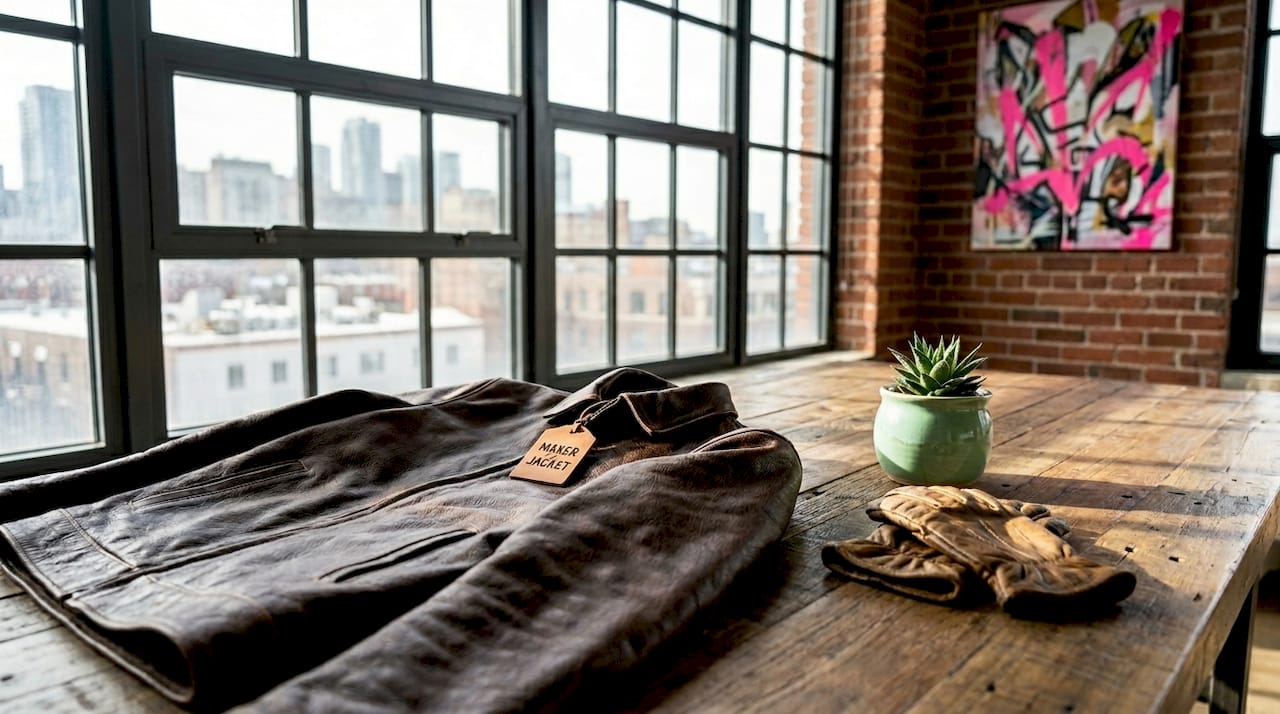
Durability reduces total waste. Product lifespan is the most underrated sustainability metric in fashion. A well-made vegetable-tanned leather jacket or bag that lasts 25 years generates a fraction of the waste produced by three or four synthetic replacements over the same period. Circular economy research consistently identifies longevity as the single most effective lever for reducing fashion’s environmental impact.
Reduced chemical exposure. Sustainable tanning processes eliminate or minimize hexavalent chromium, formaldehyde, and azo dyes that appear in conventional leather and many synthetic alternatives. This protects tannery workers, local waterways, and the end consumer who wears the product against their skin.
Transparent sourcing builds trust. Sustainable fashion brands increasingly use vegetable-tanned leather patches and recycled leather components as visible markers of quality and ethical sourcing. These details communicate product values without requiring a marketing campaign. Consumers who understand what to look for can read a product’s sustainability story directly from its materials.
Animal welfare through by-product sourcing. Leather from food industry by-product hides does not drive additional animal agriculture. The hide would otherwise be discarded. This framing does not resolve every ethical objection to animal leather, but it does address the most common environmental argument against it.
Support for slow fashion. Choosing ethical leather quality over fast-fashion synthetic alternatives directly supports the slow fashion movement. Buying less, buying better, and maintaining products for decades is the most evidence-backed approach to reducing personal fashion footprint. Leather’s repairability, including resoling, restitching, and conditioning, extends its useful life in ways that PU and PVC simply cannot match.
Key takeaways
Sustainable leather is animal leather produced with low-impact tanning, responsible hide sourcing, and a durability standard that outlasts synthetic alternatives by decades, making lifecycle thinking the defining measure of any leather’s true environmental value.
| Point | Details |
|---|---|
| Eco-leather is real leather | It meets standards like UNI 11427:2011 and is not the same as faux or vegan leather. |
| Vegan does not mean sustainable | PU and PVC vegan leathers shed microplastics and last 3 to 5 years, far less than quality animal leather. |
| Durability is the top metric | A 25-year leather product generates less waste than multiple short-lived synthetic replacements. |
| Bio-based leathers show promise | Mycelium and cactus leathers are advancing but still rely on synthetic binders that limit biodegradability. |
| Ask for lifecycle evidence | Brands making eco-friendly claims should provide certifications, material breakdowns, and durability data. |
Why lifecycle thinking beats label reading every time
The conversation around sustainable leather has matured considerably, and I think the biggest shift worth noting is this: the most environmentally damaging purchase decision is often the one that looks cleanest on the label. I have seen customers choose a PU “vegan leather” jacket because it felt like the ethical choice, only to replace it twice in five years. That is three jackets worth of production impact versus one well-made leather piece that could still be in rotation a decade from now.
What I have come to believe, after watching this space evolve, is that the slow fashion principle applies more to leather than almost any other material. The pros and cons of leather are real on both sides, but durability is leather’s strongest card, and it is the card that matters most for genuine sustainability. Bio-based alternatives are genuinely exciting, and I am optimistic about where mycelium and plant-fiber leathers are heading. But right now, in 2026, the honest answer is that most of them are not yet ready to replace quality animal leather on lifecycle terms.
My practical advice: prioritize repairability, seek out vegetable-tanned or certified eco-leather products, and treat any “eco-friendly” claim without a certification or lifecycle assessment as unverified. The brands doing this right are not shy about their process. They publish it.
— Maker
Explore custom leather jackets built to last
At Makerofjacket, every jacket starts with a commitment to quality materials and craftsmanship that holds up over years of real use. That means responsibly sourced leather, construction designed for repairability, and customization options that let you build exactly what you want rather than settling for fast-fashion volume.
If you have spent time understanding what sustainable leather actually means, you already know that durability and honest sourcing matter more than labels. Makerofjacket’s custom jacket builder lets you specify materials, fit, and finish for a piece built to last. For a closer look at how the process works from concept to delivery, explore the customization journey and see what goes into every order.
FAQ
What is sustainable leather, exactly?
Sustainable leather is animal-derived leather produced using low-impact tanning methods, responsible hide sourcing from food industry by-products, and processes that minimize chemical waste and water use. Standards like UNI 11427:2011 define eco-leather as a recognized category within this space.
Is vegan leather more sustainable than animal leather?
Not automatically. Most vegan leathers are petroleum-based PU or PVC plastics that shed microplastics and last only 3 to 5 years, while quality animal leather can last 20 to 30 years. Lifecycle research shows that durability, not material origin, determines real environmental impact.
What are the best eco-friendly leather options available now?
Vegetable-tanned animal leather and certified eco-leather meeting UNI 11427:2011 are the most proven options. Plant-based alternatives like Desserto (cactus) and Piñatex (pineapple) are commercially available but currently include plastic binders that limit their biodegradability.
How can I tell if a leather product is genuinely sustainable?
Look for third-party certifications, published lifecycle assessments, and transparent material breakdowns. Brands that list tanning method, hide sourcing, and chemical management practices are far more credible than those using broad terms like “eco-friendly” or “conscious leather” without supporting evidence.
Are bio-based leathers like mycelium leather ready to buy?
Some mycelium and bacterial cellulose leather products have reached commercial retail, but bio-based materials still face durability and water-resistance gaps compared to animal leather as of 2026. They represent the most promising direction for sustainable leather alternatives, but are not yet a full replacement for most applications.


