

The Role of Patchwork in Fashion: Culture to Runway

TL;DR:
- Patchwork in fashion transforms fabric scraps into culturally meaningful, sustainable designs that challenge uniformity. It originated as a household necessity and evolved into a high-concept language, emphasizing community, heritage, and creative expression. Contemporary runway collections and ethical practices continue to elevate patchwork’s role as a conscious, unrepeatable, artful practice.
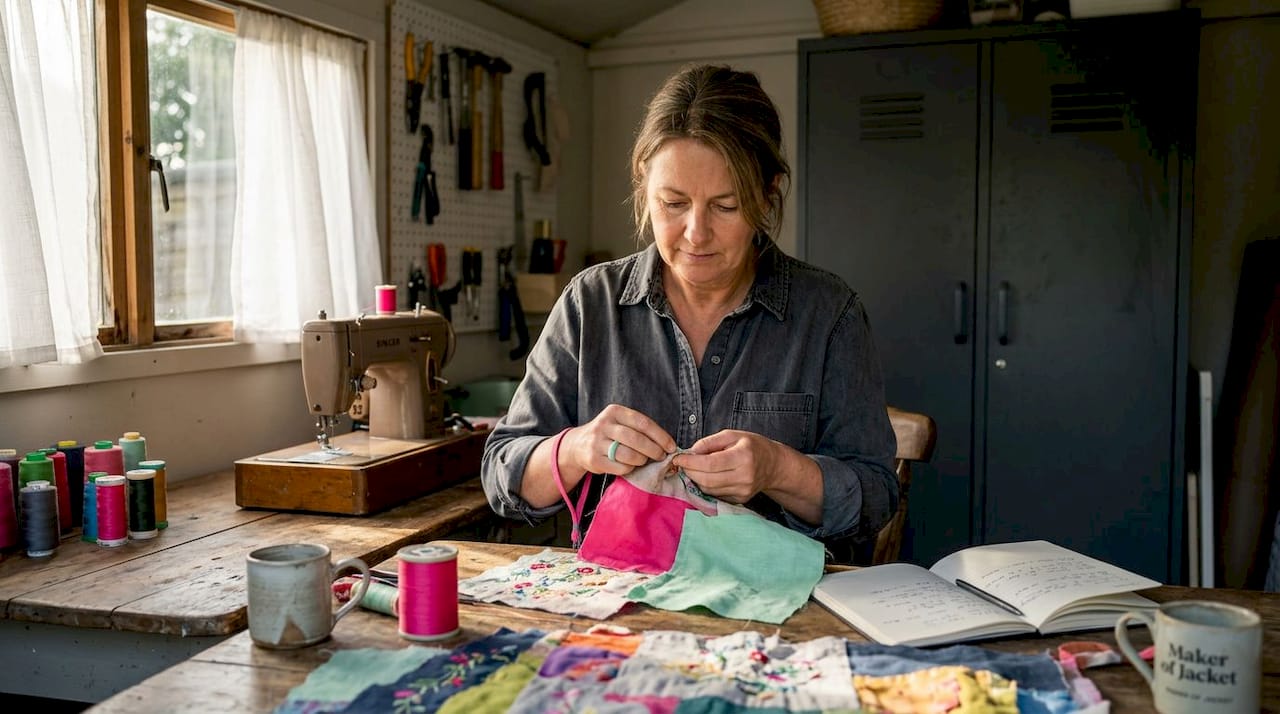
Patchwork in fashion is defined as the technique of assembling cut fabric pieces into a unified garment, and it carries cultural, artistic, and sustainable weight that few other textile practices match. The role of patchwork in fashion extends far beyond decorative stitching. It connects generational memory, indigenous craft traditions, and zero-waste production into a single design philosophy. From the quilting circles of rural Alabama to the Spring/Summer 2026 runways of Zimmermann, Stella McCartney, and Junya Watanabe, patchwork has moved from domestic necessity to high-concept design language. This article maps that full arc, with concrete examples and cultural context that go well beyond surface-level trend reporting.
How has patchwork evolved historically and culturally in fashion?
Patchwork began as an act of survival. Fabric was expensive, scraps were precious, and assembling leftover pieces into functional garments was standard household practice across Europe, Asia, and the Americas for centuries. The technique was not considered art. It was domestic economy, passed from mother to daughter as a practical skill tied to resource management and family care.
The transmission of that skill tells its own story. Research on Italian families reveals that older generations learned patchwork out of necessity, while younger generations now approach it as creativity and sustainable consumption. That generational shift is significant. It means patchwork did not disappear when scarcity did. Instead, it transformed into something chosen rather than required, which gave it new cultural weight.
The most powerful American example of that transformation is the Freedom Quilting Bee of Gee’s Bend, Alabama. Established in 1966, this cooperative of Black women in a rural community turned improvisational patchwork quilts into recognized fine art, eventually securing major retail contracts and museum exhibitions. The Gee’s Bend quilts did not abandon their community origins to reach mainstream audiences. They carried those origins with them, which is precisely what made them legible as art.
Key historical turning points in patchwork’s cultural evolution include:
- Pre-industrial era: Patchwork as household necessity, driven by fabric scarcity and economic constraint
- Late 19th century: Quilting bees as community social events, embedding patchwork in collective identity
- 1960s counterculture: Patchwork adopted by the American folk revival and hippie movement as anti-establishment self-expression
- 1966 onward: Gee’s Bend cooperative connecting community craft to fine art and commercial fashion markets
- 2000s to present: Patchwork reframed as sustainable design and high-concept runway material
“The quilts of Gee’s Bend demonstrate how community aesthetics can translate into widely legible art and fashion without losing their origins.” This principle still drives the most credible patchwork work in contemporary design.
What are the cultural and symbolic meanings of patchwork in modern fashion?
Patchwork functions as an affective language. Cultural research confirms that patchwork materializes care, memory, and relational bonds through clothing in ways that mass-produced garments cannot replicate. A patchwork garment carries the history of its materials. Each fabric piece may come from a worn shirt, a grandmother’s dress, or a community textile tradition, and that embedded narrative is part of what the wearer communicates.
The symbolic meaning of patchwork, however, depends heavily on framing. Research identifies two distinct cultural registers:
- Repair and mending: Patchwork as an act of care, extending the life of a garment and honoring its history. This reading connects to Japanese boro textile traditions and the broader slow-fashion philosophy of keeping things alive longer.
- Creative hobby and self-expression: Patchwork as a deliberate aesthetic choice, assembling fabrics to communicate individuality, cultural affiliation, or artistic vision. This reading drives the contemporary fashion market.
- Indigenous and folk art integration: Patchwork as a vehicle for preserving and activating cultural motifs, particularly in communities where textile patterns carry specific social or spiritual meaning.
- Community identity: Quilting circles and cooperative craft groups use patchwork to reinforce shared identity and collective memory, as seen in Gee’s Bend and similar traditions worldwide.
- The “perfectly imperfect” aesthetic: Contemporary fashion discourse frames patchwork as balancing luxury and ethical responsibility, where visible seams and mismatched textures signal authenticity rather than error.
The “perfectly imperfect” framing is worth examining closely. It represents a direct rejection of the uniformity that industrial production delivers. When a Stella McCartney patchwork piece shows its construction, that visibility is the point. It signals that a human made this, that choices were made, and that the garment has a story.
Pro Tip: When analyzing patchwork in a fashion context, always identify which cultural register the designer is working in. A garment referencing repair traditions carries different meaning than one built purely for visual rhythm. That distinction matters for both criticism and styling.
How does patchwork contribute to sustainability and circular fashion?
Patchwork is one of the most direct applications of circular fashion principles available to designers and consumers. Patchwork integrates circular fashion principles by elevating waste materials into desirable handcrafted designs, which means the sustainability benefit is built into the technique itself rather than added as a marketing claim.
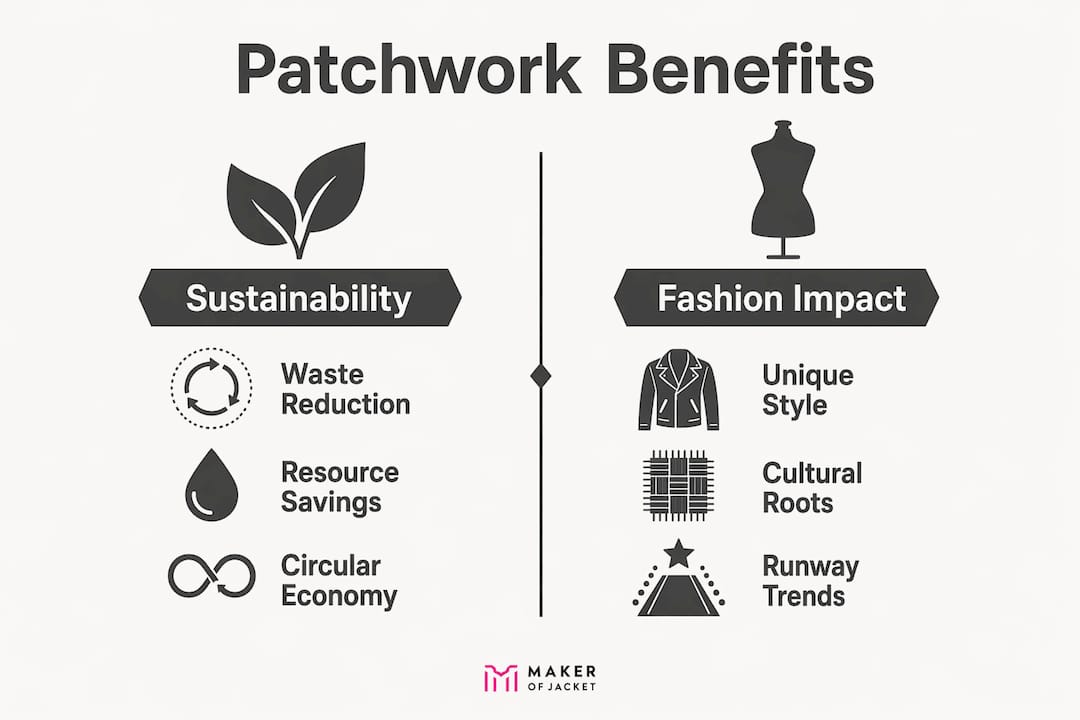
The measurable evidence is compelling. Participatory action research on indigenous artisan communities found that community upcycling via patchwork reduced textile waste by 60%, with 75% of artisans reporting increased market demand for their work. That combination of ecological and economic benefit is rare in fashion. Most sustainability initiatives require trade-offs. Patchwork, when practiced with indigenous folk art methods, delivers both simultaneously.
| Benefit | Mechanism | Impact |
|---|---|---|
| Waste reduction | Fabric scraps assembled rather than discarded | 60% textile waste reduction in documented artisan programs |
| Economic uplift | Handcrafted patchwork commands premium pricing | 75% of artisans reported demand increase |
| Cultural preservation | Indigenous motifs activated through patchwork assembly | Heritage patterns reach new markets without dilution |
| Consumer appeal | Unique, traceable garments satisfy ethical fashion demand | Growing segment of eco-conscious buyers prioritize patchwork pieces |
The contrast with mass production is stark. A factory-produced jacket is identical to thousands of others, uses virgin materials, and generates significant cutting waste. A patchwork jacket uses existing fabric, produces a one-of-a-kind result, and carries the labor story of its maker. For eco-conscious consumers, that difference is not abstract. It is the entire purchase rationale.
Learning how to upcycle clothing into patchwork pieces is one of the most direct ways fashion students can apply circular design principles in practice, connecting theory to tangible output.
How is patchwork influencing contemporary fashion trends and runway collections?
Patchwork’s presence on the 2026 runway is not nostalgic. Patchwork denim appeared prominently in Spring/Summer 2026 collections from Zimmermann, Stella McCartney, and Junya Watanabe, and in each case it functioned as a deliberate design language rather than a decorative afterthought. Designers controlled the logic of joining, the visual rhythm of panels, and the color relationships between pieces to produce garments that read as composed rather than assembled.
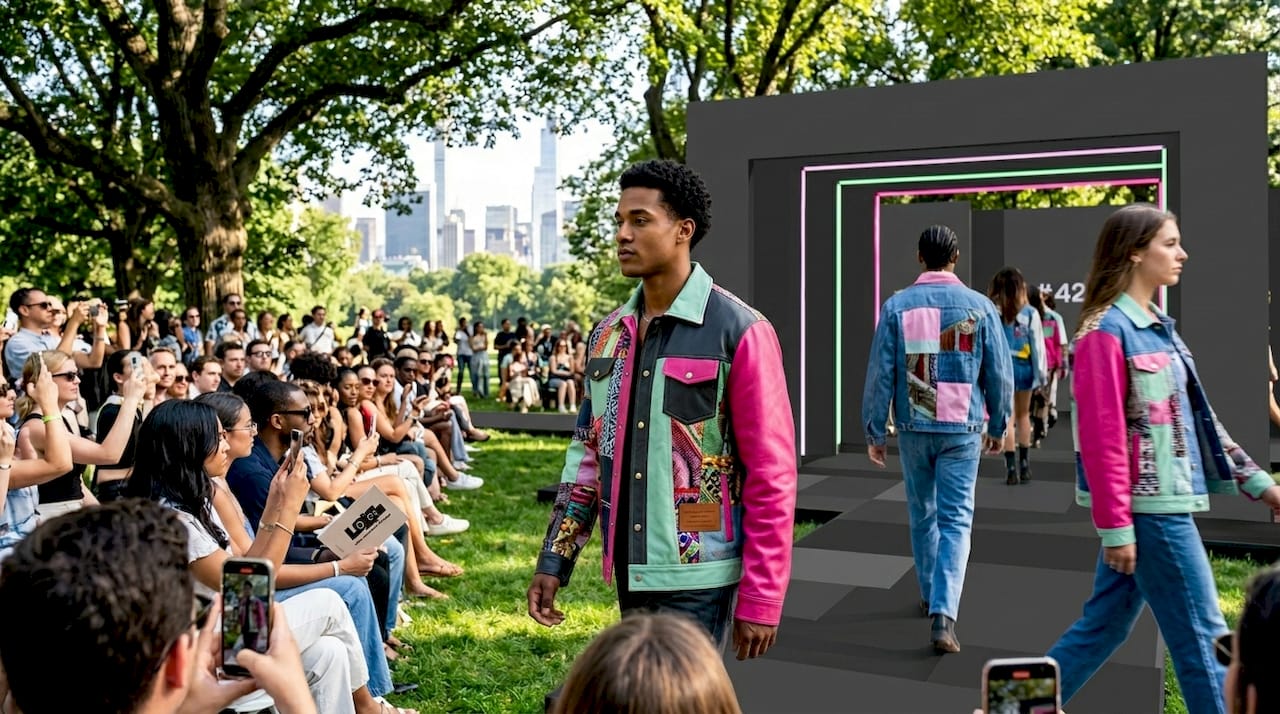
That distinction between composed and assembled is the technical core of contemporary patchwork design. Effective patchwork requires control of color, proportion, and rhythm to avoid a chaotic appearance. When those elements are managed well, patchwork creates visual complexity that rewards close attention. When they are not, the result looks accidental.
Current patchwork fashion trends worth tracking:
- Patchwork denim: Jeans and jackets assembled from different denim washes and weights, creating tonal variation with structural coherence
- Streetwear patchwork: Oversized silhouettes with bold color-blocked panels, influenced by workwear and athletic traditions
- Luxury patchwork: High-end houses using heritage fabrics, deadstock materials, and archival prints assembled into collector pieces
- Artisan collaboration: Brands partnering with indigenous or community craft cooperatives to produce patchwork collections with documented provenance
Pro Tip: When styling a patchwork garment, treat it as the focal point and build the rest of the outfit in solids. A patchwork jacket or skirt paired with a single-color base lets the construction speak without competing noise. This is how the best street style photographers approach it, and it translates directly to editorial work.
For anyone documenting patchwork looks, understanding how to photograph streetwear outfits ensures the visual complexity of patchwork reads correctly on camera rather than collapsing into visual noise.
The patchwork jacket trend specifically has moved from niche streetwear into mainstream fashion retail, which signals that consumer appetite for the aesthetic is broad enough to sustain commercial production at scale.
How can fashion enthusiasts and students incorporate patchwork thoughtfully?
Incorporating patchwork into your own style or design practice requires more than sourcing interesting fabrics. The technique carries cultural weight, and engaging with it thoughtfully produces better results than treating it as purely decorative.
- Research the origins of the motifs you use. Patchwork traditions from West African kente cloth to Japanese boro to Appalachian quilting each carry specific cultural meanings. Using those motifs without understanding them produces work that reads as superficial at best.
- Start with your own wardrobe. The most authentic patchwork projects begin with garments you already own. Old jeans, worn shirts, and fabric remnants carry personal history that gives the finished piece genuine narrative weight.
- Control your color logic before you cut. Lay out your fabric pieces and establish a color relationship before sewing. Decide whether you want tonal harmony, bold contrast, or a gradient progression. That decision made in advance prevents the chaotic result that undermines most amateur patchwork attempts.
- Use the right tools for the technique. A rotary cutter and self-healing mat produce cleaner edges than scissors for most patchwork work. Consistent seam allowances, typically a quarter inch for garment patchwork, keep panels aligned through construction.
- Study designers who do it well. Junya Watanabe’s deconstruction-reconstruction approach, Dries Van Noten’s print mixing, and the Gee’s Bend cooperative’s improvisational geometry each offer distinct models for how patchwork logic can be applied intentionally.
Understanding sustainable fashion choices gives you the framework to position your patchwork practice within the broader ethical fashion conversation, which matters both for personal clarity and for how you communicate your work to others.
Key takeaways
Patchwork’s role in fashion is defined by its simultaneous function as cultural archive, sustainability tool, and high-concept design language, making it one of the most layered techniques in contemporary clothing.
| Point | Details |
|---|---|
| Cultural roots run deep | Patchwork shifted from household necessity to creative expression across generations, carrying community identity with it. |
| Gee’s Bend as benchmark | The Freedom Quilting Bee proved community craft can reach fine art and retail markets without losing its origins. |
| Sustainability is measurable | Indigenous artisan patchwork programs reduced textile waste by 60% while increasing artisan market demand by 75%. |
| Runway adoption is intentional | Zimmermann, Stella McCartney, and Junya Watanabe used patchwork in 2026 collections as a controlled design language, not decoration. |
| Cultural framing determines meaning | Whether patchwork reads as repair, heritage, or self-expression depends on the designer’s framing and the viewer’s cultural context. |
Why patchwork deserves more serious attention than it gets
Most fashion commentary treats patchwork as a trend to track rather than a practice to understand. That framing misses the point entirely. I have watched patchwork cycle through runway seasons for years, and what strikes me consistently is how the designers who use it best are the ones who understand what they are working with culturally. Junya Watanabe does not just assemble fabric pieces. He interrogates the logic of construction itself. The Gee’s Bend quilters were not making decorative objects. They were encoding community history into material form.
The sustainability argument for patchwork is real, but it only holds when the practice is genuine. A fast-fashion brand releasing a “patchwork-inspired” print on virgin polyester is not participating in the tradition. It is borrowing the aesthetic without the substance. Fashion students especially need to make that distinction clearly, because the difference between authentic patchwork practice and patchwork-as-marketing is visible to anyone who knows what to look for.
What I find most compelling about patchwork right now is its resistance to uniformity at a moment when uniformity is the default output of algorithmic fashion. Every patchwork piece is, by definition, unrepeatable. That is not a limitation. It is the entire value proposition, and the market is finally catching up to that reality.
— Maker
Bring patchwork style to life with a custom jacket from Makerofjacket
Patchwork is not just a runway concept. It is a design philosophy you can wear. At Makerofjacket, the customization options let you bring that philosophy directly into your wardrobe. Whether you want a biker jacket assembled from contrasting leather panels, a bomber with color-blocked sections, or a varsity piece that references your own aesthetic logic, the platform builds it to your specifications. Every jacket is made to order, which means no two pieces are identical. That is patchwork thinking applied to outerwear. Explore custom jacket options at Makerofjacket and design something that carries your story.
FAQ
What is the role of patchwork in fashion?
Patchwork in fashion functions as a design technique, cultural archive, and sustainability practice simultaneously. It assembles fabric pieces into garments that carry aesthetic complexity, personal narrative, and reduced material waste.
How has patchwork influenced modern runway collections?
Patchwork appeared in Spring/Summer 2026 collections from Zimmermann, Stella McCartney, and Junya Watanabe as a controlled design language managing color, proportion, and panel rhythm to produce visually composed garments.
Why is patchwork considered a sustainable fashion practice?
Patchwork uses fabric scraps and existing materials rather than virgin inputs, and documented artisan programs show it can reduce textile waste by 60% while increasing maker income through premium handcrafted demand.
What is the cultural significance of Gee’s Bend quilts?
The Freedom Quilting Bee, established in 1966 in Alabama, transformed improvisational patchwork into recognized fine art and secured major retail contracts, proving that community craft traditions can reach mainstream markets without losing their cultural origins.
How do I start incorporating patchwork into my own style?
Begin with garments you already own, establish a clear color logic before cutting, and research the cultural traditions behind any motifs you use. Treating patchwork as a design decision rather than a random assembly produces far stronger results.


