

Quilted vs Satin Lining: Which Is Better for a Leather Jacket?

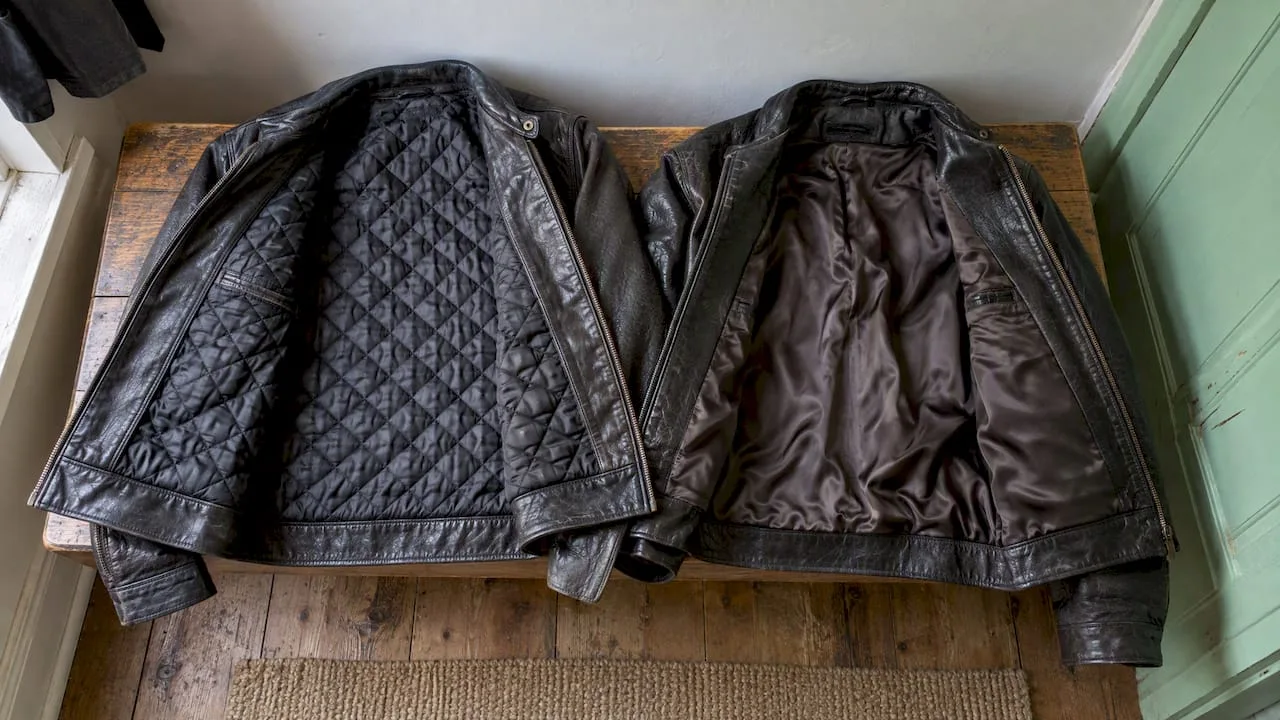
Choose quilted lining if you wear your leather jacket in cold weather and want warmth built in. Choose satin if you want a slim fit, easy layering and a smooth feel on your sleeves. The two are not strict opposites: quilting is a construction method, satin is a fabric, and the two can be combined in one lining. Below we explain how each one behaves, what to check on the label, and how to match a lining to the way you ride, commute or dress.
TL;DR
- Quilted lining adds a layer of fill, so it is the warmer option, but it is also bulkier and heavier.
- Satin lining is smooth and slippery, so the jacket slides on over a sweater or shirt and keeps a cleaner silhouette.
- Care depends on the fiber under the shine (polyester, acetate, rayon or silk), not on the word “satin”.
- Quilted satin exists, and it is a sensible middle path for a jacket you wear from fall through early spring.
- The best lining for a leather jacket is the one that fits your climate, your layers and your style.
Table of Contents
- What the two terms actually mean
- Quilted vs satin lining at a glance
- Warmth and weight
- Comfort, movement and getting dressed
- Not all satin is the same
- Which lining suits your climate and style
- Our perspective
- A simple way to decide
- Get the lining you want, made for you
- FAQ
- Sources
What the two terms actually mean
People compare quilted and satin as if they were two fabrics. They are not. Satin describes a weave that gives a glossy, smooth face. Quilting describes a construction: a top fabric, a thin layer of fill, and often a backing, stitched together in a pattern such as diamonds or channels.
The University of Kentucky’s guide to lining techniques explains that quilted linings are heavyweight because several layers are combined for warmth and protection. The same guide lists satin-backed taffeta, crepe-backed satin and heavyweight satin among linings suited to coat weight. In other words, a satin can be thin and airy, or it can be dense and substantial, and it can even be the face of a quilted lining.
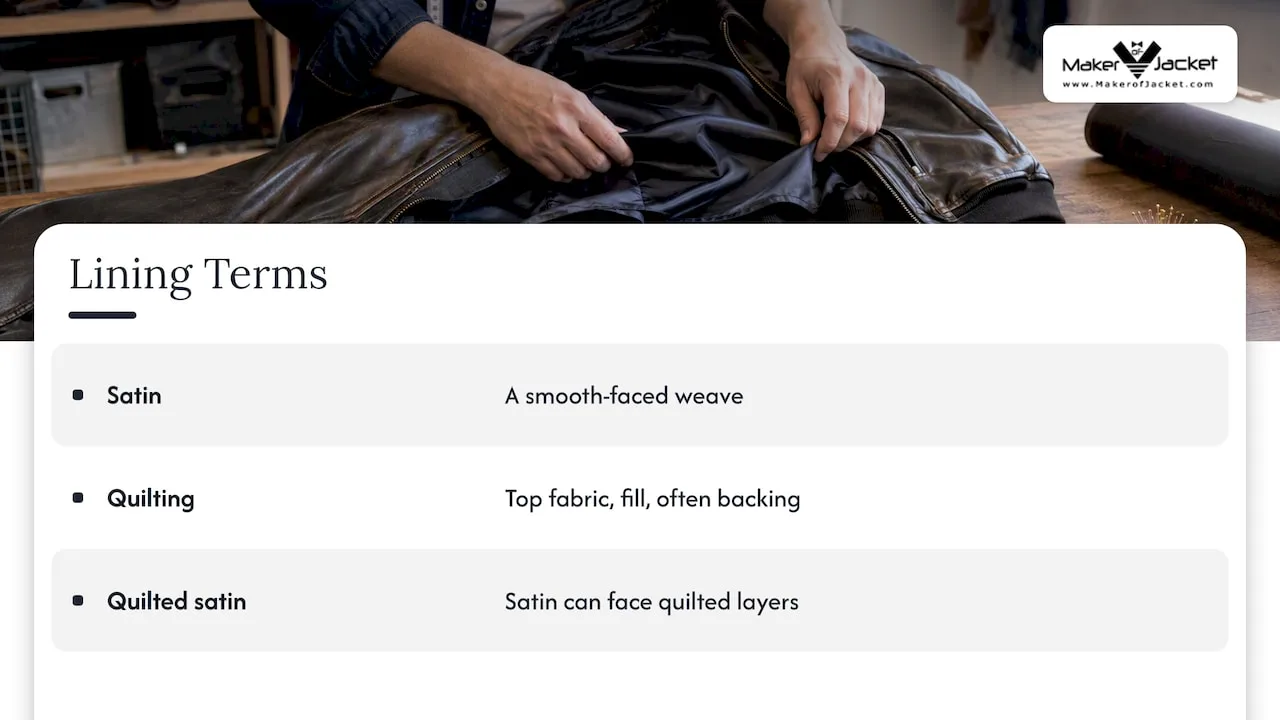
So when you read “quilted vs satin”, read it as “insulated lining vs smooth, single-layer lining”. That is the real decision.
Quilted vs satin lining at a glance
| Feature | Quilted lining | Satin lining |
|---|---|---|
| Warmth | Highest, because the fill traps air | Moderate, depends on weave weight |
| Weight and bulk | Heavier, adds volume to the jacket | Lighter, keeps a slimmer cut |
| Putting on and taking off | Grips more on thick sleeves | Slides easily over other layers |
| Feel against the skin | Soft and padded | Cool, sleek, silky |
| Best season | Late fall to winter | Spring, early fall, mild climates |
| Care | Follow the label closely, loft can flatten | Depends on fiber, often dry clean |
| Look | Diamond or channel texture, casual and rugged | Clean, glossy, classic |
Warmth and weight
Quilted lining is the warmest of the common lining options for coats, because the batting between layers traps air. Threads magazine’s overview of linings notes that quilted lining is the warmest choice for coats but it is bulky, while coat-weight satin has a dense weave and is heavy, durable and also warm.
That last point surprises many buyers. A thin, shiny polyester satin does little for warmth, but a heavyweight satin lining is not just decoration. If you want some warmth without a puffy look, a dense satin can be the better compromise.
A practical way to think about it:
- Under 40°F most days: quilted is the safer pick, especially if you will not add a sweater.
- Cool but not cold, 45 to 60°F: satin, with a light layer underneath, usually feels right.
- Warm days with air conditioning or evening chill: satin, because quilting will feel stuffy.
Those temperature bands are our rule of thumb from how people wear leather, not a measured standard, so adjust for how warm you run.
How insulation behaves over time
Some quilted linings use a branded synthetic insulation. 3M’s technical document for Thinsulate Type G describes polyester insulation that is warm, breathable, moisture-resistant and durable in specified quilted constructions. It also warns that washing or dry cleaning can reduce loft, which is the fluffiness that holds warm air. For a quilted lining that means one thing: read the care label and do not over-clean the jacket. Leather jackets rarely need frequent cleaning anyway, and a specialist leather cleaner is the right call when they do.
Comfort, movement and getting dressed
A lining does more than hide the seams. The University of Kentucky guide says a jacket lining should withstand the abrasion of putting the garment on and taking it off, and that breathable linings are more comfortable. It adds that cotton is comfortable and absorbent but does not glide well, while polyester is durable and wrinkle-resistant.
This is where satin earns its reputation. Its slick surface lets your arm slide through the sleeve, even over a hoodie or a shirt with a textured cuff. If you put your jacket on and off all day, in and out of cars, offices and cafes, that glide matters more than most people expect.
Quilted lining has a trade-off here. The padding is comfortable once you are inside, but sleeves can feel snug over thick knits, and the extra volume changes how the jacket sits on the shoulders. If you like a close fit, we suggest sizing with your usual layers in mind and checking the size guides on our product pages.
Static, breathability and fiber
New Mexico State University advises paying close attention to fiber content and weave, because they hint at how durable a lining will be. Its extension guide also says breathable or absorbent fibers such as rayon, rayon and acetate blends or cotton may be more comfortable than some polyester or nylon linings.
That matters because most budget satins are polyester. Polyester wears well, but if you run hot or wear the jacket for long stretches, a breathable fiber can feel better against the skin.
Not all satin is the same
The shine tells you the weave, not the fiber. Before you decide, find out which fiber the lining is made from. The University of Kentucky guide lays out the main differences:
- Acetate: less durable than some other fibers, and it requires dry cleaning.
- Rayon: comfortable, but less durable than polyester. Care can be washable or dry-clean only, so follow the label.
- Polyester: durable and wrinkle-resistant. Generally washable, though it may also be dry cleaned.
- Silk: luxurious and comfortable, and generally dry cleaned.
You can read those details in the university’s lining guide. The takeaway is simple. A polyester satin is the tough, low-maintenance choice. An acetate or silk satin feels refined but asks more of you.
Matching lining care to the shell
A useful rule is to keep the lining’s care needs in line with the shell. Leather is not something you toss in a washing machine, so a lining that demands gentle dry cleaning does not add a new problem, while a lining that needs frequent washing would. For most leather jackets, the lining is a part you protect by caring for the whole garment, not one you clean on its own.
Which lining suits your climate and style
In our experience, climate and silhouette decide this more than anything else.
Winter and cold climates. Quilted lining is the natural fit for winter outerwear. It is common in biker and bomber styles for exactly this reason, and you will find it in our quilted biker jackets and in the quilted bomber leather jacket.
Fashion jackets and the classic bomber look. Satin is the traditional bomber lining, and it suits sleek, fashion-forward cuts where you do not want extra volume. If you like a polished finish, browse our white satin jackets or blue satin jackets.
Year-round wear. If you live somewhere with real seasons, a quilted satin lining gives you a smooth face with a light fill behind it. The beige quilted satin bomber jacket is a good example of that blend.
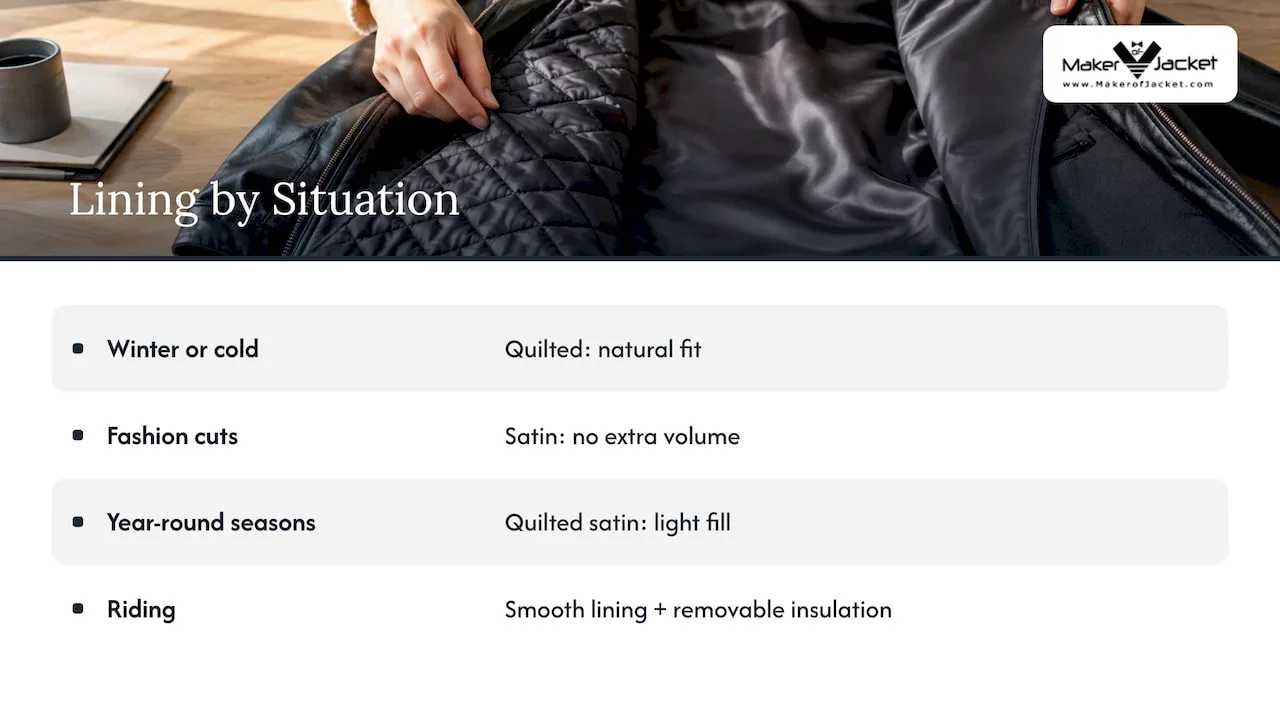
Riding. Motorcyclists have extra things to weigh. A lining that bunches or grips can be annoying under armor or a base layer, and one that overheats is worse. Many riders prefer a smooth lining that can be paired with a removable insulating layer, so one jacket covers several temperatures. If you plan to ride in cold weather, consider the lining together with the layers you will wear, and look at proper protective gear for your riding conditions.
Our perspective
We make leather jackets to order and by style, and the lining is one of the choices customers ask about most. Our view is that it deserves as much thought as the leather itself.
A lining is a supportive fabric that lets the jacket move with your body, and it can extend the life of the garment. That is why we do not treat it as an afterthought. Our pieces are handcrafted by skilled craftsmen using premium-grade materials, and the lining is part of that craft.
When customers tell us how they wear a jacket, we usually point them in one of two directions. If they ride or live in cold places, we lean toward quilted. If they want a clean, classic line they can wear over a shirt or knit, we lean toward satin. For those in between, quilted satin is often the answer.
The advantage of ordering a custom piece is that you do not have to compromise. You can tell us your size, your style and your lining preference, and we build around that.
Maker
A simple way to decide
Ask yourself four questions:
- What is the coldest day you will wear it? Below freezing regularly, go quilted. Otherwise, satin is usually enough.
- What do you layer underneath? Thick knits and hoodies favor satin’s glide. A shirt or tee leaves room for quilting.
- How do you want the jacket to look? Quilting reads rugged and sporty. Satin reads sleek and classic.
- How much care do you want to give it? Check the fiber. Polyester is the easy one. Acetate, silk and some rayon need more attention.
If you want more background before you choose, our guides on how to choose the perfect lining for your jacket and jacket lining types go through other materials too.
A note on fit and sizing
Because quilted lining adds thickness, the same size can feel tighter than the same jacket with satin. If you are between sizes and you pick quilted, think about whether you will wear the jacket over bulky layers. If you pick satin and plan to layer a lot, the glide helps, but the shell still needs room across the chest and shoulders. Measure against the size guide rather than guessing.
Get the lining you want, made for you
If none of the ready-made options has exactly the lining you have in mind, you can request it. Our custom orders let you tell us your size, style and preferences. A custom biker jacket starts at $249, a customized motorcycle jacket is $299, and a customized jacket order is $199, all as published on our site.
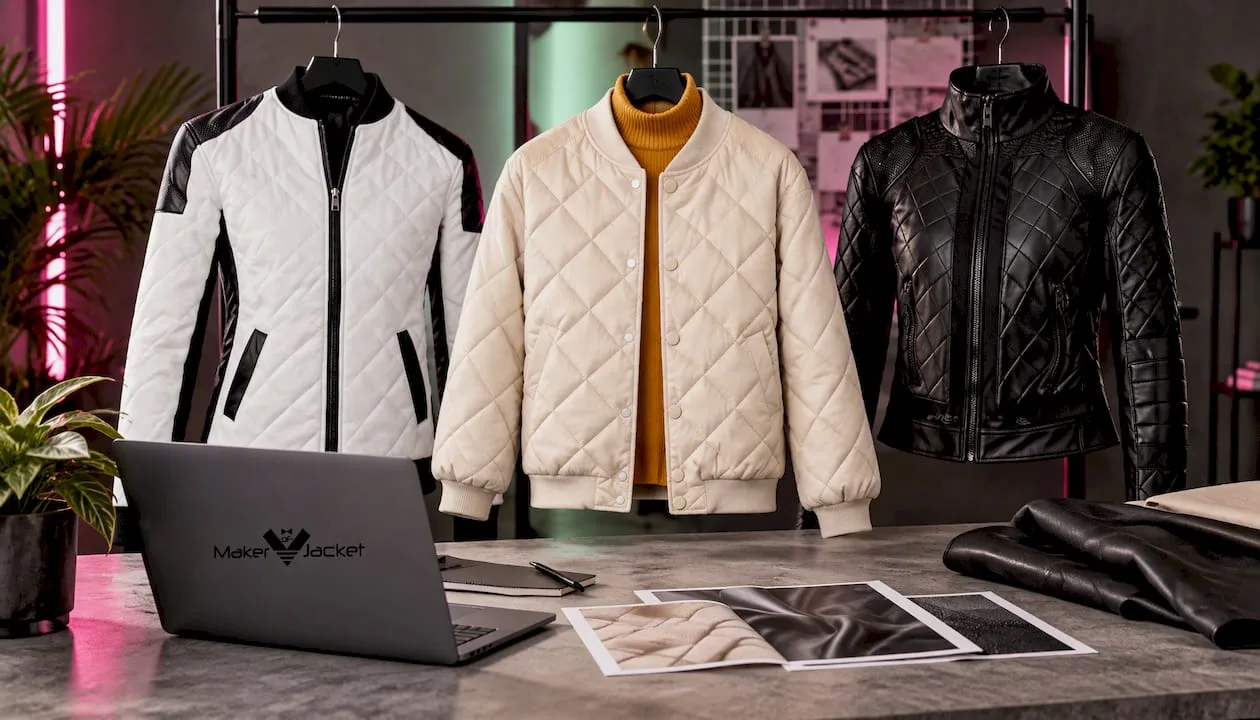
Browse the full range on our custom order page or start with a ready-made piece like the two-tone quilted leather jacket. We offer worldwide free shipping and 24/5 support if you want help deciding.
FAQ
Is quilted lining warmer than satin?
Yes, in most cases. The fill between the layers of a quilted lining traps air, which is why it is the warmest common lining for coats. A dense, heavyweight satin can still be quite warm, but a thin satin will not match a quilted lining in cold weather.
What is the best lining for a leather jacket?
It depends on where and how you wear it. Quilted suits cold climates and winter, satin suits sleek fashion jackets and milder weather, and quilted satin covers the middle. For a jacket you wear much of the year, a lining that balances warmth with breathability is usually the most practical.
Is satin lining durable?
It depends on the fiber. According to the University of Kentucky’s lining guide, polyester is durable and wrinkle-resistant, while acetate is less durable and rayon is less durable than polyester. Check the label for fiber content, and remember that a dense weave helps.
Can I wash a satin or quilted lining?
Leather jackets are generally not washed at home, so treat the lining as part of the whole garment. The fiber sets the rules: acetate needs dry cleaning, silk is generally dry cleaned, and polyester is generally washable but can also be dry cleaned. Quilted fill can also lose loft when washed or dry cleaned, so follow the garment’s care label.
Does a quilted lining make a jacket look bulky?
It can add volume, especially with thick fill. A thin quilted layer with a smooth satin face keeps the bulk down, and choosing the right size for your usual layers helps the jacket sit well.
Sources
- University of Kentucky, lining techniques guide
- Threads magazine, The Scoop on Linings
- 3M, Garment Construction Guidelines and Care Instructions
- New Mexico State University, Selecting Interfacings, Underlinings, and Linings


