

How to Spot Fake Leather: Master Identification Techniques


Fake leather products are everywhere and knowing the difference can save you a lot of trouble. Here is the eye-opener. More than 60 percent of so-called ‘leather’ goods on global markets are actually made from synthetic materials. Most people rely on looks alone, but that is exactly where even experts get fooled. The real secrets lie in what you touch, smell, and even hear when you handle the material.
Table of Contents
- Step 1: Prepare Your Senses for Inspection
- Step 2: Examine the Texture and Finish
- Step 3: Test for Smell and Breathability
- Step 4: Check for Flexibility and Durability
- Step 5: Inspect the Interior and Tags
- Step 6: Verify with a Water Test
Quick Summary
| Key Point | Explanation |
|---|---|
| 1. Understand sensory indicators for authenticity | Engage touch, smell, and sight to identify genuine leather. Authentic materials have warm textures and distinctive scents that help distinguish them from fakes. |
| 2. Examine texture and finish closely | Real leather showcases natural, irregular textures and patterns. Inspect for unique imperfections and a soft, resilient feel to confirm authenticity. |
| 3. Test for breathability and temperature response | Authentic leather permits air and moisture flow, warming to body temperature. A non-breathable, cold response indicates synthetic materials. |
| 4. Check labels for authenticity markers | Look for clear labels stating “genuine leather” or “full grain leather.” Watch for terms like “leather-like” which suggest synthetic origins. |
| 5. Perform a water test to verify material | Genuine leather absorbs water, causing darkening, while synthetic leather repels it. A simple drop test reveals clear material differences. |
Step 1: Prepare Your Senses for Inspection
Understanding how to spot fake leather starts with developing a keen sensory awareness that transforms you from an average consumer into a leather authentication expert. Your hands, eyes, and even nose become powerful investigative tools in determining leather authenticity.
Leather identification requires a multisensory approach that goes beyond casual visual inspection. Real leather has unique characteristics that synthetic materials struggle to replicate. When you begin your examination, create a calm environment with good lighting where you can focus entirely on the material’s nuanced details.
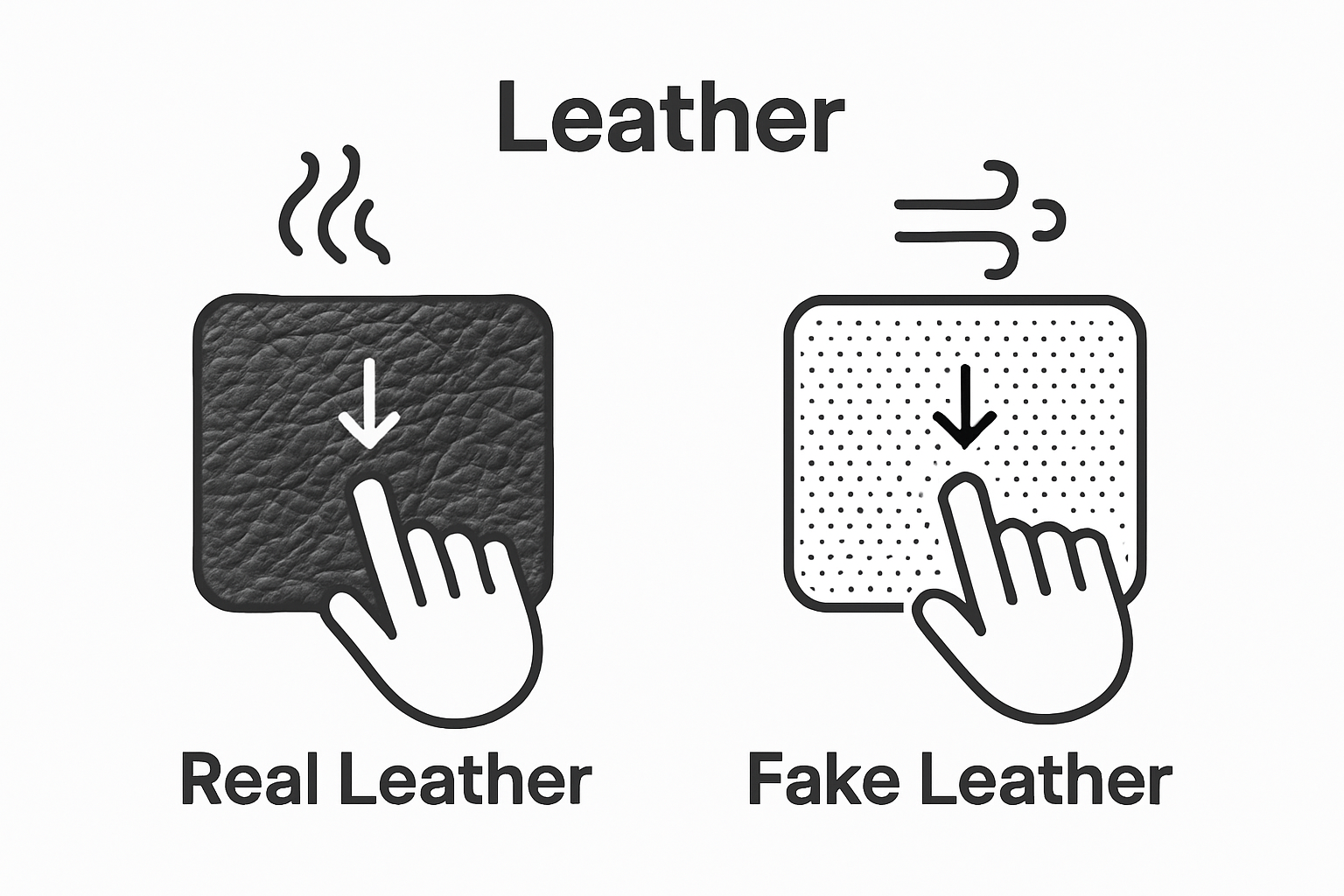
Start by gently touching the material. Authentic leather feels warm and has a natural, slightly uneven texture with subtle variations. Run your fingers across the surface, paying attention to how it responds. Genuine leather will have a soft yet firm feel, showing slight imperfections and natural grain patterns. In contrast, fake leather often feels unnaturally smooth, cold, and uniform.
Next, engage your sense of smell. According to Leather Naturally, authentic leather emits a distinctive, rich earthy scent that synthetic materials cannot consistently reproduce. Take a careful sniff near the material. A genuine leather item will have a deep, organic smell reminiscent of hide and natural processing. Fake leather typically produces a chemical or plastic-like odor that feels artificial and sharp.
Visual examination requires careful observation. Look closely at the surface texture, noting whether the patterns appear natural and irregular or mechanical and perfectly uniform. Genuine leather will have slight variations in color and grain, while fake leather often looks too perfect, with repeated patterns that seem machine-generated.
Finally, test the material’s flexibility. Gently bend and manipulate the leather. Authentic leather will show soft, natural creases that conform to movement, whereas synthetic materials tend to crack, resist bending, or maintain a rigid structure. These sensory checks form the foundation of reliable leather authentication, preparing you for more detailed investigations in subsequent steps.
Step 2: Examine the Texture and Finish
Texture and finish are critical markers that separate authentic leather from synthetic imitations. Building upon your initial sensory assessment, this step transforms you into a detailed leather detective, capable of discerning subtle manufacturing nuances that reveal a material’s true nature.
Begin by carefully examining the surface under good lighting. Real leather displays natural, irregular texture patterns that reflect its organic origins. These patterns should look slightly uneven, with gentle variations in grain and depth that mimic an animal’s actual skin. Authentic leather will show unique imperfections that tell a story of its natural creation.
According to research from the Journal of Leather Chemists, the surface characteristics provide crucial authentication signals. Focus on identifying hair follicle patterns characteristic of genuine leather. These microscopic details are challenging to replicate artificially and often reveal the leather’s true origin. Look for subtle variations in pore density and arrangement, which differ between animal species.
Run your fingers across the surface, paying attention to how the material responds to pressure. Genuine leather should feel soft yet resilient, with a natural give that synthetic materials cannot match. Fake leather tends to have an unnaturally uniform texture that feels rigid or plasticky. When you press your finger against the surface, authentic leather will show soft, natural creasing that springs back gently, while counterfeit materials might crack or maintain an artificial stiffness.
Inspect the edges and corners carefully. Authentic leather will reveal layered, organic edges with subtle fiber variations. Synthetic leather often has perfectly uniform edges that look machine-cut and lack the complex stratification of natural hide. Check for backing materials or unnatural seams that might indicate a manufactured imitation.
Additionally, observe how light interacts with the surface. Real leather has a nuanced reflection that changes subtly with movement, creating depth and character. Fake leather frequently appears flat and unnaturally glossy, reflecting light in a uniform, almost plastic-like manner. By understanding these textural distinctions, you transform from a casual observer into a confident leather authentication expert.
Step 3: Test for Smell and Breathability
Authentic leather carries a distinctive sensory signature that synthetic materials struggle to replicate. This step involves using your most nuanced senses to unveil the true nature of the material, transforming you into a leather authentication expert who understands the subtle differences between genuine and fake leather.
Smell is your first powerful investigative tool. Genuine leather emits a rich, organic aroma that speaks to its natural origins. Bring the material close and take a deep breath. Authentic leather will produce a complex scent that combines earthy, slightly musky undertones with a warm, natural fragrance. This smell evolves from the animal hide’s inherent characteristics and the traditional tanning processes. In contrast, fake leather typically releases a sharp, chemical odor reminiscent of plastic or synthetic manufacturing.
According to Ohio State University Extension, breathability serves as another critical authentication method. Real leather possesses a natural porousness that allows air and moisture to pass through its fibers. To test this, perform a simple breathability check. Hold the material close to your mouth and exhale gently across its surface. Genuine leather will allow air to pass through with minimal resistance, creating a subtle, warm sensation. Synthetic leather, by comparison, will feel like blowing against a plastic surface – rigid, unyielding, and blocking airflow completely.
Temperature interaction provides another revealing test. Authentic leather responds dynamically to body heat. When you hold the material against your skin, real leather will gradually warm and conform to your body temperature. Synthetic leather remains consistently cold and fails to adapt, maintaining an artificial, uniform temperature. This temperature responsiveness stems from leather’s organic cellular structure, which synthetic materials cannot effectively mimic.
Conducting these tests requires patience and a systematic approach. Move slowly, engage multiple senses, and trust your intuitive responses. The smell and breathability tests are not about finding absolute perfection but understanding the nuanced characteristics that distinguish genuine leather from its artificial counterparts. By developing these sensory skills, you transform from a casual observer into a confident leather authentication expert capable of making informed material judgments.
Step 4: Check for Flexibility and Durability
Authentic leather tells a story through its ability to bend, stretch, and withstand wear while maintaining its structural integrity. This step transforms you into a detective of material resilience, revealing the true character of leather through strategic flexibility tests.
Begin with a gentle bending test. Hold the material between your hands and carefully fold it, observing how it responds to movement. Genuine leather will create soft, natural creases that demonstrate suppleness and life. When you release the material, these creases should remain subtly visible but not permanently distorted. Synthetic leather, by contrast, will either resist bending completely or crack unnaturally, revealing its artificial composition.
According to the WALSALL LEATHER Skills Centre, authentic leather exhibits a dynamic relationship with movement. Press your thumb against the material and observe its response. Real leather will show a gentle give, creating subtle wrinkles that spring back to their original shape. These microchanges demonstrate the material’s living quality. Fake leather typically feels rigid and will either resist pressure entirely or maintain an unnatural, uniform appearance.
Durability testing requires a more deliberate approach. Examine areas of potential stress like seams, corners, and frequently handled sections. Authentic leather develops a rich patina over time, showing graceful signs of wear that enhance its character. Run your fingers along these areas, feeling for consistent strength and subtle texture variations. Synthetic leather often shows immediate signs of wear through peeling, cracking, or a uniform breakdown that lacks the nuanced aging of genuine leather.
Consider performing a controlled stretch test by gently pulling the material at different angles. Genuine leather will have a modest, controlled stretch that maintains its overall structure. Watch for how the material responds – authentic leather moves with a living, organic quality that synthetic materials cannot replicate. The stretch should be minimal and accompanied by subtle texture changes that reflect the material’s natural origins.
Remember that flexibility and durability are not about perfection but about understanding the material’s inherent characteristics. By developing these observational skills, you transform from a casual observer into a confident leather authentication expert who can distinguish genuine craftsmanship from artificial imitation.
To help you quickly review all the methods for authenticating leather, here is a summary table of the main steps, what each involves, and what you should look for or expect from genuine versus fake leather.
| Step | What to Do | What to Expect with Real Leather | What Youll See with Fake Leather |
|---|---|---|---|
| Sensory Inspection | Feel, smell, and visually inspect material | Warm, textured, with unique imperfections; earthy scent | Cold, overly smooth or uniform; chemical or plastic smell |
| Texture & Finish | Examine surface, edges, and light reflection | Irregular patterns, natural grain, subtle imperfections, layered edges | Repeating grain patterns, flat or overly glossy, perfectly cut edges |
| Smell & Breathability | Sniff for scent, test airflow, and temperature | Rich, organic smell; breathes and adapts to body warmth | Sharp or plastic odor; blocks air, remains cold |
| Flexibility & Durability | Bend, stretch, and check worn areas | Forms natural creases, develops a patina over time | Cracks easily, peels, loses color uniformly |
| Interior & Tags | Examine labels and interior seams | Clear tag language (e.g., “Genuine Leather”), uneven backing or fiber layers | Vague or synthetic labels, smooth or machine-like interior |
| Water Test | Place drop of water, observe materials reaction | Absorbs water, temporary darkening | Water sits on surface, does not absorb |
Step 5: Inspect the Interior and Tags
Authentic leather reveals its true nature not just through external appearance, but through careful examination of its interior construction and manufacturer’s tags. This step transforms you into a meticulous investigator, uncovering the hidden details that distinguish genuine leather from sophisticated imitations.
Labels are your first critical information source. Carefully examine all tags and inner labels, looking for specific language that indicates authenticity. Genuine leather products typically feature precise terminology like “100% Leather,” “Full Grain Leather,” or “Genuine Leather.” Be wary of vague descriptions or labels that suggest synthetic materials. Manufacturers of authentic leather take pride in clearly stating their material’s origin and quality.
According to Leather Naturally, understanding label terminology is crucial. Watch for specific red flags on tags: terms like “leather-like,” “pleather,” or mentions of materials such as PVC or polyurethane indicate synthetic production. Authentic leather tags often include additional details about the leather’s grade, tanning process, or animal origin.
Inspect the interior seams and backing with forensic attention. Genuine leather displays natural imperfections and variations in its inner layers. The backing should feel substantial and organic, with subtle fiber variations visible when you look closely. Synthetic leather often has a uniform, perfectly smooth interior that looks too manufactured. Run your fingers along interior seams – authentic leather will show slight irregularities and natural fiber transitions.
Pay special attention to the material’s edges and internal construction. Genuine leather typically has rough, slightly uneven edges that reflect its natural origins. The interior layers should show a complex, multi-dimensional structure with visible fiber interactions. Fake leather tends to have perfectly sealed, uniform edges that look machine-cut and lack the nuanced complexity of real hide.
Remember that interior inspection is about understanding the material’s story. Each small detail provides a clue about its authenticity. By developing these observational skills, you transition from a casual consumer to a confident leather authentication expert who can discern the subtle differences between genuine craftsmanship and sophisticated imitation.
Step 6: Verify with a Water Test
The water test represents the ultimate authentication method for leather, transforming you from a casual observer into a forensic material expert. This simple yet powerful technique reveals the fundamental differences between genuine leather and synthetic imitations through their unique moisture interactions.
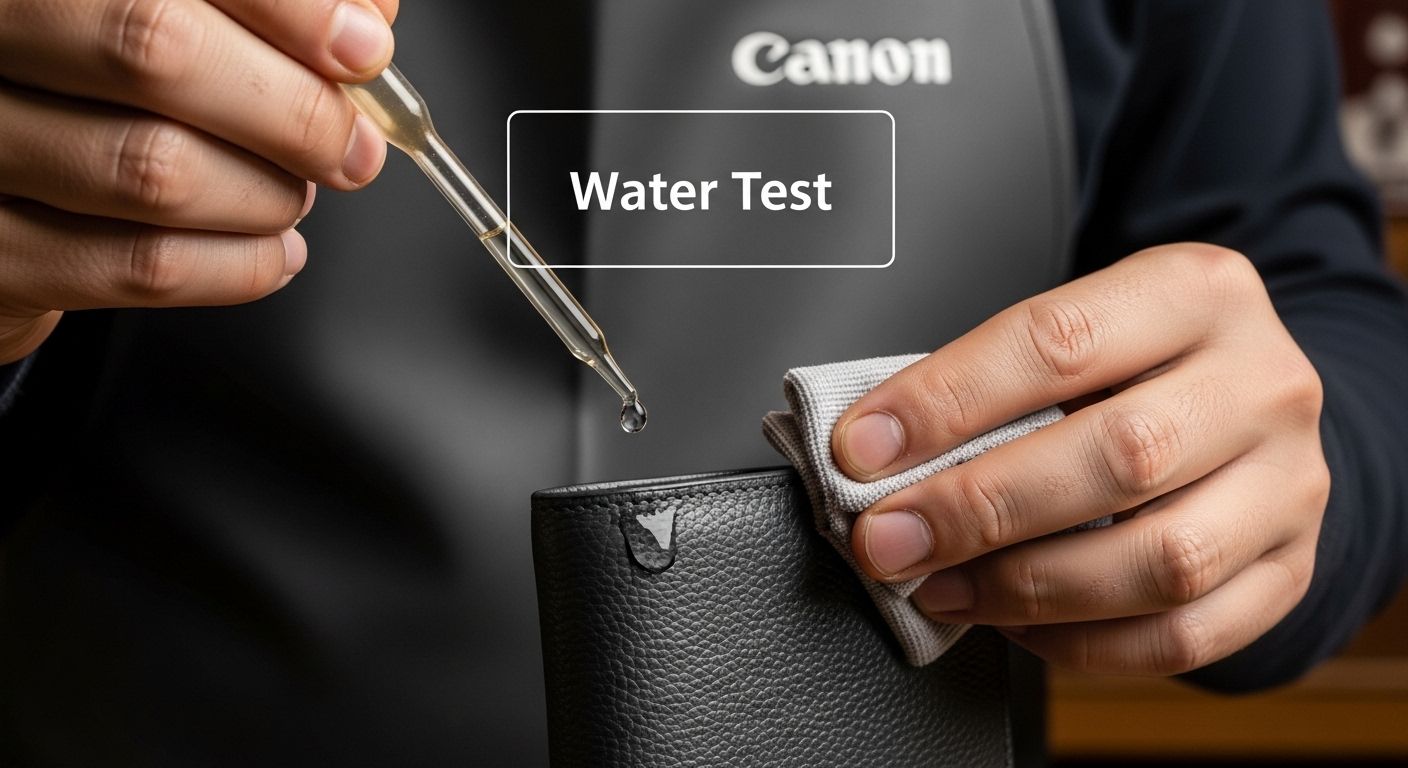
Prepare your testing environment carefully. Select a small, inconspicuous area of the material, preferably in a corner or hidden section where potential water marking won’t damage the item’s appearance. Have a clean, soft white cloth or paper towel ready to help you observe the water’s behavior. The goal is not to soak the material but to understand its fundamental moisture response.
According to the WALSALL LEATHER Skills Centre, genuine leather demonstrates a distinctive absorption characteristic. Place a single drop of water on the surface and observe its behavior meticulously. Authentic leather will slowly absorb the water, causing a temporary darkening of the material. The water should gradually disappear into the leather’s porous surface, leaving behind a subtle, slightly darker mark that will eventually return to its original color.
Synthetic leather, by contrast, will react dramatically differently. Fake leather surfaces typically cause water to bead up and sit on top of the material, refusing to penetrate. If the water remains perfectly spherical and does not get absorbed after several seconds, you are likely dealing with a synthetic material. Watch how the water interacts – genuine leather will show a soft, gradual absorption, while fake leather maintains a rigid, repellent surface.
Time your observation carefully. Allow the water droplet to rest for approximately 20 to 30 seconds, giving enough time to see the material’s true response. If you’re testing a colored leather item, be extra cautious and test in an inconspicuous area to prevent potential staining. The water test is not just about moisture absorption but about understanding the material’s fundamental cellular structure.
Remember that this test is one piece of a comprehensive authentication process. No single method provides absolute certainty, but combined with previous sensory and visual inspections, the water test becomes a powerful tool in your leather identification arsenal. By developing these observational skills, you transform from a casual consumer into a confident leather authentication expert who understands the nuanced differences between genuine craftsmanship and sophisticated imitation.
Here is a handy checklist table to follow during your leather authentication process. Use this table for quick verification as you examine a leather item step by step.
| Step | What to Check | Pass/Fail Indicator |
|---|---|---|
| Texture | Feel for uneven, warm texture | Pass if not perfectly smooth or cold |
| Smell | Detect rich, earthy aroma | Pass if NOT chemical/plastic odor |
| Visual | Look for natural grain & imperfections | Pass if not too uniform or regular |
| Flexibility | Bend and watch for natural creases | Pass if it doesnt crack or feel rigid |
| Interior/Tags | Inspect labels and seam structures | Pass if clear language, natural backing |
| Water Test | Drop water, watch absorption | Pass if absorbed, not beaded |
Trust Only What’s Authentic for Your Next Leather Jacket
You just learned how to spot fake leather by developing skills in sensory inspection and authentic material testing. But the fear of accidentally paying for a synthetic imitation can still hold you back from enjoying genuine style and long-lasting value. The frustration is real. Premium leather should not just look good – it should feel right and last for years, just as described in the article’s deep dive into grain, scent, flexibility, and durability.
Explore the Maker of Jacket’s collection where every piece is crafted with attention to authenticity and detail. Our curated range guarantees the premium quality you expect and gives you complete confidence with full product transparency and robust customer reviews.
Ready to experience the difference that true leather makes? Browse our leather pants collection or customize a jacket that showcases genuine craftsmanship and quality. Shop with absolute trust at Maker of Jacket and get a jacket that passes every authenticity test. Order now and take the guesswork out of your next purchase.
Frequently Asked Questions
How can I tell if a leather item is real or fake?
To identify if leather is real, engage your senses by touching the material for texture, smelling for an earthy scent, and visually inspecting for natural imperfections. Authentic leather feels warm, has unique grain patterns, and emits a distinct smell, unlike synthetic alternatives.
What is the water test for leather authentication?
The water test involves placing a drop of water on the leather surface. Genuine leather will absorb the water, causing a temporary darkening, while fake leather will bead up and not absorb the liquid. This test helps reveal the material’s authenticity.
Why is smell important in identifying real leather?
Smell is critical because genuine leather has a rich, organic scent derived from animal hide, whereas fake leather often has a sharp, chemical odor. Engaging your sense of smell can provide clear indicators of the material’s authenticity.
How can I assess the durability of leather?
To assess durability, perform a bending test and inspect areas of potential stress, such as seams and corners. Genuine leather should flex naturally and develop a rich patina over time, while synthetic materials often show immediate signs of wear, such as cracking or peeling.


