

Top tips for customizing your leather jacket with style


Finding the perfect way to personalize your leather jacket can feel overwhelming with so many customization methods available today. Whether you’re a motorcycle enthusiast looking to add meaningful patches or a fashion-forward individual seeking subtle embossed details, the right approach transforms your jacket from ordinary to extraordinary. This guide breaks down proven tips for jacket customization techniques, helping you choose methods that align with your personal style while maintaining jacket quality and durability for years to come.
Table of Contents
- Key takeaways
- Establishing your customization criteria
- Popular customization techniques and their unique benefits
- Comparing customization methods: pros, cons, and when to use each
- Making your jacket uniquely yours: combining techniques and final tips
- Discover custom jackets tailored to your style
- Frequently asked questions
Key Takeaways
| Point | Details |
|---|---|
| Customization criteria | Start by defining your style goals, how you will wear the jacket, and any constraints to guide method choice. |
| Material compatibility | Test your chosen technique on a hidden area and consider how each leather type responds to embossing, painting, embroidery, and patches. |
| Eco friendly options | Eco friendly paints and materials offer vibrant colors with fewer fumes and maintain breathability. |
| Technique style pairing | Choose embossing, painting, or patches in a way that aligns with your style and the jacket fabric to balance appearance and durability. |
Establishing your customization criteria
Successful jacket personalization starts with understanding your goals and constraints. Before selecting techniques, consider what you want your customized jacket to communicate about your personality and how you’ll wear it.
Start by defining your style goals. Do you prefer understated elegance or bold statements? Subtle customizations like blind embossing or small embroidered initials work beautifully for professional settings, while hand-painted graphics or large patches suit casual, expressive styles. Your lifestyle matters too. Daily riders need durable modifications that withstand weather and abrasion, while fashion enthusiasts might prioritize visual impact over extreme durability.
Material compatibility cannot be overlooked. Different leather types respond uniquely to customization methods. Full-grain cowhide handles embossing and painting exceptionally well due to its thickness and durability. Lambskin, being softer and more delicate, works better with lightweight embroidery or carefully applied patches. Before committing to any technique, test on a hidden area or scrap piece to ensure the leather accepts the modification without damage.
Sustainability increasingly influences customization choices. Eco-friendly paints now available for personalization offer vibrant colors without harsh chemicals, appealing to environmentally conscious consumers. These water-based alternatives reduce toxic fumes during application and maintain leather breathability better than traditional solvent-based options.
When establishing your criteria, consider these key factors:
- Budget constraints for materials and professional services
- Time investment for DIY versus professional customization
- Permanence preferences, whether you want reversible or lasting changes
- Maintenance requirements for keeping customizations looking fresh
- Skill level needed for different techniques
Creating a decision framework based on these criteria helps narrow options quickly. For example, if you want bold graphics but lack painting skills, professional airbrushing or high-quality patches might suit you better than attempting freehand designs. If sustainability ranks high, prioritize customizing jackets for unique style using eco-conscious materials and methods.
Popular customization techniques and their unique benefits
Understanding available techniques empowers you to select methods that best express your vision while working within your jacket’s material constraints.
Embossing
Embossing creates raised or recessed designs through heat and pressure, offering sophisticated personalization without adding color. Blind embossing produces subtle texture by pressing designs into leather, creating shadows that catch light beautifully. Foil embossing adds metallic accents in gold, silver, or copper for eye-catching details. Debossing presses designs below the leather surface, creating recessed patterns perfect for logos or initials. This leather embossing personalization technique works exceptionally well on thicker leathers and provides permanent, wear-resistant customization.
Painting
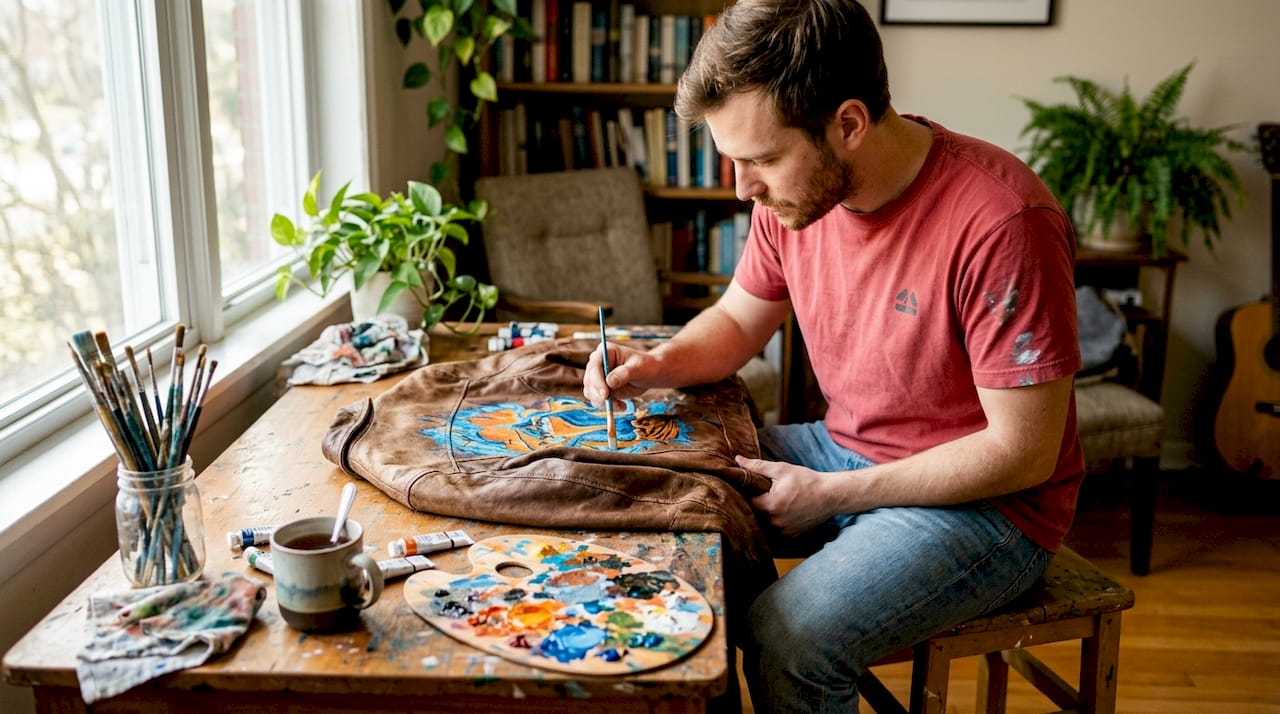
Painting opens limitless creative possibilities for bold, colorful designs. Leather paints come in acrylics, oils, and specialized formulas designed to flex with the material without cracking. You can create intricate murals, geometric patterns, or replicate favorite artwork directly on your jacket. Modern eco-friendly paints deliver vibrant results while minimizing environmental impact, making them increasingly popular among conscious consumers. Painting works best on smooth leather surfaces and requires proper preparation including cleaning and sometimes priming.
Embroidery
Embroidery adds dimensional texture through stitched designs using colored threads. This durable technique withstands washing and wear better than many surface applications. You can incorporate names, logos, symbols, or decorative patterns that complement your jacket’s style. Machine jacket embroidery techniques produce consistent, professional results, while hand embroidery offers artisanal character and flexibility for unique placements. Embroidery works well on most leather weights but requires careful tension adjustment to avoid puckering.
Patches
Patches provide versatile, interchangeable customization perfect for evolving styles. Iron-on patches offer quick application, though sewing provides superior durability for leather. Patches come in countless designs from vintage motorcycles to contemporary graphics, allowing you to update your look seasonally or express changing interests. This method proves ideal for renters or those who enjoy frequent style changes since patches can be removed or replaced without permanently altering the jacket.
Pro Tip: Combine techniques strategically by starting with permanent methods like embossing or embroidery as your foundation, then adding removable elements like patches for flexibility. This approach creates depth while preserving your ability to refresh the look over time.
Each jacket personalization method offers distinct advantages depending on your aesthetic preferences, skill level, and intended jacket use.
Comparing customization methods: pros, cons, and when to use each
Direct comparison helps you evaluate which techniques align best with your specific needs and jacket characteristics.
| Method | Best For | Durability | Cost | Reversibility |
|---|---|---|---|---|
| Embossing | Subtle texture, logos | Excellent | Medium | Permanent |
| Painting | Bold graphics, color | Good with care | Low to Medium | Permanent |
| Embroidery | Detailed designs, text | Excellent | Medium to High | Difficult |
| Patches | Quick updates, themes | Good if sewn | Low | Easy |
Embossing
Embossing excels for professional or understated looks. Its permanence means your design remains crisp for decades without fading or peeling. However, embossing limits you to texture and metallic accents rather than full color palettes. Best used on thicker leathers like cowhide, embossing works beautifully for monograms, brand logos, or geometric patterns. The technique requires specialized equipment, making professional services often necessary for quality results.
Painting
Painting delivers unmatched creative freedom and color variety. You can achieve photorealistic images, abstract art, or graphic designs limited only by artistic skill. Embossing and eco-friendly paints create personalization that balances aesthetics and sustainability. Painted designs require protective sealants and careful maintenance to prevent cracking or fading. This method suits artistic individuals comfortable with brushwork or those willing to invest in professional airbrush services. Painting works best on smooth, lighter-colored leathers where colors appear vibrant.
Embroidery
Embroidery provides exceptional durability and tactile interest. Thread colors remain vivid indefinitely, and stitched designs withstand abrasion better than surface applications. Embroidery adds slight thickness, which some find appealing for dimensional effect. The technique works wonderfully for names, small logos, or decorative accents on collars, pockets, or backs. Removing embroidery leaves visible holes, making it essentially permanent. Professional embroidery services ensure clean execution, especially for complex designs or small text.
Patches
Patches offer maximum flexibility and lowest commitment. You can swap designs seasonally, test different looks, or remove them entirely when selling or gifting your jacket. Quality sewn patches last years with proper care, while iron-on versions provide temporary solutions. Patches suit casual styles and work particularly well for motorcycle club affiliations, band logos, or travel memories. The main drawback involves visible stitching or adhesive residue if removed.
Practical Considerations
When choosing methods, consider these practical factors:
- Jacket color affects painted design visibility and embroidery contrast
- Leather thickness determines embossing depth and embroidery feasibility
- Lifestyle wear patterns influence which durable methods suit you best
- Budget flexibility guides whether DIY or professional services make sense
- Personal skill level realistically assesses what you can execute well
Pro Tip: Request samples or portfolio examples from professional customizers before committing. Seeing their work on similar leather types helps ensure your vision translates successfully to your specific jacket.
For comprehensive guidance on various approaches, explore resources on customizing leather jackets that detail material-specific considerations.
Making your jacket uniquely yours: combining techniques and final tips
Mastering individual methods sets the foundation, but strategic combination creates truly distinctive results that reflect your multifaceted personality.
Layering Techniques for Depth
Layering techniques adds visual depth and textural interest. Combine embossing with embroidery by embossing a large background pattern, then adding embroidered details in contrasting colors. This approach creates sophisticated dimension without overwhelming the design. Alternatively, use painted backgrounds with embroidered outlines to make graphics pop. The key lies in balancing techniques so each element complements rather than competes.
Eco-Friendly Customization
Sustainable customization continues gaining importance. Using eco-friendly paints balances boldness with environmental responsibility, reducing harmful chemicals while maintaining vibrant results. Pair these paints with recycled thread for embroidery or upcycled fabric patches to minimize your customization’s ecological footprint. Many conscious consumers find this approach aligns their personal style with their values.
Maintenance for Longevity
Proper maintenance preserves your customization investment. Clean painted areas gently with damp cloths rather than harsh chemicals that strip color. Condition leather regularly to prevent cracking around embroidered sections. Store your jacket on padded hangers to maintain shape and prevent patch distortion. For detailed preservation strategies, consult comprehensive leather care tips that address customized pieces specifically.
Placement Strategy
Placement strategy significantly impacts overall aesthetic. Consider your jacket’s natural focal points like shoulders, back panels, or chest areas. Asymmetrical designs create modern, edgy looks, while symmetrical placements feel more traditional and balanced. Think about how designs appear when the jacket is worn versus hung. Back designs showcase when walking away, while chest or sleeve customizations remain visible during conversations.
Scale, Proportion, and Color
Experiment with scale and proportion to achieve professional results:
- Large back panels suit bold graphics or detailed scenes
- Small chest placements work well for logos or subtle accents
- Sleeve designs add interest without dominating the overall look
- Collar customizations create unexpected detail for close interactions
- Pocket embellishments provide functional focal points
Pro Tip: Document your customization journey with photos at each stage. This creates a personal story behind your jacket and helps you refine techniques for future projects or communicate preferences clearly to professional customizers.
Discover custom jackets tailored to your style
While DIY customization offers creative satisfaction, professional services deliver expert craftsmanship and access to specialized techniques that transform your vision into wearable art.
Exploring custom jacket ordering connects you with experienced artisans who understand leather properties and customization best practices. These professionals assess your design ideas, recommend suitable techniques for your chosen leather type, and execute modifications with precision equipment and materials. The result is a polished, durable customization that withstands daily wear while maintaining visual impact.
The customization journey typically begins with consultation, where you share inspiration images, describe your style goals, and discuss budget parameters. Skilled customizers translate your vision into technical specifications, advising on placement, sizing, and technique combinations that work harmoniously. They handle complex methods like multi-color embroidery or detailed airbrushing that require specialized skills and equipment beyond typical DIY capabilities.
Maintaining your investment requires ongoing attention. Professional customizers often provide care instructions specific to the techniques used on your jacket. Following these guidelines, along with general leather care guidance, ensures your customized piece remains vibrant and structurally sound for years. Regular conditioning, proper storage, and prompt stain treatment preserve both the base leather and applied customizations.
Frequently asked questions
What are the best materials for customizing leather jackets?
Full-grain cowhide offers excellent durability and accepts most customization techniques including embossing, painting, and embroidery without special preparation. Lambskin works beautifully for lightweight embroidery and carefully applied patches but requires gentler handling due to its softer texture. Top-grain leather provides a middle ground, accepting most techniques while remaining more affordable than full-grain options.
How durable are painted designs on leather jackets?
Painted designs last years when executed with quality leather paints and proper sealants, maintaining vibrancy through regular wear. Eco-friendly paints provide durable options for leather jacket personalization while minimizing environmental impact. Durability improves significantly with regular conditioning and avoiding prolonged sun exposure that fades colors. Properly sealed painted designs withstand light rain and normal abrasion without significant degradation.
Can I combine embroidery and embossing on the same jacket?
Yes, combining embroidery and embossing creates sophisticated, multi-dimensional designs that showcase both texture and color. Plan placement carefully so embossed areas provide subtle background interest while embroidered elements serve as focal points. This combination works particularly well on thicker leathers that handle both techniques without compromising structural integrity. Review combining customization techniques for detailed planning strategies.
How do I remove patches without damaging my leather jacket?
Sewn patches require careful seam removal using a seam ripper, working slowly to avoid tearing leather fibers. After removing stitches, small holes remain but typically close with gentle conditioning and wearing. Iron-on patches lift more easily with low heat from a hairdryer to soften adhesive, then gentle peeling from one corner. Any remaining adhesive residue removes with leather-safe adhesive remover or rubbing alcohol applied sparingly with a soft cloth.
What customization method works best for motorcycle riders?
Embroidery and sewn patches offer superior durability for riders facing wind, weather, and frequent movement. These methods withstand abrasion better than painted designs, which may crack in high-flex areas like elbows and shoulders. Embossing works excellently for subtle personalization that never fades or peels. Many riders combine embroidered club patches with embossed personal details for a balanced approach that reflects both group affiliation and individual identity.
Recommended
- How to Customize Leather Jacket for a Unique Look – Maker of Jacket
- How to Personalize Motorcycle Jackets for Unique Style – Maker of Jacket
- Custom Leather Jacket Guide: Design, Order, and Personalize – Maker of Jacket
- 7 Smart Ways to Style Leather Jackets for Every Look – Maker of Jacket
- 10 κορυφαία tips για shopping που απογειώνουν το στιλ σου – Judah Club


