

How Armor in Jackets Combines Style and Protection


For years, riders believed they had to choose between looking good and staying safe. Bulky armor meant sacrificing style, while sleek jackets offered little protection. That trade-off is over. Modern armor innovations let you customize jackets that deliver both fashion and serious safety. This guide explains the crucial role of armor in motorcycle jackets, how armor works, the types and certifications that matter, real-world performance factors, design options for personalization, and how to pick the right jacket for your riding style and look.
Table of Contents
- What is armor in jackets and why does it matter?
- Types of armor: Materials, levels, and certifications explained
- How performance and placement affect real-world protection
- Customizable armor: Balancing style, comfort, and safety
- How to choose the right armored jacket for you
- Discover customizable armored jackets for your next ride
- Frequently asked questions
Key Takeaways
| Point | Details |
|---|---|
| Modern armor technology | Today’s armor blends flexibility, high protection, and style, removing the old trade-off. |
| Understanding CE levels | CE Level 2 offers the highest protection, especially needed for highway riding. |
| Fit and positioning | Armor must stay securely in place to deliver real protective benefits in real-world spills. |
| Customization options | You can now tailor your jacket for both unique style and top-tier safety, with removable armor and design features. |
| Smart jacket selection | Consider riding habits, fit, certifications, and customizability for the best combination of safety and fashion. |
What is armor in jackets and why does it matter?
Armor in motorcycle jackets is protective padding engineered from viscoelastic materials that absorb and disperse crash forces. When impact occurs, these materials reduce blunt trauma to shoulders, elbows, and back. Modern armor like D3O and SAS-TEC remains flexible during normal wear but hardens instantly on impact, offering comfort without compromising protection.
The science is clear: armored gear reduces upper-body injuries by 63% in crash simulations. This protection isn’t reserved for track riders. City commuters, highway cruisers, and weekend riders all benefit from quality armor. A low-speed urban crash can cause serious shoulder or elbow damage without proper padding.
Pro Tip: Test armor flexibility by pressing it with your palm. Quality armor should feel soft but spring back quickly, indicating it will harden effectively on impact.
Think of armor as your personal crash engineer. It manages energy transfer during accidents, spreading force across a wider area instead of concentrating it on bone and tissue. This engineering principle transforms a potentially devastating impact into a survivable one.
“Modern armor technology has revolutionized rider safety by making protection invisible to the eye but critical in crashes.”
Understanding motorcycle jacket safety features helps you make informed choices. Armor placement, material quality, and certification levels all contribute to how well a jacket protects you. The key is knowing what to look for and how different options match your riding habits and style preferences.
Types of armor: Materials, levels, and certifications explained
Armor materials vary significantly in protection, comfort, and durability. D3O leads the premium category with its molecular structure that flows freely until impact, then locks together to absorb force. SAS-TEC offers exceptional durability in thinner profiles, making it ideal for slim-fit jackets. Standard foam provides budget protection but lacks the advanced impact response of modern materials.
CE EN 1621 certification tests armor by dropping a 5kg striker and measuring transmitted force. Level 1 armor transmits up to 35kN of force and suits city riding. Level 2 armor transmits maximum 20kN, providing superior protection for highway speeds and aggressive riding.
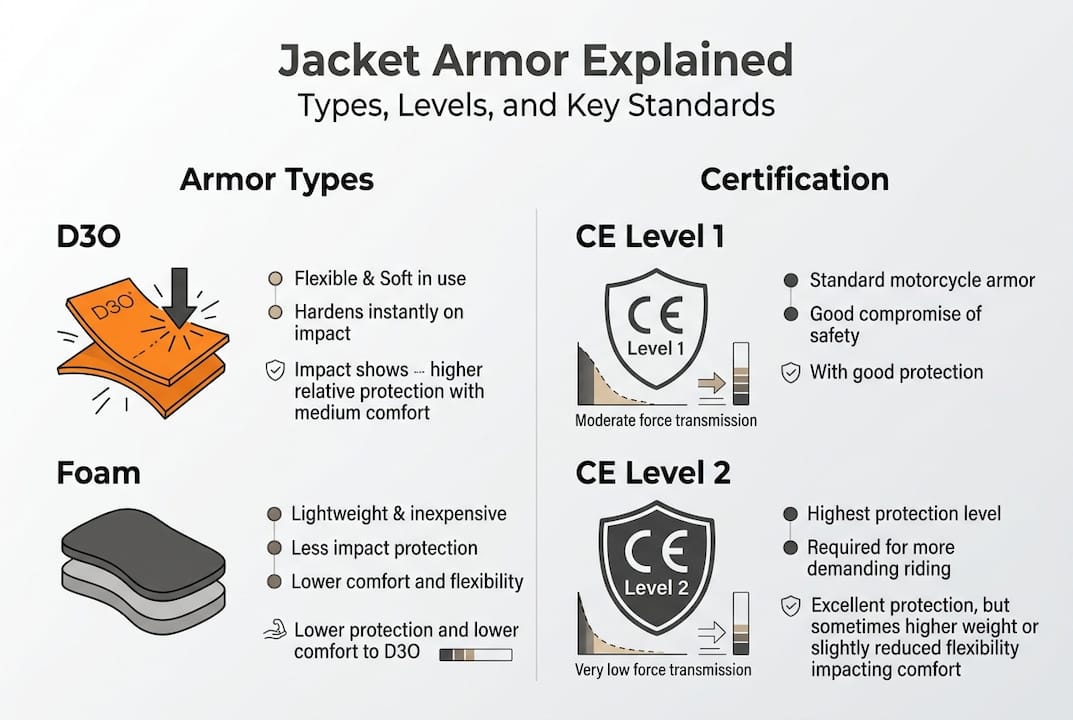
| Material | Protection Level | Weight | Comfort | Typical CE Level | Lifespan |
|---|---|---|---|---|---|
| D3O | Excellent | Light | High | Level 1-2 | 5-7 years |
| SAS-TEC | Excellent | Very Light | Very High | Level 2 | 7-10 years |
| Standard Foam | Good | Medium | Medium | Level 1 | 3-5 years |
| Hard Shell | Very Good | Heavy | Low | Level 2 | 10+ years |
Reading CE labels reveals critical information. Look for “CE EN 1621-1” for limb armor or “CE EN 1621-2” for back protectors. The certification year matters too, as newer standards impose stricter testing. A jacket marked “CE Level 2 2018” meets more rigorous requirements than older certifications.
Your riding style dictates which material and level you need. Daily urban commuters benefit from Level 1 armor that stays comfortable during long wear. Highway riders and those who push speeds require Level 2 protection. Weekend riders mixing city and highway should consider custom jacket options that let them swap armor based on the ride.
- Identify your primary riding environment
- Match CE level to your typical speeds
- Choose materials balancing protection and comfort
- Verify certification dates for current standards
- Consider upgrade paths for changing needs
Material choice affects more than safety. D3O’s slim profile enables fashion-forward designs that don’t scream “motorcycle gear.” SAS-TEC’s thinness allows layering under business casual clothing. Understanding these nuances helps you select armor that protects without compromising your style. Explore features of quality motorcycle jackets to see how materials integrate with overall design.
How performance and placement affect real-world protection
Armor effectiveness depends heavily on staying positioned correctly during crashes. Even premium Level 2 armor fails if it shifts away from impact zones. Properly secured armor pockets prevent migration, ensuring protection lands exactly where needed when you hit pavement.

Fit makes or breaks armor performance. Jackets with adjustable straps, elastic retention systems, or body-fitted base layers keep armor stable. Loose jackets allow armor to rotate or slide, exposing vulnerable areas. Testing shows Level 2 armor reduces transmitted force by 29% compared to Level 1, but only when properly positioned.
| Test Metric | Level 1 Armor | Level 2 Armor | Improvement |
|---|---|---|---|
| Force Transmitted | 35kN max | 20kN max | 43% reduction |
| Abrasion Duration | 2.5 seconds | 3.8 seconds | 52% longer |
| Impact Coverage | Standard | Extended | 15% more area |
Pro Tip: When trying jackets, raise your arms overhead and twist your torso. Armor should stay centered on shoulders and elbows without shifting more than an inch.
Expert riders prioritize fit over fabric strength because displaced armor offers zero protection. A $300 jacket with loose armor performs worse than a $150 jacket with secure pockets. This principle applies equally to fashion-conscious riders who want sleek silhouettes. Understanding jacket fit for riders ensures your style choices don’t compromise safety.
Real-world crash data reveals that properly fitted Level 1 armor outperforms poorly fitted Level 2 armor. The lesson is clear: invest time in finding jackets that hold armor securely. Adjustable systems, multiple size options, and body-mapped designs all contribute to keeping protection where it belongs during the chaos of an accident.
Customizable armor: Balancing style, comfort, and safety
Modern jackets break the old safety-versus-style paradigm through intelligent customization. Removable armor systems let you upgrade protection levels, swap materials, or remove padding for casual wear. This flexibility means one jacket serves multiple purposes without compromising either protection or appearance.
Customization extends beyond armor removal. You can now specify perforation patterns for cooling, choose color combinations that match your bike or wardrobe, and add logos or patches without affecting safety placements. Mix Level 1 armor for city commutes with Level 2 inserts for weekend highway rides, all in the same jacket shell.
- Removable armor enables easy upgrades as technology improves
- Ventilation customization balances cooling with protection coverage
- Color and finish options create unique looks without safety trade-offs
- Modular systems let you adjust protection based on riding conditions
- Slim armor profiles maintain fashionable silhouettes
Pro Tip: After any style customization, physically check that armor pockets haven’t shifted. Mark correct positions with fabric pen for quick verification.
Slim Level 2 armor in AA-rated jackets proves you can achieve urban style and highway safety simultaneously. These designs use advanced materials in minimalist cuts that look like fashion jackets but perform like racing gear. The key is working with manufacturers who understand both protection engineering and contemporary style.
Customization empowers you to express personality while maintaining safety standards. Whether you prefer classic leather aesthetics, tech-inspired designs, or bold statement pieces, modern armor systems adapt to your vision. Explore personalizing motorcycle jackets to see how far customization can go. Options like the black red leather armor jacket demonstrate that protection and striking design coexist beautifully.
How to choose the right armored jacket for you
Selecting your ideal armored jacket requires matching technical requirements with personal style preferences. Start by honestly assessing your riding patterns. Urban riders prioritize comfort and flexibility, while highway riders need maximum impact protection. Mixed riders benefit from modular systems offering both.
- Evaluate your riding environment: City streets, highways, or mixed conditions determine minimum armor levels needed.
- Define your style requirements: Classic leather, modern tech aesthetic, or fashion-forward designs guide material and cut choices.
- Verify armor specifications: Look for removable, CE-certified armor with clear upgrade paths for future improvements.
- Test fit thoroughly: Try jackets while simulating riding positions to ensure armor stays centered and secure.
- Assess customization options: Confirm you can modify colors, ventilation, logos, and comfort features without compromising protection.
- Check the balance: Does the jacket feel protective, look sharp, and offer flexibility for different riding scenarios?
Level 2 armor is recommended for highway speeds, while Level 1 suffices for city riding. However, many riders choose Level 2 for all conditions, accepting slightly reduced flexibility for maximum protection. Your risk tolerance and riding aggression should guide this decision.
“The best armored jacket is one you’ll actually wear. If it doesn’t match your style or feels uncomfortable, it won’t protect you because it will stay in your closet.”
Don’t rush the selection process. Visit stores to try multiple brands and cuts. Pay attention to how armor feels during movement, whether zippers and closures operate smoothly, and if the overall design matches your aesthetic vision. Quality jackets represent significant investments, so ensuring the right choice matters. Learn more about picking a motorcycle jacket to refine your selection criteria.
Discover customizable armored jackets for your next ride
You now understand how armor works, what certifications mean, and how to balance protection with personal style. The next step is finding a jacket that brings these principles together. Maker of Jacket specializes in fully customizable solutions that let you specify armor levels, choose colors and finishes, and create gear that’s uniquely yours.

Our collection features removable CE-certified armor systems, allowing you to upgrade protection as technology advances or adjust based on riding conditions. Browse jackets designed for both safety and self-expression, with options for perforation patterns, color combinations, and personalized details. Every jacket balances fashion-forward design with serious protective engineering.
When designing your perfect custom jacket, look for the armor customization features that let you specify protection levels for shoulders, elbows, and back. Our guides help you customize jackets for style and fit while maintaining optimal safety placements. Explore our guide to picking jacket styles to see how protection and flair go hand in hand. Order with confidence knowing your jacket will look exceptional and perform when it matters most.
Frequently asked questions
What does CE Level 1 vs Level 2 armor mean?
CE Level 1 armor transmits up to 35kN of force and works well for city riding, while Level 2 transmits maximum 20kN and provides better protection for highway speeds.
Can I add or remove armor from my motorcycle jacket?
Yes, many modern jackets feature removable and upgradable CE-certified armor for full customization of protection and comfort.
Does armor make a jacket uncomfortable or less stylish?
Slim Level 2 armor designs and customizable fits let you integrate protection without losing style or comfort in modern jackets.
How important is armor placement in a jacket?
Properly placed armor that stays put during crashes is essential for effective protection, regardless of the armor’s CE rating.
Should I choose a jacket with more abrasion resistance or focus on the armor?
Both matter, but experts prioritize quality armor and secure fit as the top priority for reducing impact injuries in crashes.


