

What is Perforated Leather? Understanding Its Features

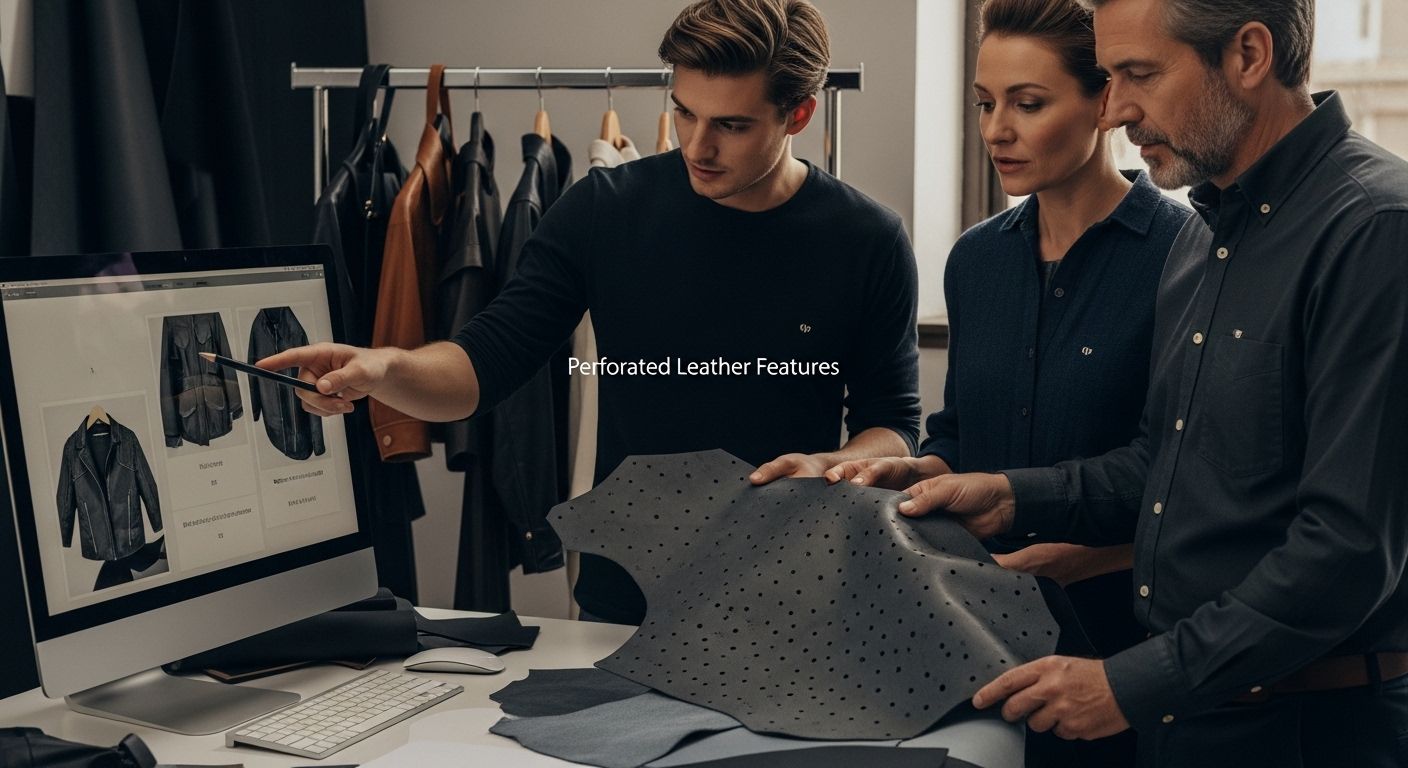
Perforated leather is shaking up the world of fashion and function. Traditional leather can feel heavy and stifling, but adding microscopic holes increases breathability and can even reduce material weight by up to 30 percent. That is impressive, but what might really surprise you is that these tiny holes do not just improve comfort. They completely transform how leather works, making it smarter and more adaptable than ever.
Table of Contents
- Defining Perforated Leather And Its Characteristics
- The Importance Of Perforated Leather In Fashion And Function
- How Perforated Leather Enhances Breathability And Comfort
- Applications Of Perforated Leather In Apparel And Accessories
Quick Summary
| Takeaway | Explanation |
|---|---|
| Perforated leather enhances breathability. | The micro-holes in perforated leather improve air and moisture flow, allowing for better comfort and thermal regulation. |
| It reduces weight without sacrificing strength. | Strategically placed holes decrease the overall weight of the leather while maintaining its structural integrity and durability. |
| Aesthetic versatility is increased with perforation. | Designers can create complex textures and patterns, enhancing the visual appeal of leather products in fashion and accessories. |
| It improves moisture management in various applications. | This material can effectively manage moisture, making it ideal for performance wear and accessories in diverse climates. |
| Precision engineering is key to its functionality. | Each hole’s size and placement are meticulously controlled to enhance the leather’s performance without compromising quality. |
Defining Perforated Leather and Its Characteristics
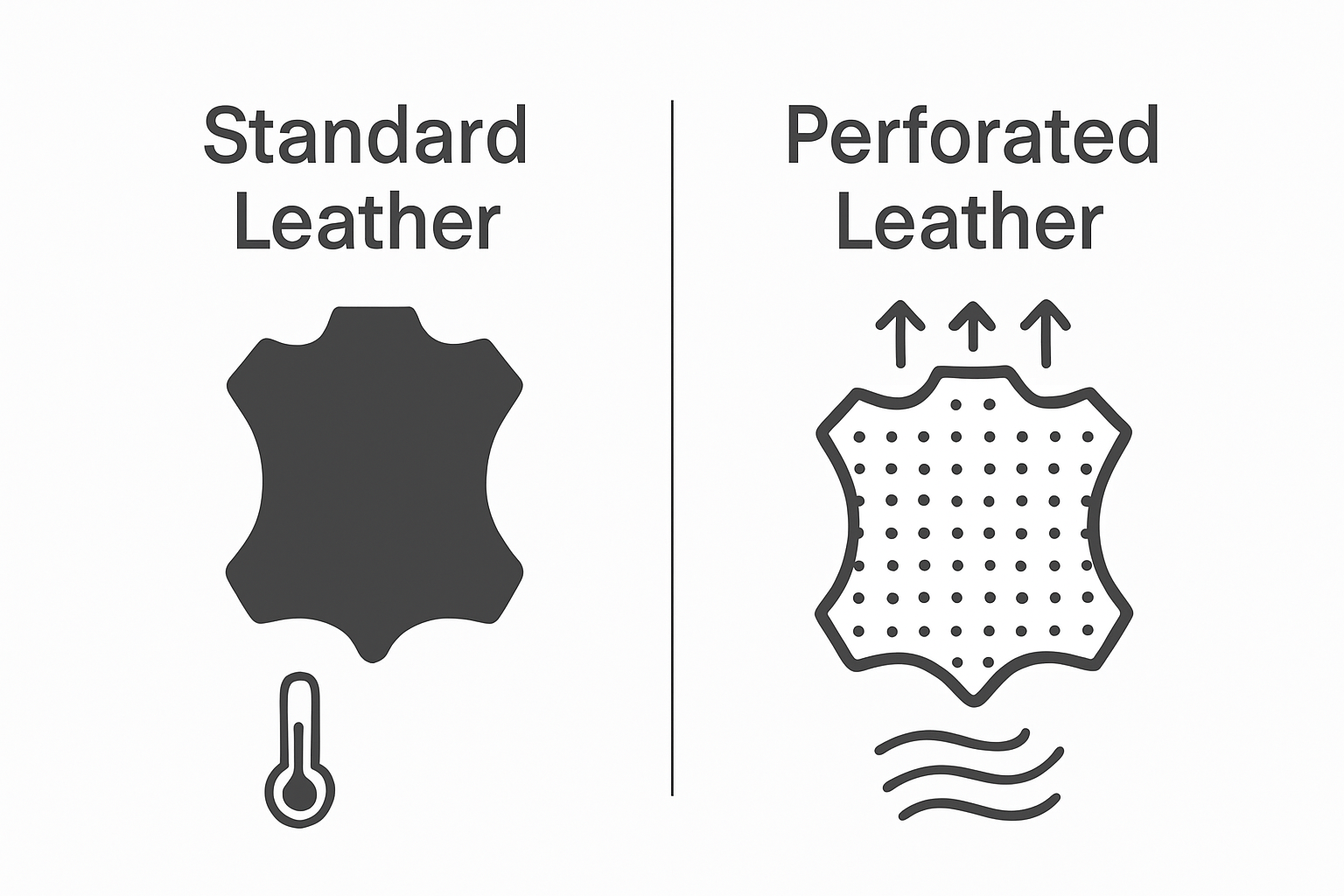
Perforated leather represents a sophisticated textile modification technique that transforms traditional leather surfaces by strategically creating multiple small holes or punctures. This process goes beyond aesthetic enhancement, introducing functional improvements that make the material more versatile and performance-oriented. Unlike standard leather, perforated leather offers unique characteristics that appeal to designers, manufacturers, and consumers across various industries.
Below is a table highlighting the key differences between traditional leather and perforated leather based on characteristics mentioned in the article.
| Characteristic | Traditional Leather | Perforated Leather |
|---|---|---|
| Breathability | Low | High (due to micro-holes) |
| Weight | Heavier | Up to 30% lighter |
| Moisture Management | Poor | Improved (better air and moisture flow) |
| Aesthetic Versatility | Limited | Complex patterns and textures possible |
| Flexibility | Standard | Increased due to perforations |
| Thermal Regulation | Prone to heat buildup | Enhanced temperature equilibrium |
| Structural Integrity | Maintained | Maintained with precision engineering |
The Science Behind Leather Perforation
The perforation process involves precisely punching or drilling tiny uniform holes into leather surfaces using specialized machinery. According to research published in PubMed, these perforations significantly impact the material’s mechanical properties, including its elasticity and lateral contraction. Manufacturers carefully control several critical parameters during perforation:
The following table summarizes the critical technical parameters controlled during the perforation process and their impact on leather performance as discussed in the article.
| Technical Parameter | Purpose in Perforation |
|---|---|
| Hole Diameter | Determines airflow and strength |
| Hole Spacing | Balances breathability and integrity |
| Punch Angle | Maintains leather surface consistency |
| Leather Thickness | Influences durability and hole placement |
| Material Grain Orientation | Impacts elasticity and structural integrity |
- Hole diameter
- Hole spacing
- Punch angle
- Leather thickness
- Material grain orientation
These technical considerations ensure that perforations enhance rather than compromise the leather’s structural integrity.
The strategic placement of holes allows for improved breathability, reduced weight, and increased flexibility without sacrificing the material’s fundamental strength.
Practical Applications and Benefits
Perforated leather finds extensive applications across multiple domains, from fashion and automotive design to sports equipment and protective gear. The microscopic holes serve multiple functional purposes beyond visual appeal. Key benefits include:
- Enhanced air circulation and moisture management
- Reduced material weight
- Improved thermal regulation
- Increased aesthetic complexity
- Greater design versatility
While initially popularized in high-performance racing gear and luxury automotive interiors, perforated leather has now become a hallmark of sophisticated design. Learn more about our custom leather jacket techniques, which showcase innovative leather modification approaches.
Understanding perforated leather requires recognizing it as more than a simple aesthetic modification. It represents a complex engineering approach that transforms traditional leather into a high-performance material adaptable to diverse user needs and environmental conditions.
This table organizes the primary functional and aesthetic advantages of perforated leather, providing a concise overview for readers looking to understand its value.
| Advantage | Description |
|---|---|
| Enhanced Breathability | Increased air and moisture flow for better comfort |
| Reduced Weight | Up to 30% lighter than standard leather |
| Improved Moisture Management | Effectively manages sweat and humidity |
| Greater Design Versatility | Allows for diverse textures and complex patterns |
| Enhanced Thermal Regulation | Maintains temperature equilibrium and reduces heat buildup |
| Increased Flexibility | Better adapts to movement and body shape |
| Structural Durability | Maintains strength with precision-engineered holes |
The Importance of Perforated Leather in Fashion and Function
Perforated leather has emerged as a transformative material that elegantly bridges the gap between aesthetic design and functional performance. This innovative textile technique has revolutionized how designers and manufacturers approach leather products, creating solutions that are both visually compelling and technically superior.
Fashion Design and Aesthetic Innovation
In the world of fashion, perforated leather represents a sophisticated design language that communicates complexity and modernity. According to the Museum of Modern Art, perforated leather introduces a unique textural dimension that allows designers to manipulate visual perception and material properties simultaneously. Fashion designers leverage these microscopic holes to create garments and accessories that appear lightweight, breathable, and intrinsically dynamic.
Key aesthetic advantages include:
- Creating visual depth and complexity
- Enabling gradient transparency effects
- Introducing sophisticated geometric patterns
- Reducing visual weight of leather products
- Enhancing surface interactivity
Functional Performance and Technical Advantages
Beyond aesthetic appeal, perforated leather delivers remarkable functional benefits across multiple industries. Explore our insights on fashion and function, where technical innovation meets design creativity. The strategic perforation of leather transforms its fundamental characteristics, providing enhanced performance in challenging environments.
Critical functional benefits encompass:
- Superior breathability for comfort
- Improved moisture management
- Enhanced thermal regulation
- Reduced overall material weight
- Increased flexibility without compromising structural integrity
From motorcycle racing gear to high-end automotive interiors, perforated leather has become synonymous with advanced material engineering. Its ability to provide targeted ventilation while maintaining durability makes it an indispensable material in performance-driven applications. The meticulous process of creating these microscopic holes requires precision engineering, ensuring that each perforation contributes to the material’s overall performance without compromising its fundamental strength.
How Perforated Leather Enhances Breathability and Comfort
Perforated leather represents a sophisticated solution to one of the most challenging aspects of traditional leather materials: thermal management and wearer comfort. By introducing microscopic holes strategically across the material’s surface, manufacturers have developed an innovative approach to addressing moisture, temperature regulation, and overall user experience.
The Science of Thermal Regulation
The perforation process is not merely aesthetic but a complex engineering solution designed to optimize human physiological comfort. According to research from the National Institutes of Health, micro-perforations dramatically improve air and moisture vapor transmission, creating a dynamic interface between the material and human skin.
Key thermal management mechanisms include:
- Facilitating rapid air circulation
- Preventing moisture accumulation
- Reducing localized heat buildup
- Enabling consistent temperature equilibrium
- Minimizing skin perspiration
These microscopic holes act like precision ventilation channels, allowing heat and moisture to escape while maintaining the leather’s structural integrity and protective qualities. The result is a material that adapts to body temperature and environmental conditions with remarkable efficiency.
Practical Applications in Performance Wear
Discover our approach to breathable leather design, where engineering meets comfort. Perforated leather has revolutionized multiple domains by providing unparalleled comfort without compromising material strength. From motorcycle racing suits to high-end athletic jackets, these strategically perforated materials offer athletes and enthusiasts unprecedented levels of thermal comfort.
Critical performance characteristics include:
- Enhanced moisture wicking capabilities
- Reduced skin surface temperature
- Improved overall wearing comfort
- Lightweight material properties
- Increased durability compared to traditional non-perforated leather
By understanding leather as a dynamic material rather than a static surface, designers have transformed traditional expectations about comfort and performance. Perforated leather represents a pinnacle of textile engineering where form meets function in the most elegant and efficient manner possible.
Applications of Perforated Leather in Apparel and Accessories
Perforated leather has transcended its origins as a purely functional material to become a versatile medium for innovative design across multiple industries. Its unique characteristics enable designers and manufacturers to create products that seamlessly blend aesthetic appeal with advanced performance capabilities, revolutionizing how we conceptualize leather as a dynamic textile.
Fashion and Performance Wear
In contemporary fashion design, perforated leather represents a sophisticated approach to material engineering. According to research published in the journal Materials, understanding the mechanical properties of perforated leather allows designers to create garments that adapt to human physiology with unprecedented precision.
Key applications in fashion include:
- High performance athletic jackets
- Breathable motorcycle racing suits
- Lightweight summer leather clothing
- Ventilated footwear designs
- Adaptive outerwear for variable climates
These applications demonstrate how perforated leather transforms traditional expectations about material performance, offering designers unprecedented flexibility in creating garments that respond dynamically to user needs.
Innovative Accessory Design
Explore our cutting edge leather design techniques, where traditional craftsmanship meets modern engineering. Perforated leather has found remarkable utility in accessories that demand both style and functionality, from handbags and wallets to gloves and belts.
Critical accessory innovations include:
- Lightweight backpacks with enhanced breathability
- Temperature-regulating gloves
- Moisture-resistant laptop sleeves
- Ventilated sports equipment covers
- Ergonomic protective gear
By reimagining leather as an adaptive material, designers have created accessories that provide superior comfort, improved durability, and aesthetic sophistication. The strategic placement of microscopic perforations allows these products to offer unprecedented levels of performance while maintaining the luxurious appearance associated with premium leather goods.
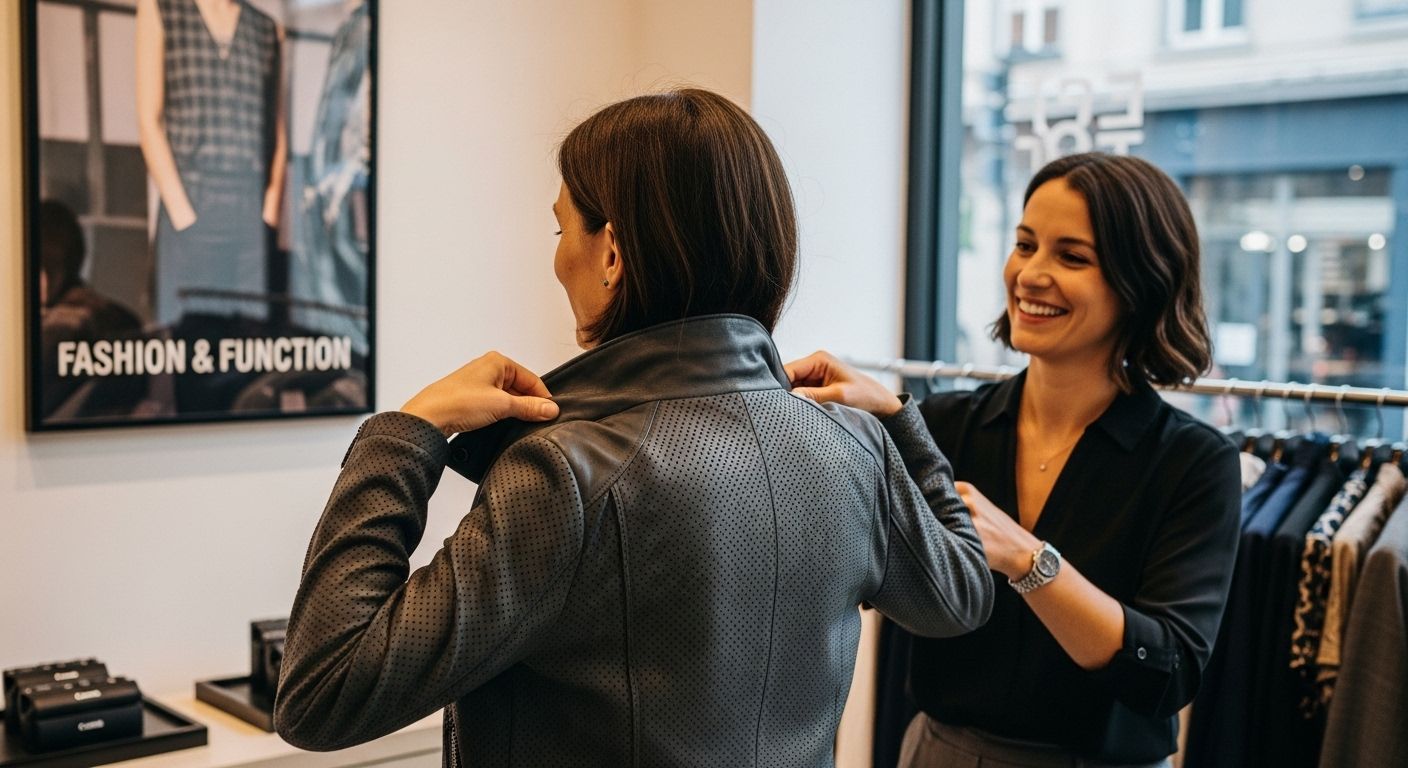
Experience Breathability and Luxury with Perforated Leather Jackets
If you are searching for a better blend of comfort and sophistication in your leather apparel, the answer lies in perforated leather. As you read in this article, traditional leather can sometimes trap heat and restrict flexibility. Perforated leather solves these common challenges by introducing thousands of tiny, carefully engineered holes, enhancing airflow and keeping you comfortable in all environments. Tired of feeling overheated or weighed down by heavy jackets? Explore how our selection addresses these exact concerns.
Take your style and comfort to the next level. Discover our curated Maker of Jacket’s collection featuring pieces that showcase advanced perforated leather craftsmanship. Whether you want customized jackets for fashion or function, each product is designed to maximize breathability without compromising on luxury or durability. Ready to upgrade your wardrobe with modern solutions? Visit Maker of Jacket now and enjoy effortless browsing, worldwide shipping, and countless customization options tailored just for you.
Frequently Asked Questions
What is perforated leather?
Perforated leather is a type of leather that has been modified by creating small holes or punctures in its surface. This technique improves breathability, flexibility, and aesthetics, making it a versatile material in various applications.
How does the perforation process affect the characteristics of leather?
The perforation process enhances leather’s mechanical properties, including elasticity and moisture management. It promotes air circulation, reduces weight, and maintains structural integrity, making the material more comfortable and functional.
What are the benefits of using perforated leather in apparel?
Perforated leather provides several advantages in apparel, such as improved breathability, moisture management, lightweight properties, and increased flexibility. These features are especially beneficial in performance wear and fashion, enhancing overall comfort during wear.
In what applications is perforated leather commonly used?
Perforated leather is commonly used in fashion, automotive design, sports equipment, and protective gear. Its unique properties allow it to serve both aesthetic and functional purposes, making it popular in high-performance and luxury products.


