

What Is a Leather Jacket and Why It Matters for Riders

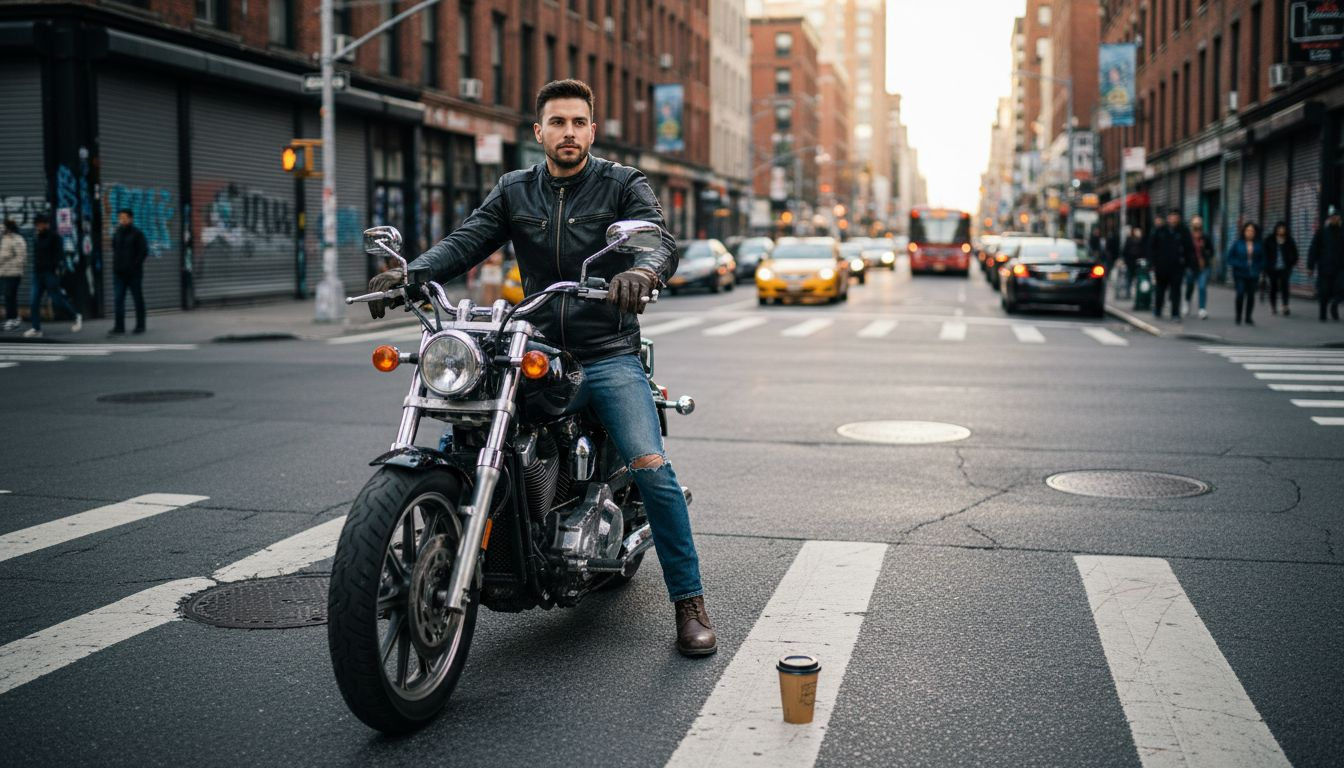
Every American motorcycle enthusiast knows the thrill of the open road comes with its own risks, making reliable gear essential. A quality leather jacket is more than just a style statement—over 85 percent of riders choose leather for its proven protective benefits. From city streets to winding highways, selecting a customizable jacket impacts not just your look but your safety. Discover what sets truly exceptional riding jackets apart in terms of comfort, durability, and unmistakable American style.
Table of Contents
- What Defines A Leather Jacket
- Leather Jacket Styles & Uses
- Common Materials In Leather Jackets
- How Motorcycle Jackets Protect
- Choosing The Right Jacket For Riding
Key Takeaways
| Point | Details |
|---|---|
| Material Selection is Crucial | Opt for jackets with leather thickness of at least 1.2mm for optimal safety and durability. |
| Understand Your Riding Environment | Choose a jacket that suits your specific riding conditions, such as urban streets or long-distance touring. |
| Look for Protective Features | Ensure jackets have CE-rated armor and reinforced seams to enhance protection during rides. |
| Prioritize Fit and Comfort | Always try on jackets with expected riding gear to ensure a snug fit that allows for mobility and protection. |
What Defines A Leather Jacket
A leather jacket represents more than just a piece of clothing – it’s a sophisticated garment crafted from carefully processed animal hide, designed to provide both protection and style for motorcycle riders. Leather jackets are sophisticated products of finished leather, known for their mesmerizing design and exceptional durability.
At its core, a leather jacket is defined by several key characteristics: the type of leather used, the tanning process, the construction method, and its intended purpose. Most motorcycle leather jackets are created from heavy cowhide or buffalo leather, chosen for their exceptional strength, abrasion resistance, and ability to withstand harsh riding conditions. The jacket-length coat is made from tanned hide of various animal skins, typically dyed in classic colors like black or brown.
The construction of a high-quality leather motorcycle jacket involves precise craftsmanship. Riders require jackets with reinforced seams, strategic padding in impact zones, and a tailored fit that allows freedom of movement while providing crucial protection. Quality leather jackets often feature additional elements like:
- Zippered vents for temperature regulation
- Removable thermal linings
- Adjustable waist and sleeve straps
- Protective armor in shoulders and elbows
- Multiple secure pockets
Pro Tip – Jacket Selection: Always prioritize jackets with CE-rated armor and thick leather (at least 1.2-1.4mm) for maximum protection during motorcycle riding.
Understanding these defining elements helps riders make informed choices about their protective gear, ensuring they select a leather jacket that combines safety, comfort, and personal style.
Leather Jacket Styles & Uses
Leather jackets for motorcycle riders encompass a diverse range of styles, each engineered to meet specific riding needs and personal aesthetic preferences. The best leather for motorcycle jackets varies based on intended use, with riders selecting from multiple distinct design categories that blend protection and style.
Classic motorcycle jacket styles include several iconic designs:
- Cruiser Jackets: Typically longer, with a relaxed fit and classic design
- Racing Jackets: Tight-fitting with pre-curved sleeves and aerodynamic profile
- Vintage Leather Jackets: Featuring distressed leather and classic design elements
- Adventure Touring Jackets: Modular designs with removable liners and multiple ventilation options
- Urban Commuter Jackets: Sleek designs blending street style with protective features
Each style serves a unique purpose beyond mere fashion. Racing jackets, for instance, offer maximum abrasion resistance with strategically placed leather panels and integrated armor, while adventure touring jackets prioritize versatility with adjustable features for changing weather conditions.
Modern leather jackets integrate advanced protective technologies, including CE-rated armor, reinforced impact zones, and high-performance materials that offer superior protection without compromising mobility. The construction goes far beyond traditional leather coats, incorporating engineering principles that transform these garments into critical safety equipment for motorcycle enthusiasts.
Pro Tip – Style Selection: Choose a leather jacket that matches your riding style, body type, and specific motorcycle environment, ensuring both safety and personal comfort.
Understanding the nuanced differences between leather jacket styles empowers riders to make informed choices that reflect their individual riding needs and personal aesthetic preferences.
Common Materials In Leather Jackets
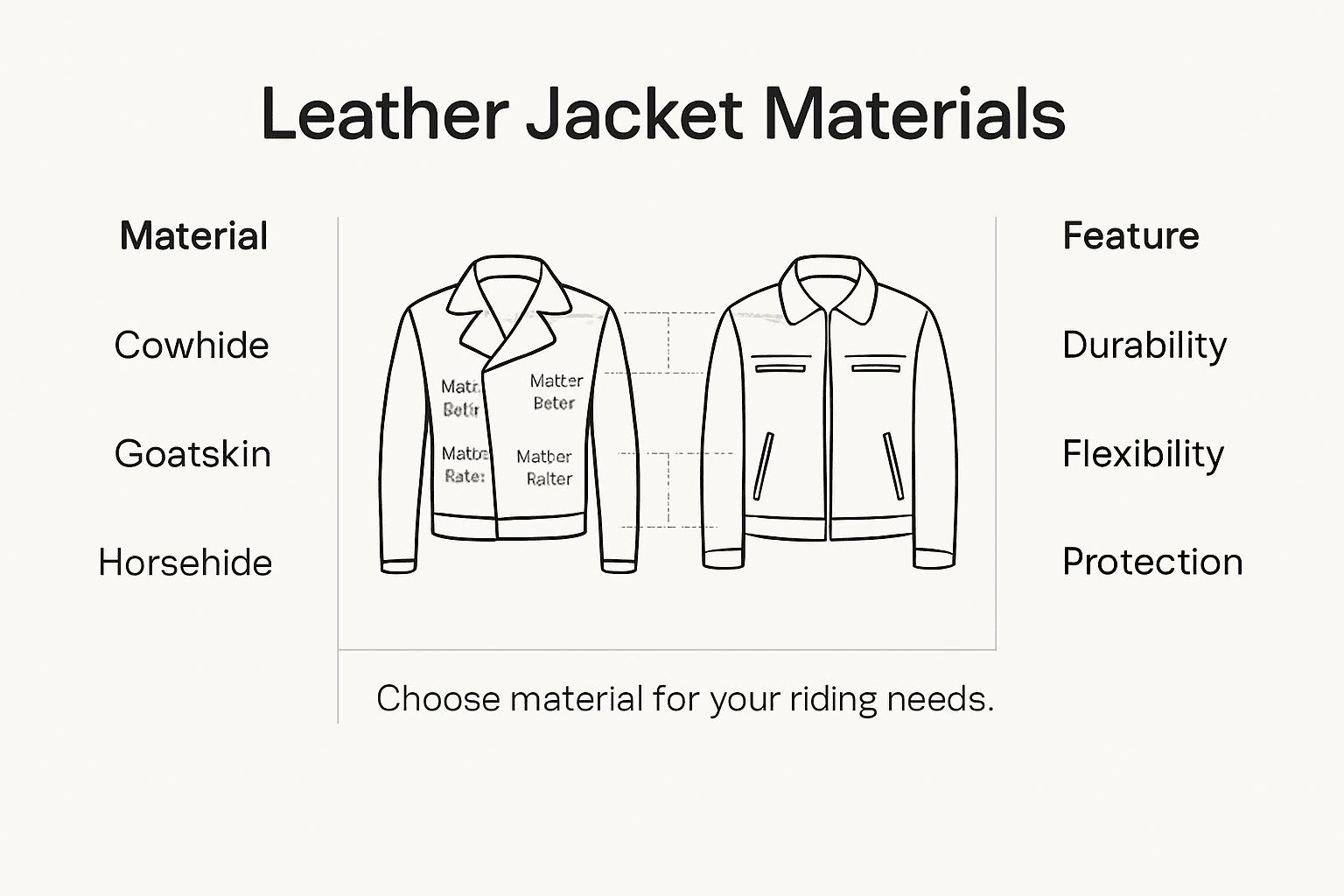
Leather jackets for motorcycle riders are crafted from a diverse range of animal hides, each offering unique characteristics and performance attributes. Leather jackets are commonly made from hides such as antelope, buckskin, goatskin, sheepskin, horsehide, and cowhide, with each material bringing distinct advantages to motorcycle protective gear.
The most popular leather types for motorcycle jackets include:
- Cowhide: The gold standard for motorcycle jackets, offering exceptional durability and abrasion resistance
- Goatskin: Lightweight and incredibly flexible, providing excellent mobility
- Horsehide: Known for its incredible strength and ability to develop a unique patina over time
- Buffalo Leather: Extremely thick and robust, ideal for heavy-duty riding conditions
- Sheepskin: Softer and more lightweight, typically used in fashion-oriented leather jackets
Cowhide remains the primary material for serious motorcycle riders due to its superior protective qualities. Thick cowhide leather typically ranges from 1.2 to 1.4 millimeters, providing critical impact protection while maintaining enough flexibility for comfortable riding. Leather jackets are sophisticated products of finished leather, used primarily in cold places with thick linings, making them ideal for various riding environments.
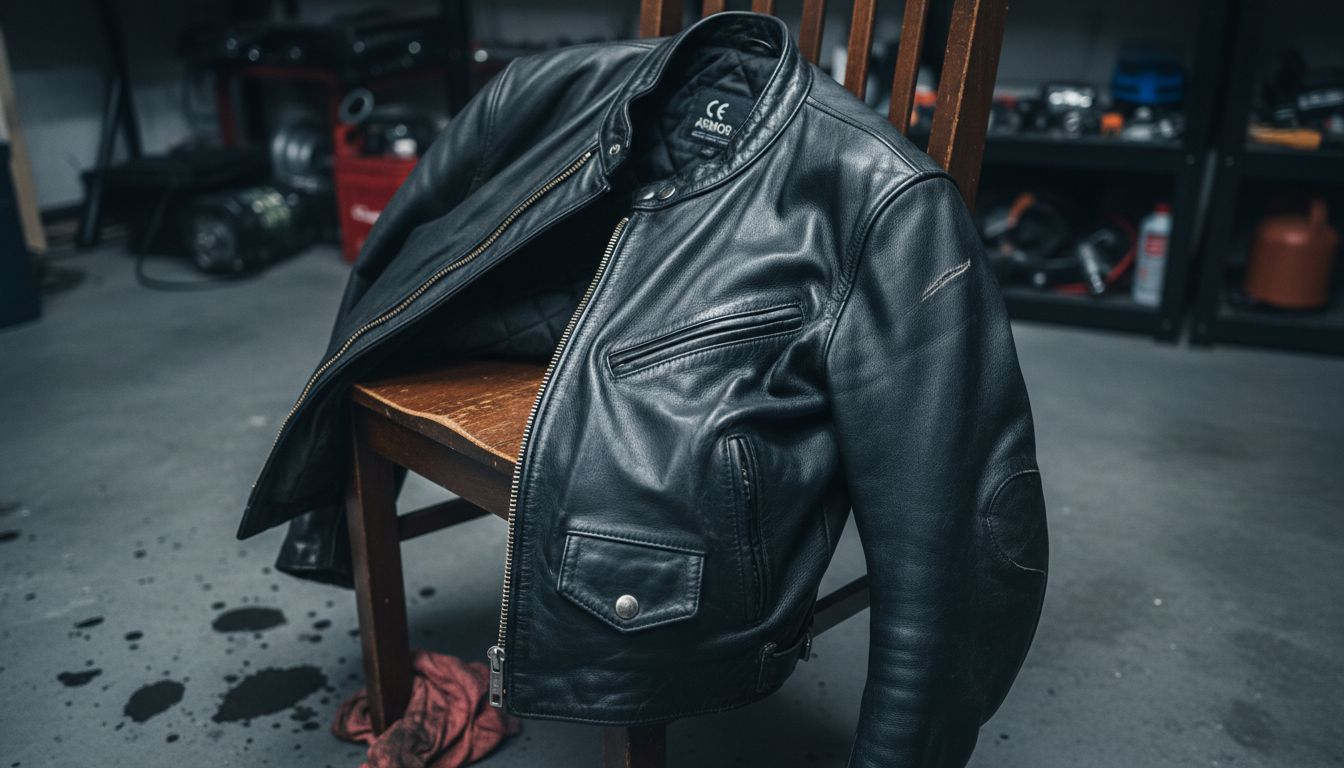
Modern leather jacket manufacturing involves sophisticated tanning and treatment processes that enhance the natural properties of these animal hides. Manufacturers apply specialized techniques like chrome tanning, vegetable tanning, and additional protective coatings to improve water resistance, durability, and overall performance of the leather.
Pro Tip – Material Selection: Always prioritize leather thickness and quality over aesthetic considerations, focusing on jackets with at least 1.2mm thick leather and proper protective certifications.
Understanding the nuanced differences between leather materials empowers riders to make informed choices about their protective gear, ensuring both safety and comfort during motorcycle adventures.
Here’s a quick comparison of popular leather types used in motorcycle jackets:
| Leather Type | Durability & Protection | Comfort & Flexibility | Typical Use Cases |
|---|---|---|---|
| Cowhide | Highest abrasion resistance | Firm but supple, breaks in | Touring, racing, daily riding |
| Goatskin | Moderate abrasion resistance | Extremely flexible, light | Urban riding, lightweight gear |
| Horsehide | Very high durability | Stiff initially, softens over time | Vintage, heritage styles |
| Buffalo | Extra thick and tough | Heavy, less flexible | Heavy-duty, adventure riding |
| Sheepskin | Softer, less durable | Plush, lightweight | Cold-weather, fashion jackets |
How Motorcycle Jackets Protect
Motorcycle jackets designed for protective use are heavier, thicker, and sometimes equipped with armor, transforming them from mere fashion statements into critical safety equipment for riders. These specialized garments provide comprehensive protection through multiple integrated defensive features that shield motorcycle enthusiasts from potential injuries during accidents and challenging riding conditions.
The primary protective elements of a high-quality motorcycle jacket include:
- Impact Armor: Rigid protective inserts in critical zones like shoulders, elbows, and back
- Abrasion Resistance: Thick leather that prevents road rash during sliding incidents
- Padding Systems: Strategic padding that absorbs and distributes impact forces
- Reinforced Seams: Double-stitched construction that maintains jacket integrity during crashes
- Temperature Regulation: Thick linings that protect riders in cold environments
Modern motorcycle jackets utilize advanced engineering principles to create a protective barrier between the rider and potential road hazards. CE-rated armor represents the gold standard in motorcycle jacket protection, with standardized testing ensuring that each protective element meets rigorous safety benchmarks. The armor typically consists of high-impact polymers strategically placed to cover vulnerable body parts while maintaining flexibility and comfort.
Beyond physical protection, motorcycle jackets serve multiple defensive functions. They shield riders from wind chill, road debris, and environmental elements while providing crucial visibility through reflective panels and bright color options. The jacket’s design incorporates aerodynamic principles that reduce wind resistance and minimize potential fatigue during extended rides.
Pro Tip – Safety Inspection: Regularly check your jacket’s armor placement, seam integrity, and overall condition, replacing protective gear every 3-5 years or after significant impact incidents.
Understanding the sophisticated protective mechanisms of motorcycle jackets empowers riders to make informed choices about their personal safety equipment, recognizing these garments as sophisticated technological solutions rather than simple fashion accessories.
Choosing The Right Jacket For Riding
Selecting the ideal motorcycle jacket requires a comprehensive understanding of your specific riding needs, environment, and personal safety requirements. Explore the best leather options that match your riding style to ensure maximum protection and comfort during your motorcycle adventures.
Key considerations for jacket selection include:
- Riding Environment: Urban streets, highway touring, off-road adventures
- Climate Conditions: Hot summers, cold winters, variable weather patterns
- Riding Frequency: Daily commuting, weekend rides, long-distance touring
- Body Type: Proper fit for mobility and protection
- Safety Certification: CE-rated armor and protection standards
Motorcycle riders must evaluate jackets based on multiple critical factors beyond aesthetic appeal. The jacket’s primary function is protection, which means assessing leather thickness (minimum 1.2mm), armor placement, and overall construction quality. Different riding styles demand specialized jacket features – touring riders might prioritize comfort and storage, while racing enthusiasts require maximum impact protection and aerodynamic design.
Material selection plays a crucial role in jacket performance. Cowhide remains the gold standard for serious riders, offering superior abrasion resistance and durability. Goatskin provides exceptional flexibility, while horsehide delivers unmatched strength. Advanced jackets now incorporate textile panels and stretch zones to enhance mobility without compromising safety, creating hybrid designs that adapt to various riding conditions.
Pro Tip – Fit and Protection: Always try on motorcycle jackets with your typical riding gear underneath, ensuring a snug fit that allows full range of motion while maintaining critical protective coverage.
Understanding the intricate balance between protection, comfort, and personal style empowers riders to make informed decisions, transforming their motorcycle jacket from a simple garment into a sophisticated piece of safety equipment.
This table summarizes how jacket features align with different riding environments:
| Riding Environment | Recommended Jacket Features | Key Benefit |
|---|---|---|
| Urban Streets | Slim fit, ventilation, visibility panels | Enhanced comfort and city mobility |
| Highway Touring | Thick lining, storage, high collar | Extended comfort on long rides |
| Off-Road/Adventure | Removable armor, weatherproofing | Adaptability to changing conditions |
| Sport/Racing | Aerodynamic shape, maximum armor | Optimal protection at high speeds |
Elevate Your Ride With the Perfect Leather Jacket
Choosing the right leather jacket is crucial for every rider who values safety and style. This article highlights the importance of thick, durable leather, CE-rated armor, and tailored fits to protect you during your motorcycle adventures. At Maker of Jacket, we understand these needs and offer a remarkable selection of customizable leather jackets crafted with the finest materials to ensure both comfort and maximum protection.
Discover our Maker of Jacket’s collection Archives – Maker of Jacket where you can explore styles designed specifically for riders who refuse to compromise safety or style.
Why wait to invest in gear that truly matters? Visit Maker of Jacket today and start customizing your next motorcycle jacket that combines rugged protection with personalized flair. For riders seeking matching gear, check out our leather pants collection Archives – Maker of Jacket to complete your look with confidence and toughness.
Frequently Asked Questions
What materials are commonly used in leather jackets for motorcycle riders?
Leather jackets for motorcycle riders are typically made from various animal hides, including cowhide, goatskin, horsehide, buffalo leather, and sheepskin. Cowhide is the most popular due to its exceptional durability and abrasion resistance.
How does a leather jacket protect riders in case of an accident?
A leather jacket enhances rider safety with features like impact armor, abrasion resistance from thick leather, padding systems to absorb impact forces, reinforced seams, and temperature regulation for cold environments. These elements work together to minimize injuries during rides.
What are the key characteristics to look for when choosing a leather motorcycle jacket?
When selecting a leather motorcycle jacket, consider factors such as leather thickness (at least 1.2mm), armor placement, construction quality, fit, and features specific to your riding style and environment. Prioritize safety and comfort in your choice.
What is the difference between various types of leather jackets designed for riders?
Different types of leather jackets serve specific purposes: cruiser jackets offer a relaxed fit for comfort, racing jackets prioritize maximum protection at speed with aerodynamic designs, vintage jackets showcase classic styles, adventure touring jackets provide modular designs for changing weather, and urban commuter jackets blend street style with protective features.


