

How to Customize Leather Jacket for a Unique Look


Every American leather jacket tells a story as unique as the person wearing it. With customization on the rise, more people are turning classic jackets into true personal statements rather than settling for off-the-rack looks. Whether you are aiming for subtle upgrades or bold transformations, discovering how to tailor your jacket means your next favorite piece will never blend in. This guide reveals the creative steps and expert techniques to help your American leather jacket stand out in any crowd.
Table of Contents
- Step 1: Assess Jacket Type And Choose Customization Options
- Step 2: Prepare Materials And Set Up Work Area
- Step 3: Apply Design Elements And Personal Touches
- Step 4: Secure And Finish Customization Details
- Step 5: Inspect And Maintain Your Customized Jacket
Quick Summary
| Key Point | Explanation |
|---|---|
| 1. Analyze Your Jacket Type | Understanding the base style of your jacket helps you select tailored customization options effectively. |
| 2. Gather Essential Materials | Preparing the right tools and workspace ensures a smooth and professional customization process. |
| 3. Plan Your Design Elements | Carefully consider your customization methods to enhance your jacket’s style without compromising its integrity. |
| 4. Secure All Design Elements | Properly finishing customization with quality checks and protective measures ensures lasting results. |
| 5. Regularly Maintain Your Jacket | Consistent maintenance preserves the vibrancy and function of customized features for years to come. |
Step 1: Assess Jacket Type and Choose Customization Options
Customizing a leather jacket requires strategic understanding of the base garment’s structure and potential style transformations. By carefully analyzing your jacket’s fundamental characteristics, you can create a truly personalized piece that reflects your unique aesthetic.
Begin by examining the jacket’s base style carefully. Is it a classic motorcycle jacket, a bomber design, or a vintage racing cut? Each type offers different customization possibilities. Garment editing approaches suggest understanding the semantic attributes of your specific jacket will guide more effective personalization strategies. Pay close attention to key structural elements like lapel design, sleeve shape, pocket placement, and overall silhouette.
Consider your customization goals thoughtfully. Do you want to add color blocking, embroider personal artwork, attach patches, or modify hardware? Generative design techniques emphasize maintaining the jacket’s structural integrity while making creative modifications. Select customization options that complement the jacket’s original design rather than completely disrupting its core aesthetic.
Pro Tip: Always sketch or digitally mock up your planned customizations before making permanent alterations to ensure the final design matches your vision.
Here is a quick reference comparing common leather jacket types and their best-fit customization techniques:
| Jacket Type | Distinct Style Features | Customization Methods That Suit Best |
|---|---|---|
| Motorcycle | Asymmetrical zippers, snaps | Patches, bold color blocking |
| Bomber | Ribbed cuffs, minimal trim | Embroidery, artistic painting |
| Racing/Vintage Racer | Streamlined, minimal pockets | Contrast panels, hardware upgrades |
Step 2: Prepare Materials and Set Up Work Area
Transforming a leather jacket requires careful preparation and the right workspace setup. This crucial stage ensures you have everything needed to execute your customization project smoothly and professionally.
Gather your essential tools and materials before starting. You will need specific items depending on your planned customization but generally include sharp fabric scissors, leather cutting tools, measuring tape, chalk or fabric markers, protective gloves, a sturdy cutting mat, rubbing alcohol for cleaning leather surfaces, painter’s tape for precise markings, and high-quality leather adhesives or specialized sewing equipment. Select custom black and white leather motorcycle jacket reference images to guide your design approach.
Choose a well-lit, clean workspace with a large flat surface like a solid wood table or crafting workbench. Ensure the area is well-ventilated and free from dust or potential contaminants that could damage the leather. Lay down a protective covering on your work surface and organize your tools within easy reach. Position good lighting to help you see detailed work and prevent eye strain during intricate customization processes.

Pro Tip: Always work on a clean surface and wear cotton gloves to prevent oils from your hands transferring onto the leather during your customization project.
Step 3: Apply Design Elements and Personal Touches
Customizing your leather jacket is where creativity truly comes alive. This step transforms your jacket from a standard piece of clothing into a unique expression of your personal style and artistic vision.
Start by carefully planning your design elements. Consider techniques like embroidery, patches, color blocking, or custom painting. Generative design techniques emphasize maintaining the jacket’s structural integrity while making creative modifications. Select methods that complement the jacket’s original silhouette and material characteristics. If adding patches or embroidery, position them strategically to enhance rather than overwhelm the jacket’s design. Custom black and orange motorcycle racing jacket examples can provide inspiration for color and placement techniques.
Apply your chosen design elements with precision and patience. For embroidery, use stabilizer backing to prevent fabric distortion. When adding patches, select high-quality adhesive or carefully hand stitch to ensure long-term durability. Consider using fabric paint specifically designed for leather if you want to add custom artwork or color modifications. Test your techniques on a small hidden area first to verify color fastness and application quality.
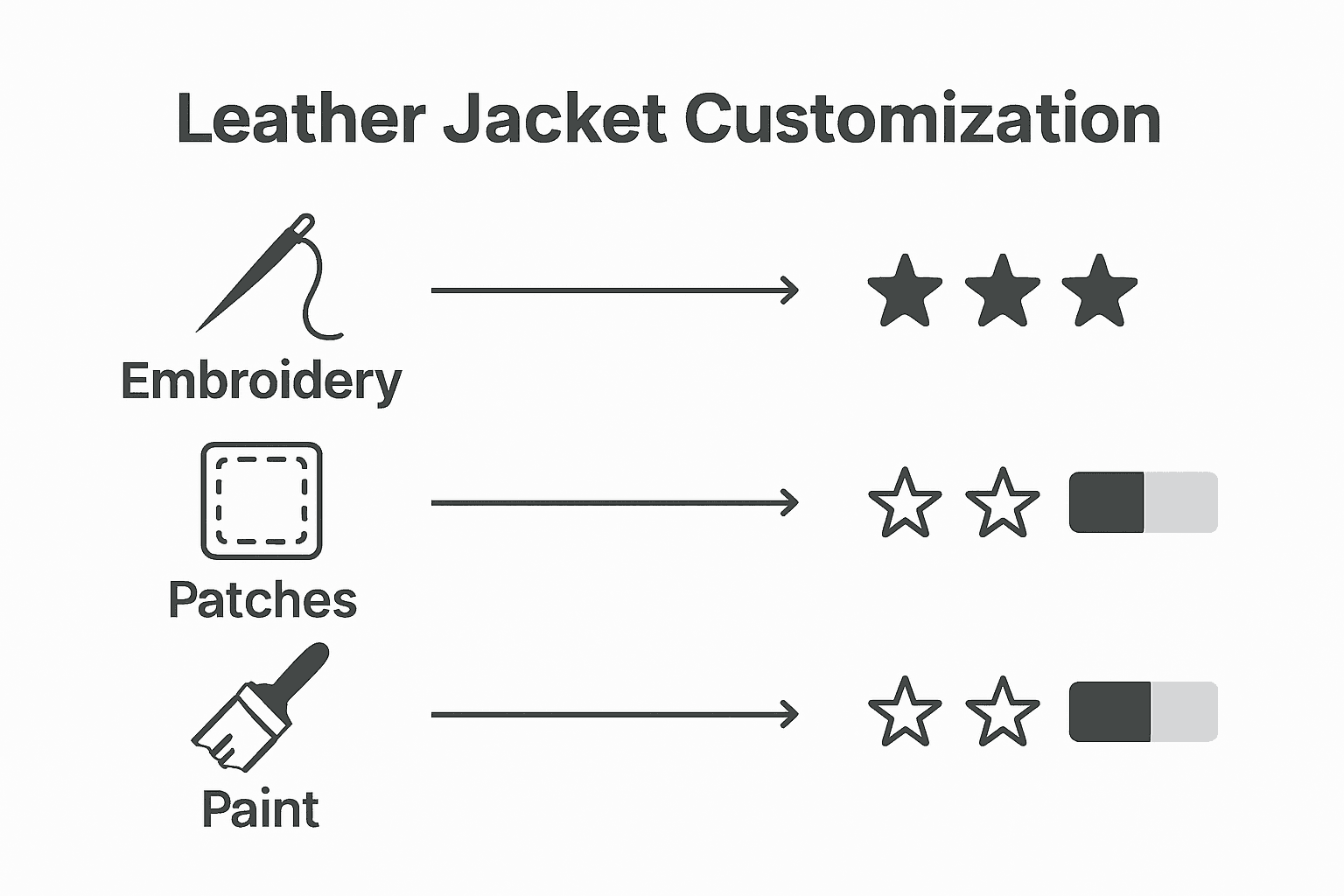
This summary shows how different customization techniques impact your jacket’s style and durability:
| Customization Technique | Visual Impact Level | Durability Consideration |
|---|---|---|
| Embroidery | High | Requires stabilizer for longevity |
| Patches | Moderate to high | Needs strong adhesive or stitching |
| Color Blocking | Strong, bold | Use leather-friendly paint |
| Hardware Changes | Subtle to bold | Stainless steel recommended |
Pro Tip: Always work in thin, multiple layers when adding paint or decorative elements to leather to achieve a more professional and refined finish.
Step 4: Secure and Finish Customization Details
The final stage of your leather jacket customization transforms your creative vision into a polished, professional result. This critical phase ensures that all your carefully applied design elements are securely integrated and protected.
Carefully inspect each customization element for proper attachment and finish. Garment editing approaches emphasize the importance of maintaining structural coherence during modifications. Use leather sealant or protective spray to safeguard painted areas and embroidery, creating a durable barrier against wear and environmental factors. Reinforce patch edges with precision stitching or specialized leather adhesive to prevent lifting or peeling. Custom black and lime green leather motorcycle jacket styling techniques can provide inspiration for seamless integration of design elements.
Finalize your jacket by conducting a comprehensive quality check. Gently stretch and move the jacket to ensure all added elements remain secure and do not restrict movement. Allow any adhesives or sealants to fully cure according to manufacturer instructions. Consider adding a final protective coating that maintains the leather’s natural texture while providing additional durability to your personalized design.
Pro Tip: Allow your customized jacket to air dry completely in a well-ventilated area away from direct sunlight to preserve the integrity of your design elements and prevent potential damage.
Step 5: Inspect and Maintain Your Customized Jacket
Preserving the unique character and quality of your newly customized leather jacket requires careful and consistent maintenance. This final step ensures your creative work remains vibrant and protected for years to come.
Regularly inspect your jacket for signs of wear or potential damage to the customized elements. How to Add Patches to Jackets techniques can help you understand how to maintain intricate design details. Clean the jacket using leather specific products appropriate for the type of customization you have applied. For painted areas, use a soft cloth with minimal moisture. For embroidered sections, gently brush away dust and avoid excessive rubbing. When storing, use a padded hanger in a cool dry location away from direct sunlight to prevent color fading or material degradation.
Develop a consistent maintenance routine that protects your jacket’s unique design. Apply a leather conditioner every few months to keep the material supple and prevent cracking. When cleaning best leather jacket materials, use products specifically designed for your jacket type. Test any cleaning or conditioning product on a small hidden area first to ensure it does not damage your custom work.
Pro Tip: Create a dedicated storage bag with breathable fabric to protect your customized leather jacket from dust and potential environmental damage when not in use.
Elevate Your Style with Personalized Leather Jackets from Maker of Jacket
Customizing a leather jacket to create a truly unique look can be challenging. The article highlights key pain points like choosing the right jacket type, maintaining structural integrity while applying design elements, and ensuring long-lasting durability. If you want your jacket to reflect your personal vision without risking damage or complexity, expert guidance and quality materials are essential. Concepts such as “garment editing approaches” and “generative design techniques” remind us that thoughtful customization blends creativity with craftsmanship.
Ready to bring your tailored leather jacket ideas to life? Explore the Maker of Jacket’s collection Archives – Maker of Jacket for premium customizable options that suit your style goals.
Take control of your look today with ready-to-customize jackets designed for maximum creativity and durability. Visit https://makerofjacket.com now and discover how our expert craftsmanship and customizability can unlock your jacket’s full potential. Don’t wait to turn your unique style into reality.
Frequently Asked Questions
How can I assess my leather jacket type for customization?
Begin by identifying the base style of your jacket, such as motorcycle, bomber, or racing. Pay attention to its distinct features and structure, as these will guide your customization options and help you choose complimentary design elements.
What tools and materials do I need to customize my leather jacket?
Gather essential tools such as sharp fabric scissors, leather cutting tools, measuring tape, and high-quality leather adhesives. Additionally, consider including a protective covering for your work surface and painter’s tape for precise markings to ensure a clean customization process.
What are some recommended design elements for customizing a leather jacket?
Common design elements include embroidery, patches, color blocking, or custom painting. Choose one or a combination of these techniques to enhance your jacket while keeping its original silhouette and materials in mind for optimal results.
How can I ensure the durability of my jacket after customization?
Use leather sealant or protective spray to safeguard painted areas and ensure that all patches are securely attached. Regularly inspect your jacket for wear and apply leather conditioner every few months to keep the material supple and prolong the life of your customizations.
What steps should I take to maintain my customized leather jacket?
Develop a maintenance routine that includes regular inspections and gentle cleaning with leather-specific products. Store your jacket on a padded hanger in a cool, dry location to prevent fading and material degradation, ensuring it looks its best for years to come.


