

What is faux leather? Smart, stylish, sustainable choices


TL;DR:
- Faux leather is a synthetic material designed to mimic animal leather without using hides, with PU and PVC being the most common types. While PU leather has a lower environmental footprint than animal leather and plastic-based options shed microplastics, most faux leathers are not biodegradable or recyclable and may still have sustainability tradeoffs. High-quality faux leather lasts longer, but transparency in material composition and durability data are key factors for conscious buying decisions.
Faux leather seems like the obvious choice for anyone trying to dress well without harming animals or the planet. But scratch beneath the surface and the story gets complicated fast. Not all faux leather is created equal, and the difference between a smart purchase and a disappointing one can come down to a few critical facts most shoppers never learn. This guide covers what faux leather is actually made from, how different types compare, how long they really last, and what sustainability claims actually hold up under scrutiny.
Table of Contents
- What is faux leather?
- How faux leather is made: Materials and innovations
- Durability and performance: How long does faux leather last?
- Is faux leather actually sustainable?
- How to choose quality faux leather: Smart buyer’s checklist
- Faux leather: What most guides won’t tell you
- Explore sustainable, high-quality jackets with Maker of Jacket
- Frequently asked questions
Key Takeaways
| Point | Details |
|---|---|
| What faux leather is | Faux leather is a synthetic alternative made from plastics like PU or PVC and sometimes plant-based sources. |
| Eco benefits and tradeoffs | While faux leather uses less water and emits less CO2 than cow leather, it still sheds microplastics and is often not biodegradable. |
| Durability varies widely | Quality faux leather can last 5-8 years but cheaper versions may peel or crack after only a year or two. |
| Smart shopping checklist | Always check for clear material labeling and durability ratings to ensure your faux leather items last longer. |
| Transparency beats marketing | Sustainable faux leather must last, shed minimal microplastics, and brands should be open about their materials. |
What is faux leather?
Faux leather is any man-made material designed to look and feel like animal leather without using animal hides. You’ll hear it called synthetic leather, artificial leather, vegan leather, pleather, and a handful of other names depending on the brand, the price point, and the marketing strategy. The terminology can be intentionally misleading, so understanding what’s behind each label matters.
The two most common materials are polyurethane (PU) and polyvinyl chloride (PVC). PU leather is softer, more breathable, and generally considered a higher-quality option. PVC leather is stiffer and more durable in certain applications, but has a much heavier environmental cost during production. Then there’s an exciting newer category: plant-based leathers made from pineapple leaf fibers (Piñatex), cactus pulp (Desserto), and mycelium (mushroom-derived material).
The term “vegan leather” is often used interchangeably with faux leather, but there’s a subtle distinction worth knowing. Vegan leather is specifically marketed to signal an ethical stance against animal products. Faux leather is a broader term that may or may not carry that ethical message. As a buyer, understanding faux leather explained in detail helps you cut through the noise and identify what you’re actually buying.
Here’s a quick breakdown of common faux leather terms:
- PU leather: Soft, flexible, most common in apparel and fashion accessories
- PVC leather: Harder, more resistant to moisture, often used in upholstery
- Plant-based leather: Derived from agricultural byproducts, marketed as eco-friendly
- Vegan leather: Broad ethical label; can include any of the above
- Bonded leather: Uses scraps of real leather mixed with synthetic materials; lowest quality
Knowing these distinctions gives you real power at the point of purchase.
How faux leather is made: Materials and innovations
Now that we know what faux leather is, let’s look at exactly how it’s made and where it stands compared to traditional materials.
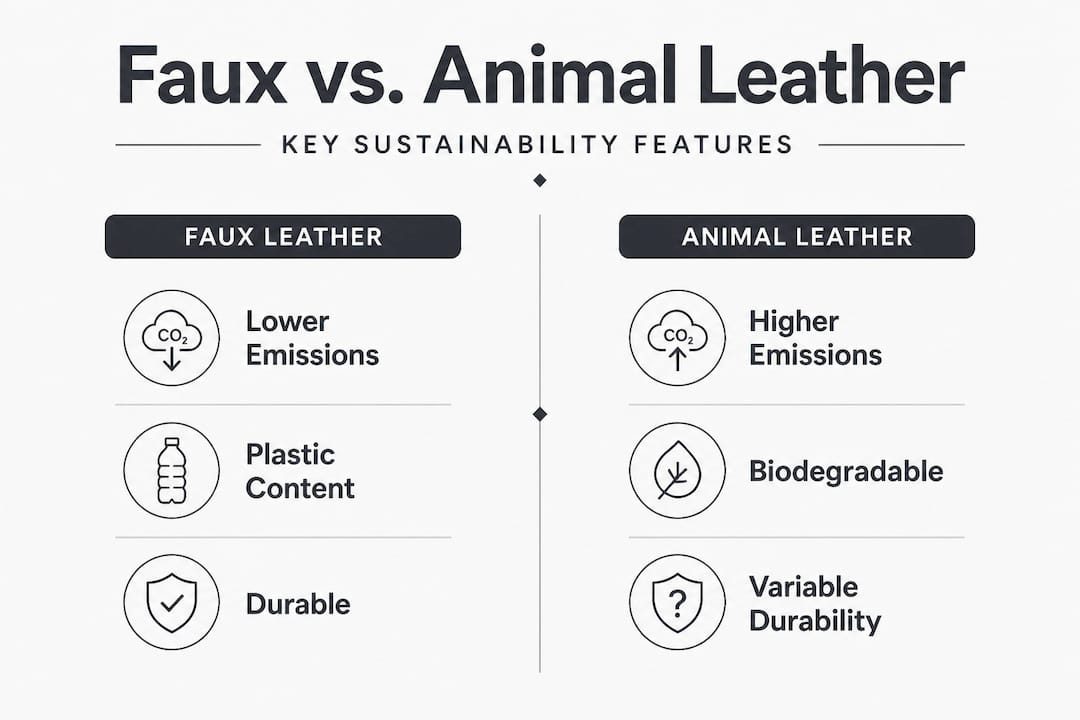
PU leather is produced by coating a fabric base, typically polyester or cotton, with a layer of polyurethane. The result is a material that mimics leather’s texture and visual appeal while remaining relatively soft and flexible. From an environmental standpoint, PU leather has a significantly lower footprint than animal leather. PU faux leather emits just 7 to 15.8 kg CO2e per square meter compared to animal leather’s staggering 110 kg CO2e per square meter, uses less water and land, but is not biodegradable and sheds microplastics over its lifespan.
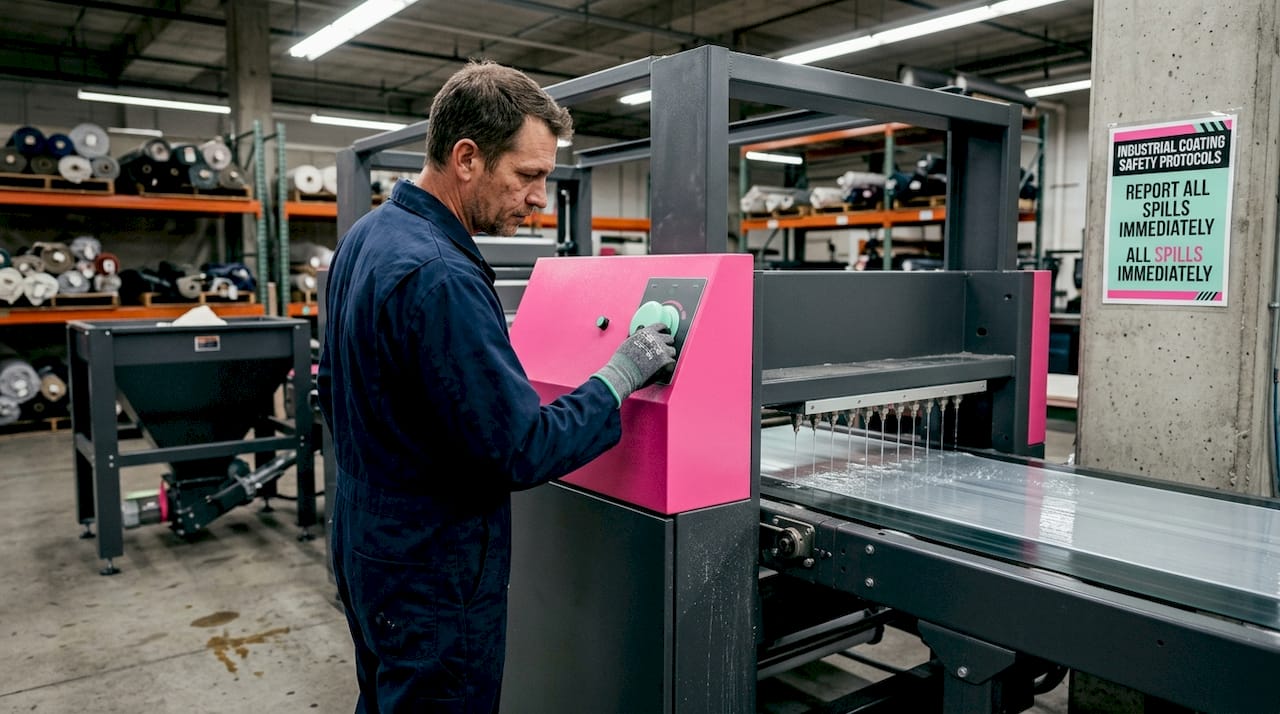
PVC leather is made by layering polyvinyl chloride over a fabric backing. It’s extremely tough and resistant to scratching, but the production process releases harmful dioxins and chlorine-based compounds. Most ethical brands have moved away from PVC in favor of PU or plant-based alternatives.
Plant-based leathers are genuinely exciting. Piñatex uses pineapple leaf fibers, which are agricultural waste from the pineapple industry. Desserto uses nopal cactus, which grows in arid conditions with minimal water. Mycelium leather is grown from fungal networks and can be shaped and harvested like a crop. However, plant-based vegan leathers such as Piñatex and Desserto generate GHG emissions of just 0.8 to 8.8 kg CO2e per square meter, but most still require PU or PVC binders for structural durability, which limits their sustainability gains and means they still shed microplastics.
Here’s a side-by-side comparison to help you understand the tradeoffs:
| Material | GHG Emissions (kg CO2e/m²) | Biodegradable? | Microplastics? | Durability |
|---|---|---|---|---|
| Animal leather | ~110 | Yes (slowly) | No | Very high |
| PU leather | 7 to 15.8 | No | Yes | Moderate to high |
| PVC leather | 10 to 20+ | No | Yes | High |
| Plant-based (e.g., Piñatex) | 0.8 to 8.8 | Partial | Yes | Moderate |
| Mycelium leather | ~1.5 | Potentially | Limited | Still scaling |
Pro Tip: When shopping plant-based faux leather products, always ask or check whether the material uses a plastic topcoat or backing. A product labeled “cactus leather” may still be 50% or more polyurethane, which significantly changes its environmental profile. Transparency in labeling is the clearest sign of a trustworthy brand.
Explore the faux and vegan leather differences in more depth to sharpen your buying judgment even further.
Durability and performance: How long does faux leather last?
Knowing what makes up faux leather, let’s uncover how it actually performs in daily life and how long it really lasts.
The honest answer? It depends enormously on quality. Faux leather durability ranges from just 1 to 3 years for low-quality versions, 3 to 5 years for mid-range options, and 5 to 8 years for high-quality products. The primary failure modes are cracking and peeling caused by plasticizer loss (when the chemical compounds that keep PU flexible break down), hydrolysis (moisture breaking down polymer bonds), and UV or heat damage.
| Quality tier | Expected lifespan | Common failure points |
|---|---|---|
| Budget/low grade | 1 to 3 years | Surface peeling, cracking within months |
| Mid grade | 3 to 5 years | Gradual fading, edge fraying |
| High grade | 5 to 8 years | Minor surface wear, maintained flexibility |
For commercial applications, look for products that have passed the Wyzenbeek abrasion test at 50,000 or more double rubs. This test simulates repeated friction across a surface, and meeting this threshold is a strong signal that the material can handle years of regular use.
When comparing faux vs real leather, genuine leather typically outlasts faux leather when well-maintained, often lasting 20 or more years. But faux leather doesn’t require conditioning, polishing, or as much careful storage, which matters for everyday buyers.
“True sustainability in leather alternatives isn’t just about what the product is made from. It’s about how long it lasts. A jacket replaced every two years creates far more waste than one that lasts a decade.”
Pro Tip: Before buying a faux leather jacket or accessory, ask for or look up the abrasion test data. Any brand selling premium-priced faux leather should be willing to share this information. If the product listing has no material specifications, treat that as a red flag. Understanding synthetic vs real leather performance expectations will help you make a more confident investment.
Is faux leather actually sustainable?
Given performance and material realities, what about the sustainability promise behind faux leather?
The answer is nuanced. Faux leather, particularly PU and plant-based versions, carries a significantly smaller carbon footprint than animal leather from the tannery. The numbers are clear: PU faux leather produces between 7 and 15.8 kg CO2e per square meter while animal leather averages around 110 kg CO2e per square meter, a dramatic reduction. Water use and land use are also substantially lower for faux leather production.
But there are real concerns that most sustainability conversations gloss over:
- Microplastic shedding: Every faux leather product, including plant-based versions with plastic binders, sheds microplastic particles over its lifetime through wear and washing
- Non-biodegradable end-of-life: PU and PVC products don’t break down naturally in landfill
- Replacement cycles: A low-quality faux leather jacket replaced every two years has a larger cumulative environmental footprint than one high-quality piece lasting eight years
- Limited recycling options: Most faux leather cannot be separated and recycled due to its blended synthetic construction
- Greenwashing risk: Terms like “vegan leather” and “eco leather” have no regulated definition, leaving brands free to market plastic-heavy products as sustainable
Plant-based leather materials like Piñatex and Desserto do show lower GHG emissions between 0.8 and 8.8 kg CO2e per square meter, but the plastic reinforcement issue means they are not the zero-impact solution the marketing often implies.
“Vegan leather marketing often greenwashes plastic pollution. True sustainability requires durability beyond ten years, low microplastic shedding, and recyclability. Mycelium and cactus materials are promising, but still limited in scale.”
The most honest position on faux leather sustainability is this: it’s better than traditional animal leather on several key metrics, particularly carbon and water use, but it is not a perfect solution. The faux vs vegan sustainability debate ultimately comes down to what tradeoffs you’re willing to accept as a conscious consumer.
How to choose quality faux leather: Smart buyer’s checklist
Armed with all these facts, it’s time to apply your knowledge and choose the best faux leather for your values and style.
Use this checklist every time you’re evaluating a faux leather product:
- Check material disclosure first. The product label or description should clearly state whether the material is PU, PVC, plant-based, or a blend. Vague terms like “synthetic leather” or “eco leather” with no further detail are red flags.
- Look for abrasion test data. Commercial-grade faux leather should pass the Wyzenbeek test at 50,000 or more double rubs. This number tells you the material can handle real-world use before breaking down.
- Seek third-party certifications. Labels like OEKO-TEX, Global Recycled Standard (GRS), or Bluesign indicate that production has been audited for chemical safety and environmental standards.
- Inspect the craftsmanship in person or through detailed photos. Premium faux leather feels thick and supple, not thin or plasticky. Stitching should be even and tight. The backing fabric (the layer beneath the PU surface) should be substantial.
- Factor in cost per wear. A $60 jacket that lasts 18 months costs more per month than a $180 jacket that lasts 7 years. Higher upfront investment in quality faux leather typically results in lower long-term environmental impact.
- Ask about end-of-life options. Progressive brands are beginning to offer take-back programs or repair services. These signals indicate a brand thinking beyond the sale.
Understanding the differences between faux and real leather also helps you calibrate your expectations before you buy. If you’re specifically looking at jacket options, reviewing a detailed choosing jacket material guide can clarify which style and material type fits your lifestyle best.
Pro Tip: Higher initial cost genuinely matters here. The price gap between budget and premium faux leather usually reflects real differences in material weight, abrasion resistance, and construction quality rather than just branding.
Faux leather: What most guides won’t tell you
Here’s the part of the faux leather conversation that doesn’t make it into the clean product descriptions or the eco-friendly brand campaigns.
The biggest misconception consumers carry into faux leather shopping is that choosing non-animal automatically means choosing sustainable. It doesn’t. The environmental calculus involves replacement cycles, microplastic pollution, energy-intensive production, and the near-total absence of recycling infrastructure for blended synthetic materials. A cheap PU jacket bought three times in five years almost certainly has a worse environmental impact than one high-quality piece of either faux or genuine leather that lasts a decade.
There’s also the greenwashing issue. Vegan leather marketing frequently obscures how much plastic is actually in the product. The word “cactus” or “pineapple” in the product name can make shoppers feel they’re buying something almost agricultural, when the product may still be 60 to 70% petroleum-based polyurethane.
What we believe is that transparency is the new luxury. When a brand publishes exact material compositions, shares third-party test data, and honestly acknowledges the limitations of their products, that’s a sign of integrity worth rewarding with your purchase. Compare that to brands hiding behind buzzwords.
Biomaterial innovation is genuinely promising. Mycelium leather and fully bio-based cactus alternatives without plastic reinforcement are in development and show exciting potential. But they are not yet available at scale in mainstream retail. Understanding the faux and real leather explained landscape honestly means acknowledging this gap between marketing narratives and market reality.
The smartest move you can make right now is to demand specifics from any brand you buy from. Ask for material data. Ask about durability testing. Ask what happens to the product at end of life. The brands that can answer these questions are the ones building toward a better future for fashion.
Explore sustainable, high-quality jackets with Maker of Jacket
You’ve now got the knowledge to shop faux leather with confidence and a critical eye. Putting that knowledge into practice is the next step.
At Maker of Jacket, we offer made-to-order jackets with clear material choices, transparent sourcing, and full customization across both faux and genuine leather styles. Whether you’re after a sharp custom jacket built to your exact measurements or you want to explore a range of fashion jacket styles designed for longevity and style, we’ve got you covered. Every piece is crafted with durability as a priority, because we believe a jacket you wear for years is always the most sustainable jacket. Explore what we offer and find a piece you’ll actually keep.
Frequently asked questions
Does faux leather biodegrade?
Most faux leathers, including PU and PVC types, are not biodegradable because they are built from synthetic polymers that don’t break down naturally in landfill conditions.
Is plant-based faux leather better than PU leather?
Plant-based faux leathers can have a lower carbon footprint, but most still use plastic binders for durability, which limits the overall sustainability improvement compared to standard PU leather.
How do I spot high-quality faux leather?
Quality faux leather should list its exact materials and ideally provide abrasion data; look for products that pass the Wyzenbeek test at 50,000 or more double rubs, and always check for even stitching and a substantial backing layer.
Does faux leather shed microplastics?
Yes. Almost all faux leather, including PU and plant-based versions that contain plastic components, releases microplastic particles through normal wear and washing over time.
Can faux leather jackets be recycled?
Faux leather is rarely recyclable because its blended synthetic construction makes material separation impractical, meaning most faux leather products end their life in landfill.
Recommended
- What is Faux Leather? A Comprehensive Guide – Maker of Jacket
- Faux Leather vs Vegan Leather: Understanding the Differences – Maker of Jacket
- Faux Leather vs Real Leather: Which One Is Right Choice?
- Understanding the Difference Between Faux and Real Leather – Maker of Jacket
- Custom Faux Leather Certificate Covers for Awards and Recognition | Honor U


