

Understanding the Difference Between Faux and Real Leather


People everywhere want the look and feel of leather, but not everyone is ready to make the same pick. Every year, the world produces over 2 billion square meters of faux leather, changing the way we think about fashion and furniture. Leather may seem timeless and unbeatable, but the biggest shock comes when you realize faux leather is not just about animal rights or price tags. The real difference is something few expect—and it goes far beyond the surface.
Table of Contents
- What Is Faux Leather And How Is It Made?
- Understanding Real Leather: Origins And Processing
- The Environmental Impact Of Faux Vs. Real Leather
- Comparing Durability And Maintenance Needs
- Choosing The Right Option For Your Style And Ethics
Quick Summary
| Takeaway | Explanation |
|---|---|
| Faux leather mimics genuine leather | Faux leather uses synthetic materials designed to resemble real leather in appearance and durability. |
| Production involves synthetic polymers | Faux leather is primarily made from polyester coated with PVC or PU to achieve the desired look and feel. |
| Durability differs between materials | Genuine leather often outlasts faux leather, developing a unique patina, while faux leather may show wear faster. |
| Ethical considerations influence choice | Consumers often weigh animal welfare, environmental sustainability, and style when choosing between materials. |
| Maintenance needs vary significantly | Genuine leather requires more specialized care, while faux leather is easier to clean and maintain. |
What is Faux Leather and How is it Made?
Faux leather represents a synthetic alternative to traditional animal hide leather, engineered through advanced manufacturing processes that mimic the aesthetic and functional properties of genuine leather. Unlike real leather, which originates from animal skin, faux leather is created entirely from artificial materials designed to replicate leather’s appearance, texture, and durability.
The Synthetic Composition
Faux leather is fundamentally constructed using a fabric base typically made from polyester, which is then coated with plastic polymers like polyvinyl chloride (PVC) or polyurethane (PU). Scientific research from materials engineering reveals that these polymers are carefully applied to create a material that closely resembles genuine leather’s look and feel.
Key characteristics of faux leather’s composition include:
- A stable synthetic base fabric
- Plastic polymer coating for texture and durability
- Advanced surface treatments to enhance visual appeal
- Potential for multiple color and finish variations
Manufacturing Process
The production of faux leather involves intricate steps designed to transform basic synthetic materials into a leather-like product. Manufacturers begin by selecting a suitable fabric substrate, which is then treated with specialized polymer coatings. These coatings are applied through precise techniques such as calendering or extrusion, which help create uniform thickness and consistent texture.
Modern manufacturing techniques have significantly improved faux leather’s quality, enabling producers to develop materials that are increasingly indistinguishable from genuine leather. Learn more about our leather jacket selection.
The resulting synthetic material offers several advantages: it is generally more affordable, easier to maintain, and can be produced without the ethical concerns associated with animal hide processing. While purists might argue that faux leather cannot completely replicate genuine leather’s natural characteristics, technological advancements continue to narrow this gap, making synthetic leather an increasingly attractive option for consumers seeking style, sustainability, and affordability.
Understanding Real Leather: Origins and Processing
Real leather is a natural material derived from animal hides, primarily sourced from cattle, sheep, goats, and other livestock. According to the Encyclopedia Britannica, leather represents a complex material transformed through sophisticated processing techniques that convert raw animal skin into a durable, versatile textile with remarkable characteristics.
Natural Sources and Animal Hide Selection
The leather production process begins with careful animal hide selection, where the quality, thickness, and condition of the skin play crucial roles in determining the final leather product. Different animal species provide unique leather types, each with distinct textural and performance properties.
Key considerations in hide selection include:
- Overall skin health and absence of significant blemishes
- Thickness and uniformity of the animal hide
- Age and breed of the animal
- Intended purpose of the final leather product
Tanning: Transforming Raw Hide into Leather
Tanning represents the critical chemical process that converts raw, biodegradable animal hide into stable, non-decomposing leather. This transformation involves treating the hide with specific chemical agents that restructure the protein structures, preventing decay and enhancing durability. Learn more about our premium leather jackets that showcase exceptional leather craftsmanship.
Traditional tanning methods include vegetable tanning, which uses natural plant-based extracts, and chrome tanning, a more modern technique utilizing chromium salts. Each method imparts unique characteristics to the leather, influencing its color, flexibility, and overall performance.
The leather production process is an intricate blend of art and science, transforming a raw biological material into a versatile textile prized for its durability, aesthetic appeal, and natural origins. While synthetic alternatives continue to improve, genuine leather remains unmatched in its rich texture, breathability, and ability to age gracefully with distinctive character and charm.
The Environmental Impact of Faux vs. Real Leather
The environmental debate surrounding leather production involves complex considerations regarding ecological sustainability, resource consumption, and long-term environmental consequences. Both genuine and synthetic leather manufacturing processes present significant environmental challenges that demand careful examination.
Resource Consumption and Production Emissions
Research from the United States Department of Agriculture reveals that leather production involves substantial environmental trade-offs. Animal leather production requires extensive land, water, and feed resources, while simultaneously contributing to greenhouse gas emissions through livestock farming.
Key environmental considerations for animal leather include:
- Significant water consumption for animal rearing
- Methane emissions from livestock
- Land use for grazing and feed production
- Chemical treatments during hide processing
Synthetic Leather’s Ecological Footprint
Faux leather, typically manufactured from petroleum-based polymers, presents its own set of environmental challenges. These synthetic materials are non biodegradable and often generate substantial chemical waste during production. Explore our environmentally conscious leather alternatives.
Synthetic leather’s environmental impact includes:
- Petroleum-based material sourcing
- Non biodegradable composition
- Potential microplastic generation
- Energy-intensive manufacturing processes
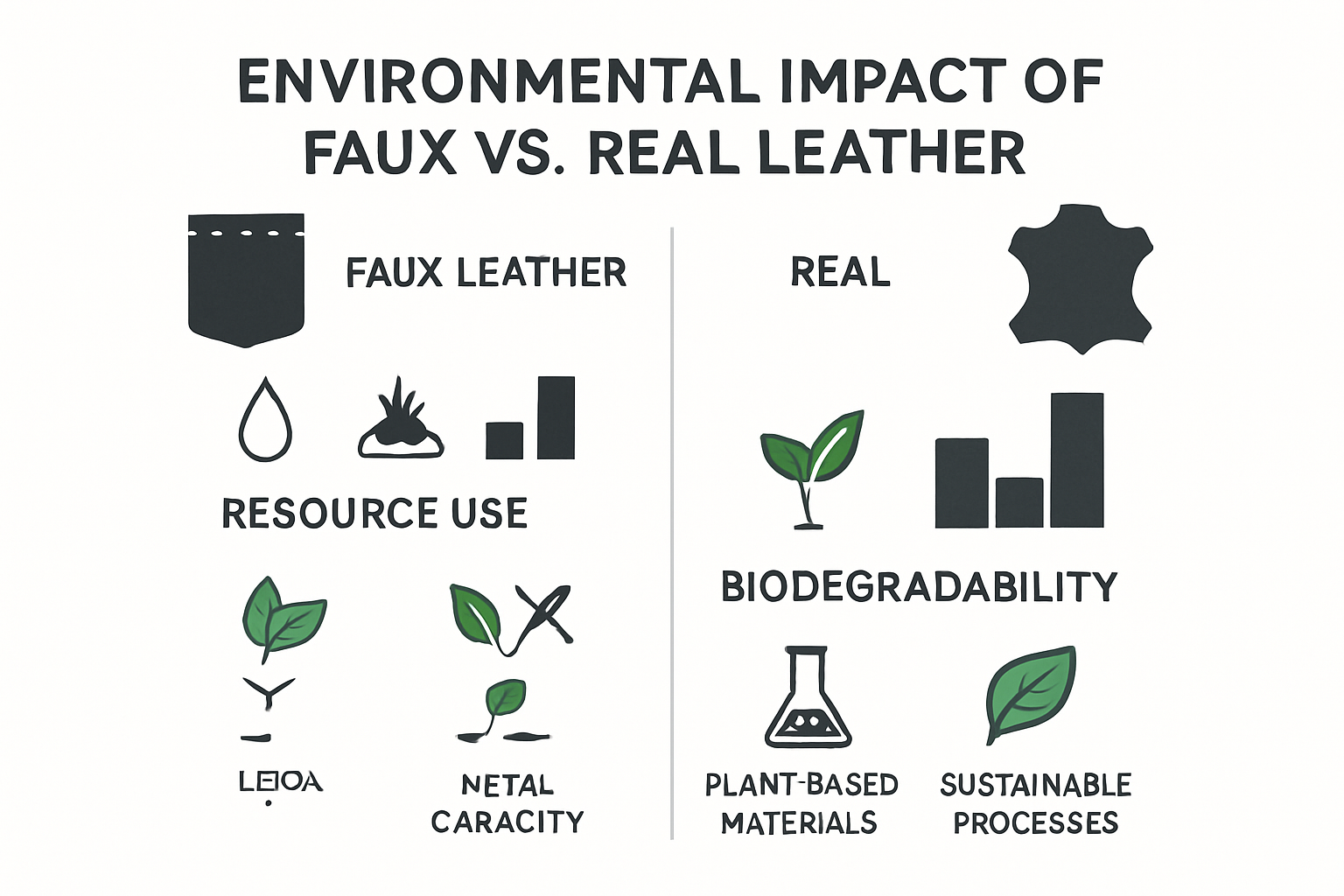
While both leather types present ecological challenges, emerging technologies are developing more sustainable production methods. Innovations like plant-based leather alternatives, recycled synthetic materials, and more efficient tanning processes offer promising solutions to reduce environmental impact. Consumers increasingly prioritize environmentally responsible manufacturing, driving industry transformation towards more sustainable leather production practices.
Comparing Durability and Maintenance Needs
Durability and maintenance represent critical factors when selecting between genuine and faux leather, with each material presenting unique characteristics that influence long-term performance and care requirements. Understanding these differences helps consumers make informed decisions about their leather product investments.
Structural Integrity and Wear Resistance
Scientific research published in the Polymers journal demonstrates that genuine leather typically offers superior structural integrity compared to synthetic alternatives. Real leather develops a distinctive patina over time, becoming more aesthetically appealing with age, while faux leather tends to show wear more quickly.
Key durability considerations include:
- Natural leather’s ability to withstand repeated stress
- Synthetic leather’s potential for surface cracking
- Variation in material thickness and composition
- Long-term performance under different environmental conditions
Maintenance and Care Requirements
Maintenance approaches differ significantly between genuine and faux leather. Real leather demands more specialized care, including periodic conditioning and protection from excessive moisture, while synthetic leather offers easier cleaning and more straightforward maintenance. Discover our leather care recommendations.
Key maintenance factors to consider:
- Cleaning frequency and method
- Susceptibility to environmental damage
- Restoration and repair potential
- Cost and complexity of long-term preservation
While faux leather provides a low-maintenance alternative, genuine leather remains unparalleled in its ability to develop character, withstand rigorous use, and maintain structural integrity over extended periods. Consumers must weigh their specific needs, lifestyle, and aesthetic preferences when selecting between these two distinctive materials.
To help you compare faux leather and real leather at a glance, here is a table summarizing their major differences across key areas.
| Feature | Faux Leather | Real Leather |
|---|---|---|
| Main Material | Synthetic base (usually polyester) coated with PVC or PU | Animal hide (primarily cattle, sheep, goats) |
| Production Process | Polymer coating on fabric, advanced surface treatments | Tanning (vegetable/chrome), skilled craftsmanship |
| Durability | Prone to surface cracking and faster wear | Develops patina, superior structural integrity |
| Maintenance Requirements | Easy to clean, low-specialized care | Requires conditioning, sensitive to moisture |
| Environmental Concerns | Non-biodegradable, petroleum-based, potential chemical waste | High water & land use, methane emissions |
| Ethical Considerations | No animal use, supports animal welfare | Biodegradable, traditional craftsmanship |
| Appearance | Consistent color, contemporary finishes | Natural grain, unique texture, ages over time |
Choosing the Right Option for Your Style and Ethics
Selecting between genuine and faux leather involves navigating complex personal considerations that extend beyond mere aesthetic preferences. Ethical considerations, lifestyle requirements, and individual values play crucial roles in making an informed decision about leather material selection.
Personal Style and Aesthetic Preferences
Leather represents more than just a material choice it embodies a personal statement about individual style and aesthetic sensibility. Genuine leather offers a timeless, classic appearance with natural variations and a rich patina that develops over time, while faux leather provides contemporary design flexibility and consistent color options.
Key style considerations include:
- Natural texture and unique grain patterns of genuine leather
- Consistent color and finish of synthetic materials
- Potential for customization and design versatility
- Alignment with personal fashion philosophy
Ethical and Philosophical Considerations
Modern consumers increasingly prioritize ethical manufacturing and environmental sustainability when making material choices. Faux leather appeals to individuals committed to animal welfare, while some consumers prefer genuine leather’s traditional craftsmanship and biodegradable properties. Explore our commitment to responsible fashion choices.
Ethical decision making factors encompass:
- Animal welfare concerns
- Environmental sustainability
- Manufacturing transparency
- Long term material lifecycle

Ultimately, selecting between genuine and faux leather transcends simple material comparison. It represents a personal decision reflecting individual values, aesthetic preferences, and philosophical commitments. Consumers should thoughtfully evaluate their priorities, understanding that both materials offer unique advantages and potential drawbacks in terms of style, performance, and ethical considerations.
Find Your Perfect Leather Match with Maker of Jacket
Understanding the difference between faux and real leather can feel overwhelming. Maybe you struggle to trust if a jacket is truly high quality or worry that faux leather will lack durability. Or you care about animal welfare but still want style and distinction. The article breaks down these challenges and shows how choosing between genuine and synthetic leather involves deeper questions of style, ethics, and practicality. At Maker of Jacket, we make it easy to bridge these gaps. You get complete transparency about the materials in our Maker of Jacket’s collection and freedom to customize your look with either authentic or advanced faux leather.
Stop guessing and start wearing jackets that fit your values and needs. Browse our Maker of Jacket’s collection to see detailed product previews or head to Maker of Jacket to create your own statement piece. Make your choice today. Enjoy premium quality, customer testimonials for confidence, and global free shipping. Your new favorite jacket is just a click away.
Frequently Asked Questions
What is faux leather made of?
Faux leather is primarily made from a synthetic fabric base, usually polyester, that is coated with plastic polymers like PVC or PU. These materials are engineered to mimic the look and feel of genuine leather.
How does the durability of faux leather compare to real leather?
Generally, genuine leather offers superior durability, developing a distinctive patina over time. Faux leather may show wear more quickly and is more susceptible to surface cracking, especially under stress.
What are the environmental impacts of faux leather compared to real leather?
Both faux and real leather have environmental challenges. Real leather production requires considerable land, water, and contributes to greenhouse gas emissions. Conversely, faux leather, made from petroleum-based materials, raises concerns about non-biodegradability and potential chemical waste.
How do maintenance needs differ between faux leather and real leather?
Real leather requires more specialized care, including conditioning and protection from moisture. In contrast, faux leather is generally easier to clean and maintain but may not withstand wear as effectively as genuine leather.


