

Why Leather Jackets Last: Durability Explained for Riders


Over half of American riders say their leather jacket is more than just gear—it is a statement of style and resilience on the road. American motorcycle enthusiasts know firsthand how a well-crafted jacket can reflect personality while offering real protection. This article clears up misconceptions about leather quality, construction, and care so you can spot genuine craftsmanship and invest in a jacket as tough and unique as you are.
Table of Contents
- Leather Jackets Defined And Misconceptions
- Types Of Leather Used In Jackets
- Craftsmanship And Construction Techniques
- How Material Quality Impacts Longevity
- Proper Care And Maintenance Essentials
- Comparing Leather To Other Jacket Materials
Key Takeaways
| Point | Details |
|---|---|
| Understand Leather Types | Recognize the differences between full-grain, top-grain, genuine, and bonded leather to make informed purchasing decisions. |
| Quality Impacts Longevity | The durability and lifespan of a leather jacket are significantly influenced by its material quality and proper care. |
| Prioritize Craftsmanship | Investigate the stitching and construction of the jacket to ensure it meets high durability and safety standards. |
| Compare Materials Effectively | When evaluating jackets, focus on protective performance rather than aesthetic appeal, especially when comparing leather to synthetic options. |
Leather Jackets Defined and Misconceptions
When discussing leather jackets, understanding their fundamental composition and characteristics is crucial for riders seeking quality apparel. Federal Trade Commission guidelines clarify that genuine leather involves complex material processing, distinguishing authentic products from synthetic imitations.
True leather jackets originate from animal hide treated through specialized tanning processes, transforming raw material into durable, flexible fabric. Scientific studies from the National Bureau of Standards reveal that leather’s physical properties depend on multiple factors, including hide origin, tanning method, and treatment techniques. These variations significantly impact the jacket’s density, flexibility, and overall performance characteristics.
Common misconceptions about leather jackets persist among consumers. Many believe all leather products are identical, but professional riders understand substantial differences exist between full-grain, top-grain, genuine, and bonded leather types. Each classification represents a distinct manufacturing process, affecting durability, appearance, and price point. High-quality motorcycle jackets typically utilize full-grain or top-grain leather, which provide superior protection and longevity compared to cheaper alternatives.
Pro tip: When purchasing a leather jacket, always request detailed information about the specific leather type and tanning process to ensure you’re investing in a genuinely high-quality product.
Types of Leather Used in Jackets
Motorcycle riders understand that not all leather is created equal. Scientific research on leather density reveals complex variations in leather types that directly impact jacket performance and durability. Understanding these differences is crucial for selecting the right protective gear.
Four primary leather types dominate motorcycle jacket manufacturing: full-grain, top-grain, genuine, and bonded leather. Full-grain leather represents the highest quality, utilizing the hide’s complete top layer with natural grain intact. This type maintains maximum strength and develops a unique patina over time. Top-grain leather follows closely, with the surface slightly modified to remove imperfections while retaining significant durability. Genuine leather represents a lower-grade option, created by combining leather scraps and synthetic materials, offering reduced protection and shorter lifespan.
Best leather for jackets depend on specific riding conditions and personal preferences. Cowhide remains the most popular motorcycle jacket material due to its excellent abrasion resistance and reasonable cost. Buffalo leather offers superior thickness and durability, making it ideal for extreme riding environments. Exotic leathers like goatskin provide exceptional flexibility and lightweight protection, though at a higher price point.
Pro tip: When evaluating leather jackets, always check the leather’s origin, thickness, and tanning process to ensure maximum protection and longevity for your riding needs.
Here’s a snapshot of how major leather types differ in quality and usage for motorcycle jackets:
| Leather Type | Durability Level | Typical Use in Jackets | Price Range |
|---|---|---|---|
| Full-Grain | Highest durability | Premium protective gear | Most expensive |
| Top-Grain | Very good durability | High-quality fashion gear | Moderately expensive |
| Genuine Leather | Moderate durability | Casual jackets, accessories | Affordable |
| Bonded Leather | Low durability | Low-cost jackets | Cheapest option |
Craftsmanship and Construction Techniques
Artisanal leather jacket craftsmanship represents a complex intersection of skill, technique, and material understanding that transforms raw leather into protective motorcycle gear. True craftsmanship goes far beyond simple stitching, involving intricate knowledge of how leather behaves under different conditions and stress points specific to rider requirements.
Professional leather jacket construction involves several critical techniques that determine long-term durability. Reinforced stitching plays a crucial role, with specialized techniques like double-needle lockstitch and bar tacking used at high-stress areas such as shoulders and elbows. Material density research reveals that proper cutting and alignment of leather pieces significantly impacts the jacket’s overall structural integrity, ensuring maximum protection for riders.
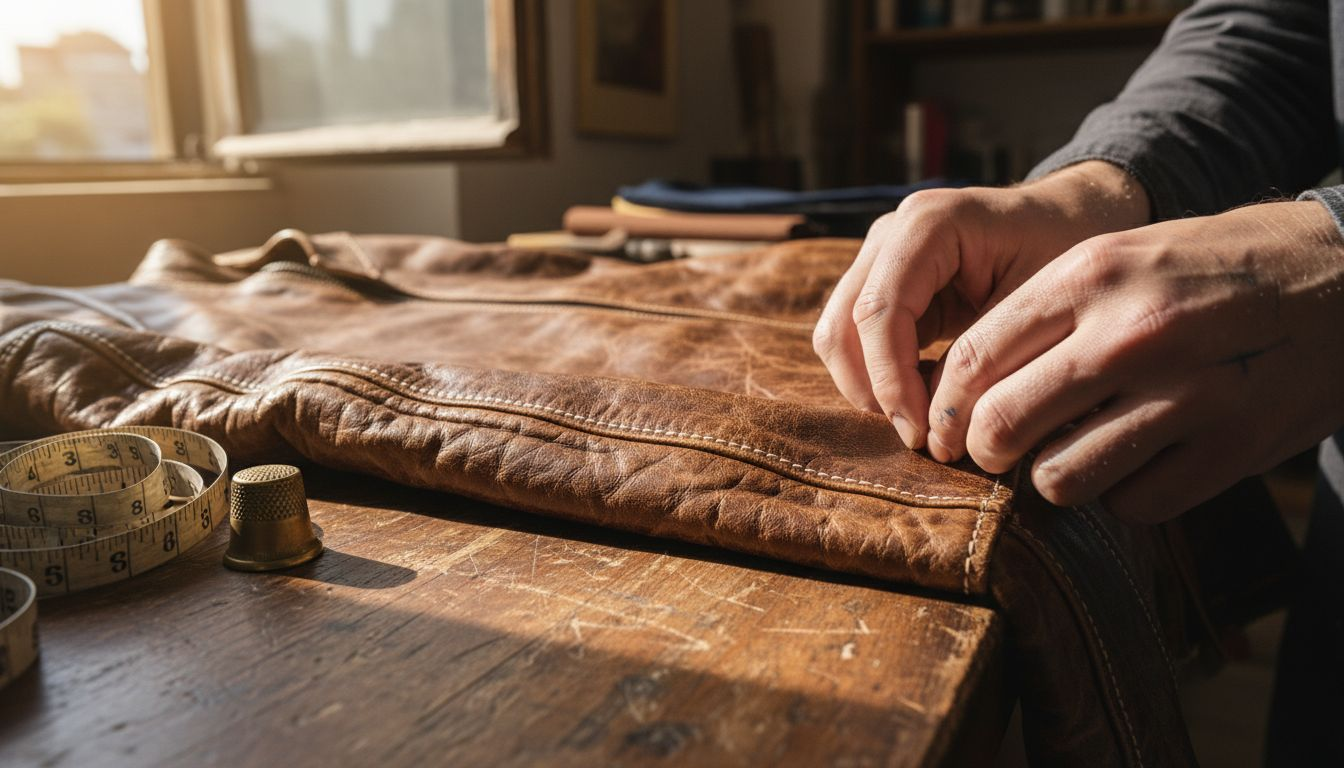
Advanced construction methods distinguish premium leather jackets from mass-produced alternatives. Techniques like leather skiving (thinning edges for smoother seams), precise pattern matching, and strategic panel placement ensure optimal fit and movement. Professional craftsmen carefully consider factors like grain direction, leather thickness, and natural hide characteristics when constructing each jacket, creating garments that not only protect but also adapt to the rider’s body over time.
Pro tip: Inspect a leather jacket’s internal construction by checking the consistency of stitching, looking for reinforced seams, and ensuring smooth, even leather panel alignment to gauge true craftsmanship quality.
How Material Quality Impacts Longevity
Product longevity research demonstrates that material quality represents the most critical factor in determining a leather jacket’s lifespan. For motorcycle riders, this means understanding how microscopic material characteristics translate directly into years of reliable protection and performance.
The fundamental quality indicators of leather durability include tensile strength, fiber density, and resistance to environmental stressors. Material measurement techniques reveal that premium leather jackets maintain structural integrity through carefully controlled manufacturing processes. High-quality leather undergoes rigorous testing to ensure it can withstand repeated stress, UV exposure, moisture, and the intense friction experienced during motorcycle riding. Factors like grain consistency, natural hide selection, and precise tanning methods dramatically influence a jacket’s ability to resist wear and maintain its protective qualities.
Beyond initial material selection, leather jacket longevity depends on complex interactions between material properties and environmental conditions. Full-grain leather from carefully selected hides demonstrates superior performance, with natural fibers creating a dense, interwoven structure that resists tearing and maintains flexibility. Professional-grade jackets utilize leather with minimal surface treatments, allowing the material’s inherent strength to provide maximum protection while developing a unique patina that tells the story of countless rides.
Pro tip: When evaluating a leather jacket’s potential longevity, examine the leather’s grain tightness, check for consistent coloration, and bend the material to assess its natural flexibility and strength.
Proper Care and Maintenance Essentials
Personal protective equipment maintenance guidelines emphasize that proper leather jacket care is not just about appearance, but critical for preserving safety and performance. Motorcycle riders must understand that a leather jacket represents a significant investment in personal protection, requiring systematic and thoughtful maintenance.
The fundamental maintenance routine involves regular cleaning and conditioning. Different leather types demand specific approaches: full-grain leather requires gentle leather cleansers that preserve natural oils, while treated leather might need specialized products. Protective equipment care protocols recommend cleaning jackets after exposure to intense conditions like dust, mud, or road grime. Use a soft, damp cloth for initial cleaning, followed by a leather-specific conditioner that replenishes moisture and prevents cracking.
Storage plays a crucial role in leather jacket longevity. Riders should hang jackets on wide, padded hangers to maintain shape, avoiding direct sunlight and extreme temperatures that can cause leather to dry and become brittle. Periodic inspections for wear, loose stitching, or potential damage are essential. Pay special attention to high-stress areas like elbows, shoulders, and seams. Professional leather repair services can address minor issues before they compromise the jacket’s structural integrity or protective capabilities.
Pro tip: Invest in a breathable garment bag for off-season storage and apply a thin layer of leather conditioner before extended periods of non-use to prevent moisture loss and maintain jacket flexibility.
Comparing Leather to Other Jacket Materials
Material science research demonstrates that leather remains unparalleled in motorcycle protective gear, offering unique performance characteristics that synthetic materials struggle to replicate. Riders require jackets that provide exceptional durability, impact resistance, and environmental adaptability under challenging conditions.
The comparative performance metrics reveal stark differences between leather and alternative materials. Physical property analysis shows leather outperforms textiles like nylon and polyester in critical areas: tensile strength, abrasion resistance, and temperature regulation. Synthetic materials might offer lighter weight, but they catastrophically fail during high-impact scenarios, whereas leather maintains structural integrity and provides genuine protective capabilities.
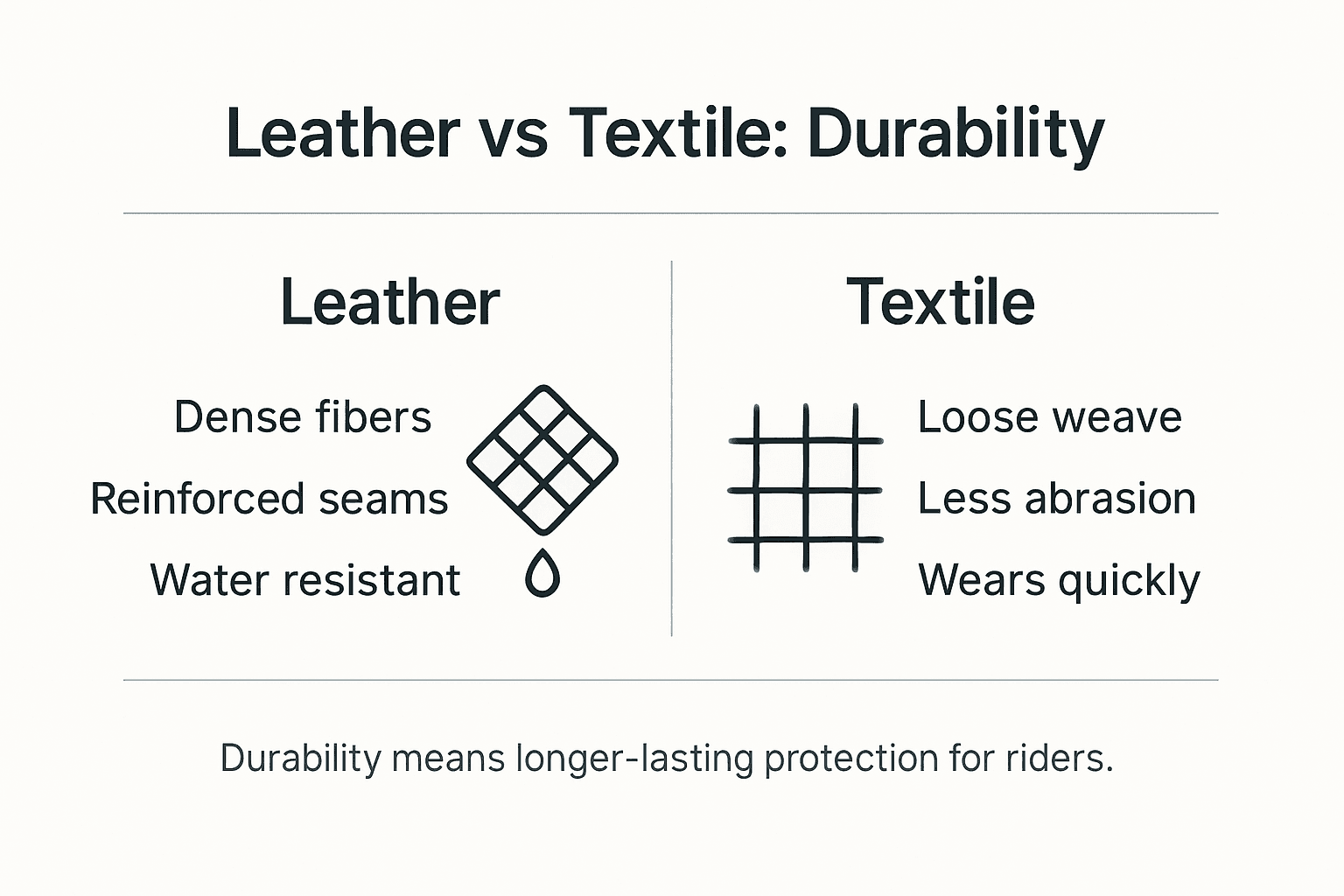
Key performance comparisons highlight leather’s superiority across multiple dimensions. Textile jackets quickly degrade under UV exposure and mechanical stress, while leather develops a protective patina that actually increases durability over time. Cowhide versus buffalo leather comparisons demonstrate nuanced differences within leather types themselves, with each variant offering unique advantages for specific riding environments and personal preferences.
Pro tip: When comparing jacket materials, prioritize protective performance over aesthetic considerations and always test the material’s flexibility, thickness, and resistance to tearing.
Compare these common jacket materials based on safety and comfort characteristics:
| Material | Abrasion Resistance | Impact Protection | Temperature Regulation |
|---|---|---|---|
| Leather | Excellent | Very good | Adapts to conditions |
| Nylon | Moderate | Low | Cools quickly |
| Polyester | Low | Very low | Lightweight feel |
| Buffalo Leather | Superior | Exceptional | Retains warmth |
Discover Durability That Matches Your Riding Passion
Understanding why leather jackets last involves recognizing the importance of quality craftsmanship and premium materials like full-grain and top-grain leather. For riders seeking long-lasting protection that adapts with every ride, investing in a jacket tailored to your needs is essential. At Maker of Jacket, we specialize in customizable leather motorcycle jackets that combine superior durability with personalized style, perfect for those who demand excellence.

Explore our biker leather collections from here https://www.makerofjacket.com/product-category/biker-jackets/to find your ideal jacket built with reinforced stitching and genuine leather that will stand the test of time. For a comprehensive selection or to design your own piece, visit https://makerofjacket.com and start your journey towards outstanding quality and lasting performance today. Don’t wait to protect yourself with gear crafted for real riders and crafted for life.
Frequently Asked Questions
What are the different types of leather used in jackets?
Full-grain, top-grain, genuine, and bonded leather are the primary types used in motorcycle jackets. Each type varies in durability, appearance, and overall quality, impacting their performance for riders.
How does craftsmanship affect the durability of leather jackets?
Quality craftsmanship, including reinforced stitching and careful panel alignment, enhances durability. Techniques like double-needle lockstitching at stress points significantly contribute to a leather jacket’s longevity and reliability in protection.
What maintenance is required for leather jackets to ensure their longevity?
Regular cleaning and conditioning are essential for maintaining leather jackets. Use appropriate leather cleaners and conditioners, and store the jacket on padded hangers away from sunlight to preserve its shape and flexibility.
How do leather jackets compare to synthetic materials in terms of durability?
Leather jackets generally outperform synthetic materials like nylon and polyester in abrasion resistance and impact protection. Leather retains its durability over time and adapts to different environmental conditions, while synthetic options tend to degrade quicker under stress.


