

Leather Jacket Care Tips: Keep Your Style Fresh in 2025

Leather jackets never go out of style and they carry memories with every crease and scratch. Most people think tossing one in a closet or wiping it down once in a while will keep it looking new. Yet neglecting proper care can cut a leather jacket’s lifespan in half and ruin its signature look in less than a year. There are smarter and easier ways to keep your leather jacket sharp and rugged for years without sacrificing comfort or style.
Table of Contents
- Choosing The Best Cleaning Methods
- How To Store And Protect Leather Jackets
- Fixing Common Leather Jacket Issues
- Adding Personal Style While Caring For Leather
Quick Summary
| Takeaway | Explanation |
|---|---|
| Know your leather type. | Different leathers require specific cleaning methods to maintain their quality. Understand whether yours is full-grain, top-grain, or suede. |
| Store in a cool, dry place. | Proper storage conditions prevent mold and preserve the jacket’s structure. Use breathable bags and padded hangers for best results. |
| Address minor damage promptly. | Small scratches can be fixed easily with conditioners or kits. For deeper scuffs, consider professional repair services for a seamless fix. |
| Limit exposure to elements. | Protect your jacket by avoiding direct sunlight and moisture. These factors can cause fading and material degradation, reducing its lifespan. |
| Personalize without damage. | Customize your jacket to reflect your style, but ensure modifications do not compromise its structural integrity or material quality. |
Choosing the Best Cleaning Methods
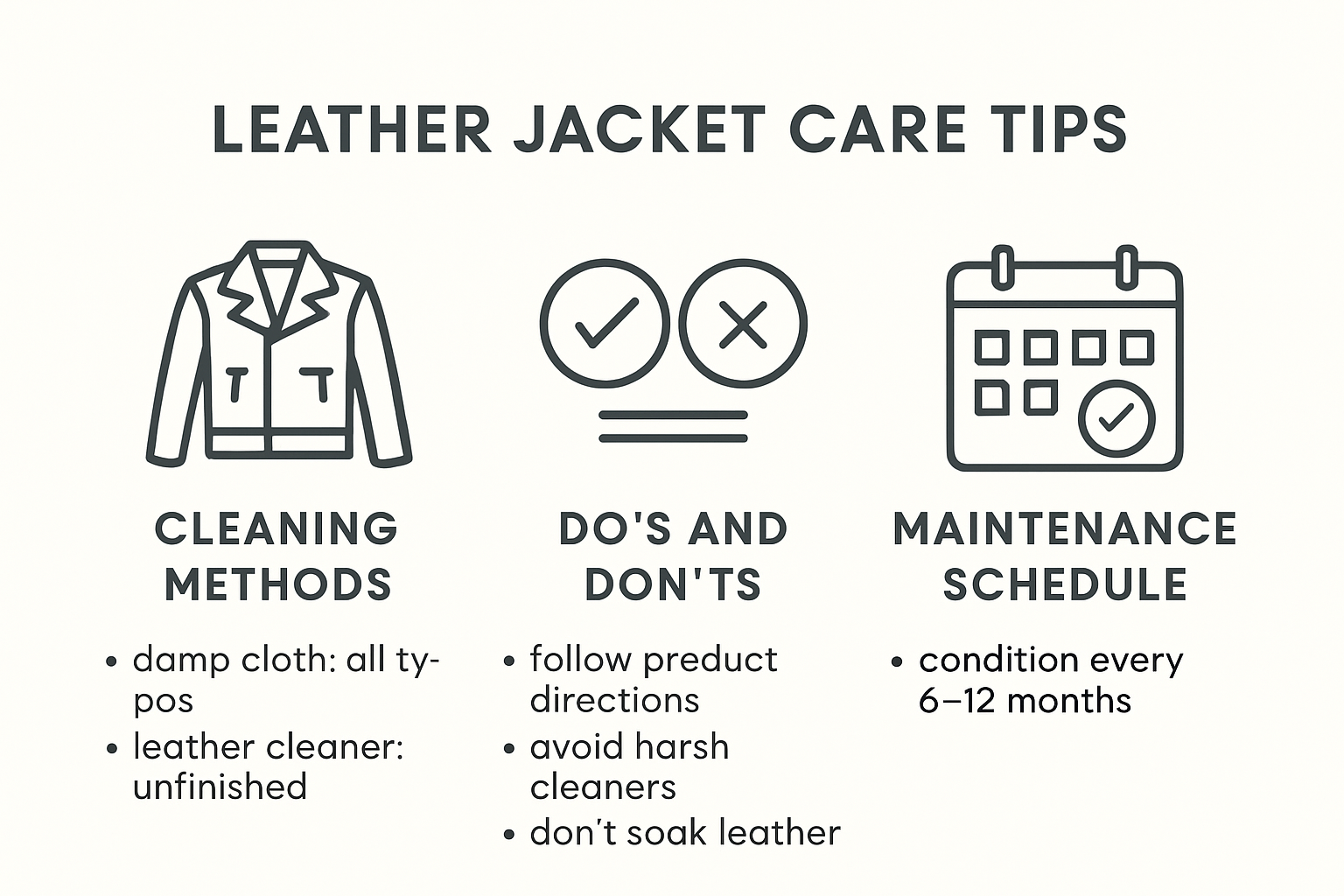
Cleaning your leather jacket requires precision and care. Different leather types demand unique approaches to maintain their integrity and appearance. Understanding the nuanced techniques will help preserve your investment and keep your jacket looking pristine.
Understanding Leather Surface Types
Leather jackets are not a one-size-fits-all when it comes to cleaning. Full-grain, top-grain, and suede leather each require specialized treatment. Fashion Schools recommends understanding your specific leather type before attempting any cleaning method.
Full-grain leather typically responds best to gentle spot cleaning using a slightly damp microfiber cloth. Avoid saturating the material. For top-grain leather, which has been sanded and processed, use a soft brush to remove surface dust and dirt before applying any cleaning solution. Suede requires the most delicate approach, often needing specialized suede brushes and cleaning products designed specifically for its unique texture.
Below is a comparison table that summarizes the recommended cleaning methods for different leather types to help you quickly identify the best approach for your jacket.
| Leather Type | Recommended Cleaning Method | Precautions |
|---|---|---|
| Full-Grain | Spot clean with damp microfiber cloth | Do not saturate with water |
| Top-Grain | Soft brush for dust, apply leather cleaner if needed | Test cleaner on inconspicuous area first |
| Suede | Use specialized suede brush and suede-specific products | Avoid water and common leather cleaners |
Professional vs. Home Cleaning Techniques
While DIY cleaning seems economical, professional leather cleaning services offer expertise that can significantly extend your jacket’s lifespan. Leather Care Experts suggest that professional cleaners understand how different treatments interact with various leather finishes.
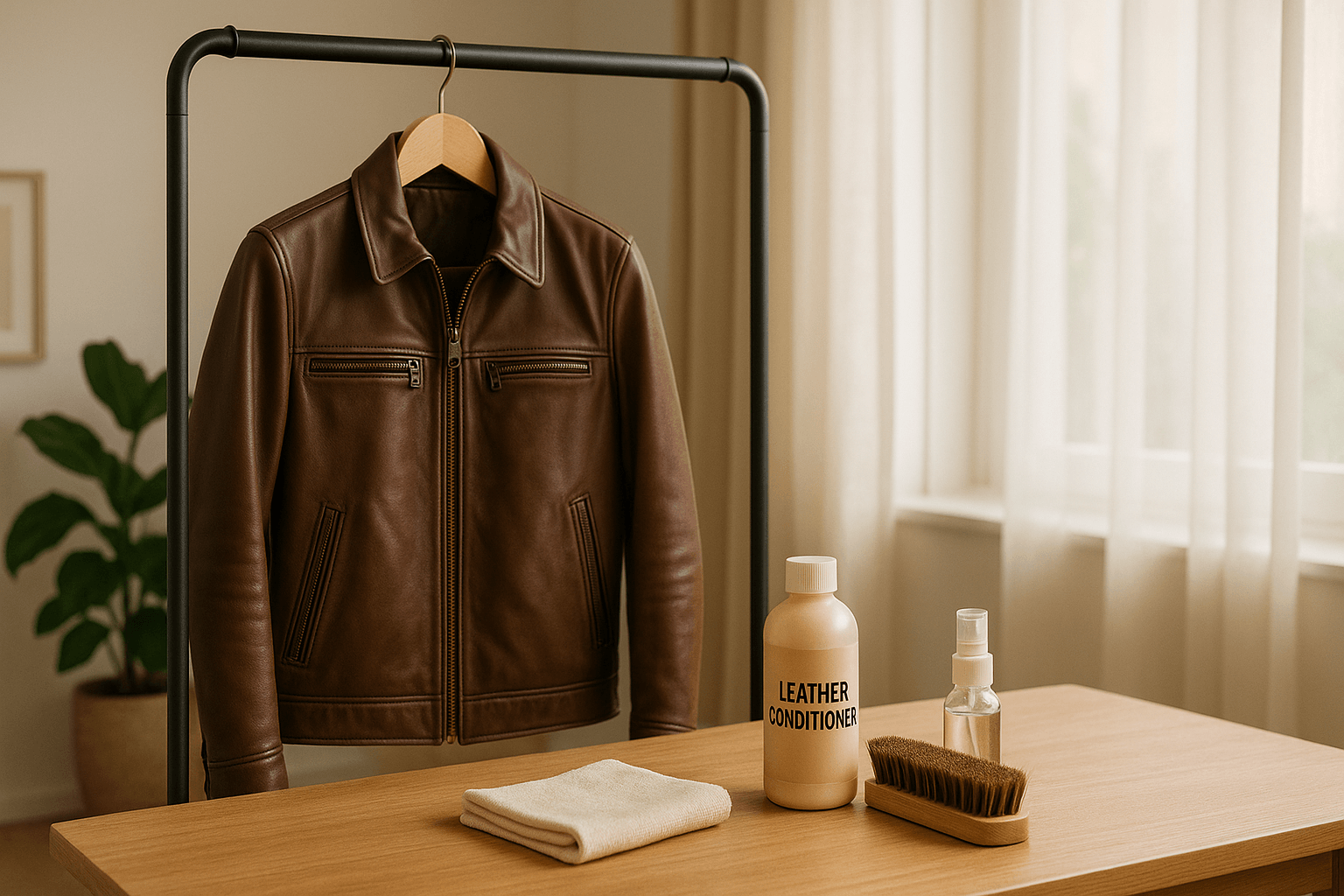
For home maintenance, create a cleaning kit with essential tools: soft microfiber cloths, a soft-bristled brush, mild leather soap, and a leather conditioner. When spot cleaning, use minimal moisture and always test any product on an inconspicuous area first. Avoid household cleaners, which can strip natural oils and damage the leather’s surface.
Preventative Maintenance Strategies
Prevention is the most effective leather jacket care strategy. Store your jacket in a cool, dry place away from direct sunlight. Use padded hangers to maintain the jacket’s shape and avoid folding, which can create permanent creases. Regular light brushing removes surface dust and prevents dirt accumulation.
Consider applying a light leather protectant spray every few months to create a barrier against moisture and stains. This simple step can dramatically reduce the frequency and intensity of cleaning required. Remember that leather is a natural material that requires breathing space and gentle treatment to maintain its characteristic suppleness and shine.
By implementing these leather jacket care tips, you’ll ensure your garment remains a stylish and durable piece in your wardrobe for years to come.
How to Store and Protect Leather Jackets
Protecting your leather jacket requires strategic storage and thoughtful handling. Understanding the right preservation techniques will ensure your investment remains stylish and functional for years to come.
Optimal Storage Environment
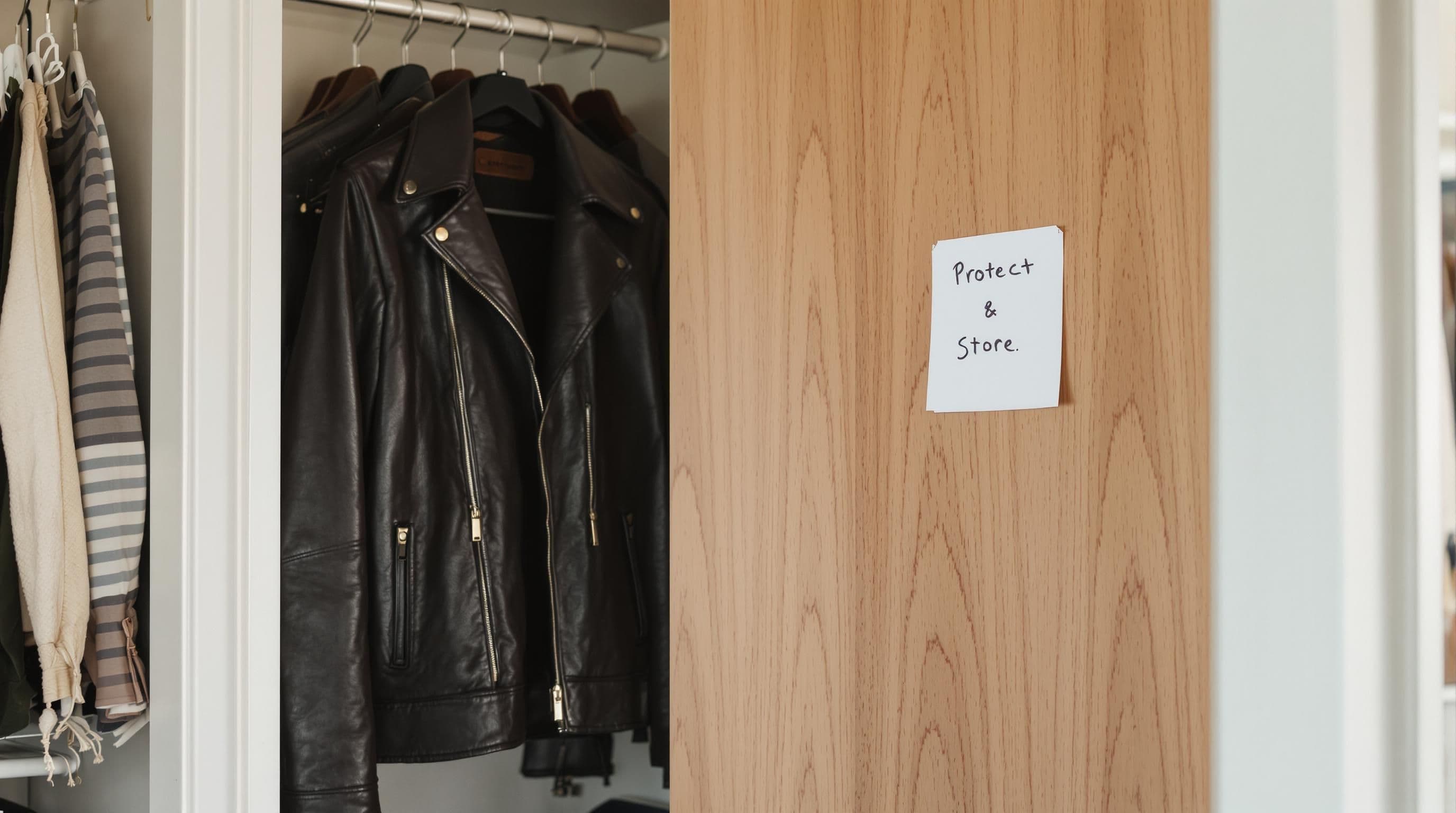
Ohio State University Extension emphasizes the critical importance of proper storage conditions for leather garments. Temperature and humidity play significant roles in maintaining leather’s integrity. Aim to store your jacket in a cool, dry environment with consistent temperature between 60-70 degrees Fahrenheit. Avoid areas with extreme temperature fluctuations like attics, basements, or near heating vents.
Breathable storage solutions are paramount. Use cotton or canvas garment bags that allow air circulation while protecting against dust and potential moisture. Plastic covers trap humidity and can promote mildew growth, which damages leather’s natural structure. Invest in a wide, padded hanger that supports the jacket’s shoulders and prevents unnecessary stretching or misshaping.
The following table breaks down optimal storage tips versus common mistakes when storing leather jackets.
| Best Storage Practice | Description | Common Mistake to Avoid |
|---|---|---|
| Cool, dry environment | Store in temp. between 60-70°F, away from sunlight | Storing in attics/basements or near heat |
| Breathable garment bags | Use cotton/canvas bags for air circulation | Using plastic covers |
| Wide, padded hangers | Maintains shoulder shape and structure | Using wire/thin hangers |
| Dedicated closet space | Prevents compression and rubbing against other garments | Overcrowding or folding the jacket |
Protective Measures Against Environmental Damage
Leather is sensitive to direct sunlight and can fade or dry out when exposed for prolonged periods. Leather Conservation Society recommends storing jackets away from windows or using UV-protective covers. When not in use, keep your jacket in a dark, climate-controlled space to preserve its color and prevent material degradation.
Consider using silica gel packets in your storage area to absorb excess moisture. These small packets help maintain an optimal humidity level and prevent potential mold or mildew development. Rotate your jacket periodically to ensure even air circulation and prevent creasing in specific areas.
Long-Term Preservation Strategies
For extended storage periods, such as seasonal transitions, take additional precautions. Clean your leather jacket thoroughly before storing it for extended times. Apply a thin layer of leather conditioner to prevent the material from drying out. Stuff the shoulders gently with acid-free tissue paper to maintain the jacket’s shape and prevent unwanted creasing.
Avoid hanging leather jackets in tight closet spaces where they might get compressed or rubbed against other garments. If possible, allocate a dedicated section of your closet for leather apparel. When traveling, use garment bags with soft interiors and avoid folding the jacket, which can create permanent creases.
By implementing these meticulous storage and protection techniques, you’ll safeguard your leather jacket’s quality, ensuring it remains a timeless piece in your wardrobe that continues to look sophisticated and well-maintained.
Fixing Common Leather Jacket Issues
Leather jackets are resilient but not indestructible. Understanding how to address common issues can save your cherished garment from permanent damage and extend its lifespan significantly.
Addressing Surface Scratches and Scuffs
Leather Repair Institute explains that surface-level leather damage can often be remedied with targeted techniques. Minor scratches can frequently be minimized using specialized leather repair kits or professional restoration methods. For shallow scratches, gently rubbing the area with a soft cloth and applying a matching leather conditioner can help blend the imperfection.
When dealing with deeper scratches, consider professional leather restoration services. These experts use color-matched compounds and precise application techniques to seamlessly repair more significant surface damage. Home remedies like using shoe polish or leather balm can temporarily camouflage minor imperfections, but they are not long-term solutions.
Handling Moisture and Water Damage
Leather Care Professionals recommend immediate action when leather becomes wet. Never use direct heat sources like hairdryers or radiators to dry leather, as this can cause permanent cracking and material distortion. Instead, gently pat the jacket with a soft, absorbent towel and allow it to air dry naturally at room temperature.
If your leather jacket becomes significantly soaked, stuff it loosely with clean paper towels to help absorb moisture and maintain its shape. Replace the paper towels periodically as they become damp. Once dry, apply a leather conditioner to restore the material’s natural oils and prevent potential stiffening or cracking.
Managing Stretch and Shape Restoration
Leather jackets can sometimes lose their original shape due to improper storage or prolonged wear. To restore structure, use strategic reshaping techniques. Hang the jacket on a wide, padded hanger and gently manipulate the material back to its original form. For shoulders that have stretched or become misshapen, careful steaming can help realign the leather fibers.
In cases of significant stretching or structural damage, professional leather tailoring services can provide precise alterations. These specialists understand leather’s unique properties and can make adjustments without compromising the jacket’s integrity. Avoid attempting major structural repairs at home, as leather requires specialized handling.
By understanding these repair strategies, you can address common leather jacket issues proactively. Regular maintenance, careful handling, and timely interventions will help preserve your jacket’s appearance and structural integrity, ensuring it remains a stylish and durable wardrobe staple for years to come.
Adding Personal Style While Caring for Leather
Leather jackets transcend mere clothing items they are canvases for personal expression. Maintaining your jacket’s quality while infusing it with unique character requires a delicate balance of care and creativity.
Customization and Personalization Techniques
The Guardian emphasizes that personalizing leather doesn’t mean compromising its integrity. Consider subtle customizations like carefully selected patches, minimal embroidery, or tasteful pin placements. These additions should complement the jacket’s natural lines and not compromise the leather’s structural integrity.
Professional leather artisans can help create bespoke modifications that enhance your jacket’s personality. Techniques like strategic color blocking, custom zipper replacements, or carefully placed decorative stitching can transform a standard leather jacket into a unique statement piece. Always consult professionals who understand leather’s delicate nature to ensure modifications do not damage the material.
Maintaining Style and Functionality
GreenEarth Cleaning recommends maintaining your jacket’s stylish appearance through regular, gentle care. Condition your leather at least four times annually to keep it soft and prevent cracking. Avoid spraying hairspray, perfume, or cologne directly onto the jacket, as these substances can degrade the leather’s finish.
Accessorizing can also elevate your leather jacket’s style while protecting it. Consider silk or lightweight cotton scarves that can be strategically draped to add color and protect high-wear areas. Leather-specific belts or subtle belt attachments can cinch the waist and create a more tailored silhouette without compromising the jacket’s structural integrity.
Creative Styling and Preservation
Los Angeles Times highlights the importance of thoughtful styling in leather jacket maintenance. Rotate your jacket with other outerwear to prevent excessive wear in specific areas. When styling, choose complementary fabrics and colors that enhance the leather’s natural texture and sheen.
Experiment with layering techniques that protect your jacket while creating dynamic visual interest. Lightweight merino wool sweaters, breathable cotton shirts, or delicate silk underlayers can add depth to your outfit while providing an additional protective barrier for the leather. Pay attention to the jacket’s fit and how different layers interact with its structure.
By approaching leather jacket care as an art form, you transform maintenance from a chore into a creative expression. Your jacket becomes more than a garment it becomes a personal narrative, telling a story of careful preservation and individual style. Embrace the journey of keeping your leather jacket both impeccably maintained and uniquely yours.
Frequently Asked Questions
What are the best cleaning methods for different leather types?
Different leather types require specific cleaning methods. For full-grain leather, use a slightly damp microfiber cloth for spot cleaning. Top-grain leather is best cleaned with a soft brush, while suede requires specialized brushes and products. Always check your cleaning solution on an inconspicuous area first.
How should I store my leather jacket to maintain its quality?
Store your leather jacket in a cool, dry place away from direct sunlight. Use breathable garment bags made from cotton or canvas, and hang your jacket on wide, padded hangers to maintain its shape and prevent creasing.
What should I do if my leather jacket gets wet?
If your leather jacket gets wet, gently pat it dry with a soft towel and let it air dry at room temperature. Avoid using direct heat sources like hairdryers, as they can cause the leather to crack. After drying, apply a leather conditioner to restore its natural oils.
Can I customize my leather jacket without damaging it?
Yes, you can customize your leather jacket without compromising its integrity. Subtle customization options include adding patches or minimal embroidery. Always consult a professional leather artisan for significant modifications to ensure the leather remains undamaged.
Elevate Your Leather Jacket Care With Custom Solutions
You’ve learned how vital proper cleaning, storage, and quick damage fixes are for keeping your leather jacket sharp and stylish. Still, even with perfect care, many jackets fall short if they lack the exact look or fit you crave. Maybe you struggle to find a jacket that matches your vision or you feel like off-the-rack options limit your personal expression. You might even wonder if the effort you put into maintenance really pays off when the jacket doesn’t feel truly yours.
At Maker of Jacket, you never have to settle. We let you design the leather jacket you want, with custom materials, colors, personalized patches, and perfect sizing. Enjoy world-class craftsmanship and worldwide free shipping to make your experience stress-free from start to finish. Go from learning about leather care to wearing the jacket that fits your style and story. Visit Maker of Jacket now and start creating a leather jacket as unique as your journey.


