

How to Fix a Leather Jacket Peeling?

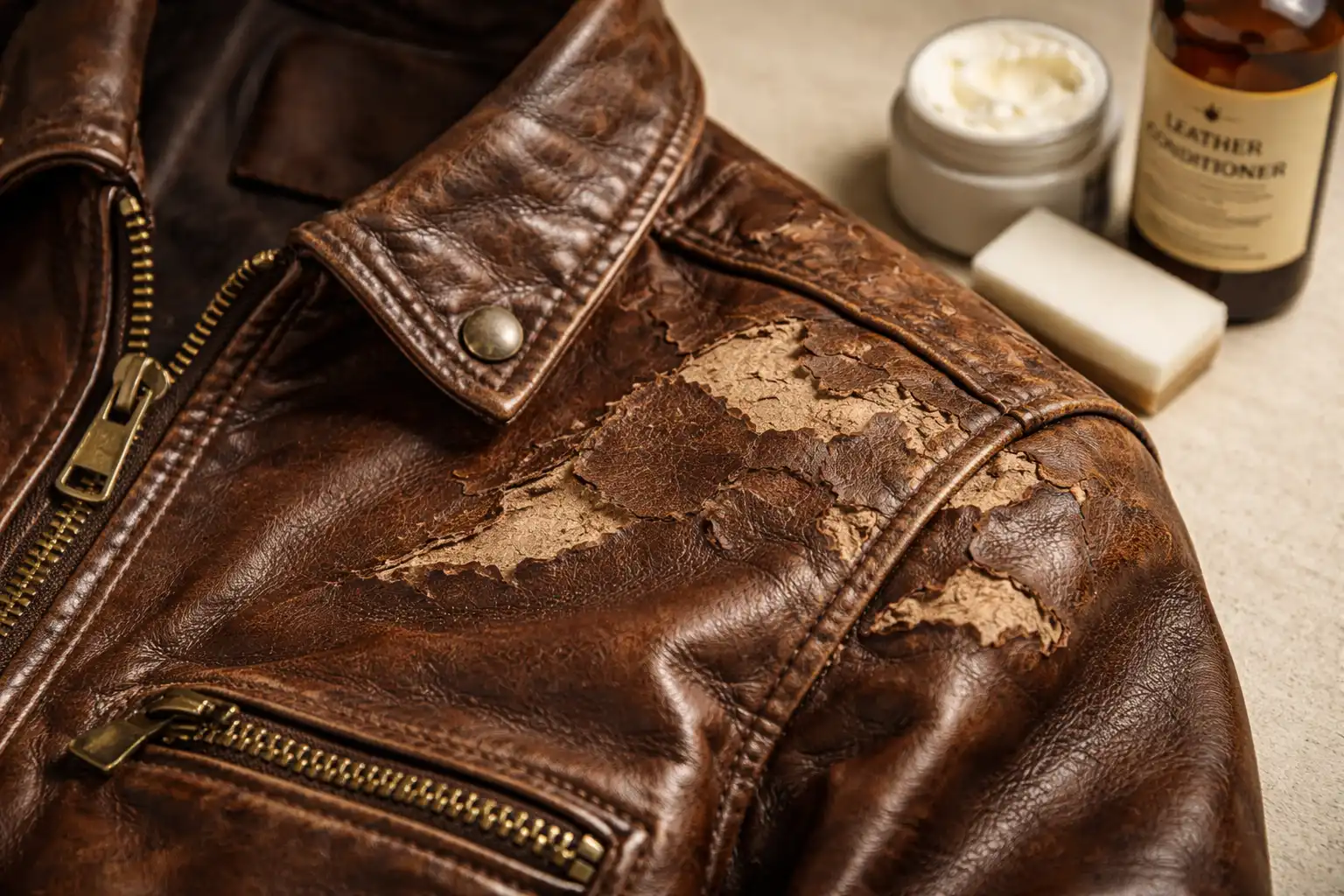
A leather jacket represents durability, confidence, and long-term style. When peeling appears, many people assume the jacket has lost its value. That assumption often leads to unnecessary replacement, even when repair remains possible. Peeling usually signals surface damage, poor maintenance, or material breakdown rather than complete failure.
This guide explains how to fix leather jacket peeling in a structured and practical way. You will understand the causes, learn how to identify leather type, apply the correct repair method, and protect your jacket from further damage.
What Causes Leather Jackets to Peel?
Peeling never appears without warning. Leather reacts to its environment, care routine, and material quality. Once you understand these factors, you reduce repeat damage after repair.
Low-Quality or Bonded Leather
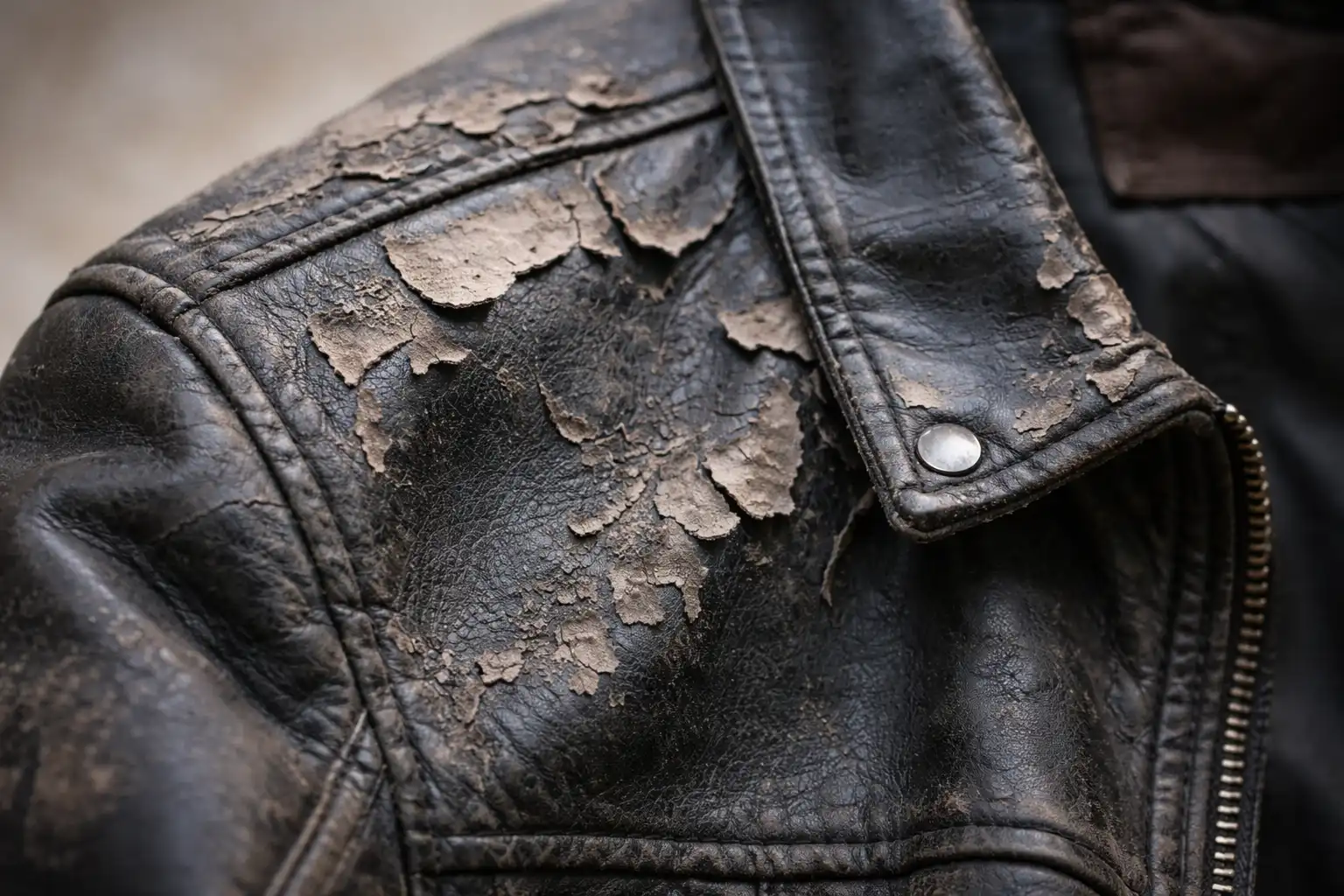
Many jackets use bonded leather or synthetic blends that rely on a surface coating rather than natural fibers. Over time, this coating separates from the base layer and begins to flake. This type of peeling spreads quickly and often affects budget jackets more than premium ones.
Lack of Moisture and Conditioning
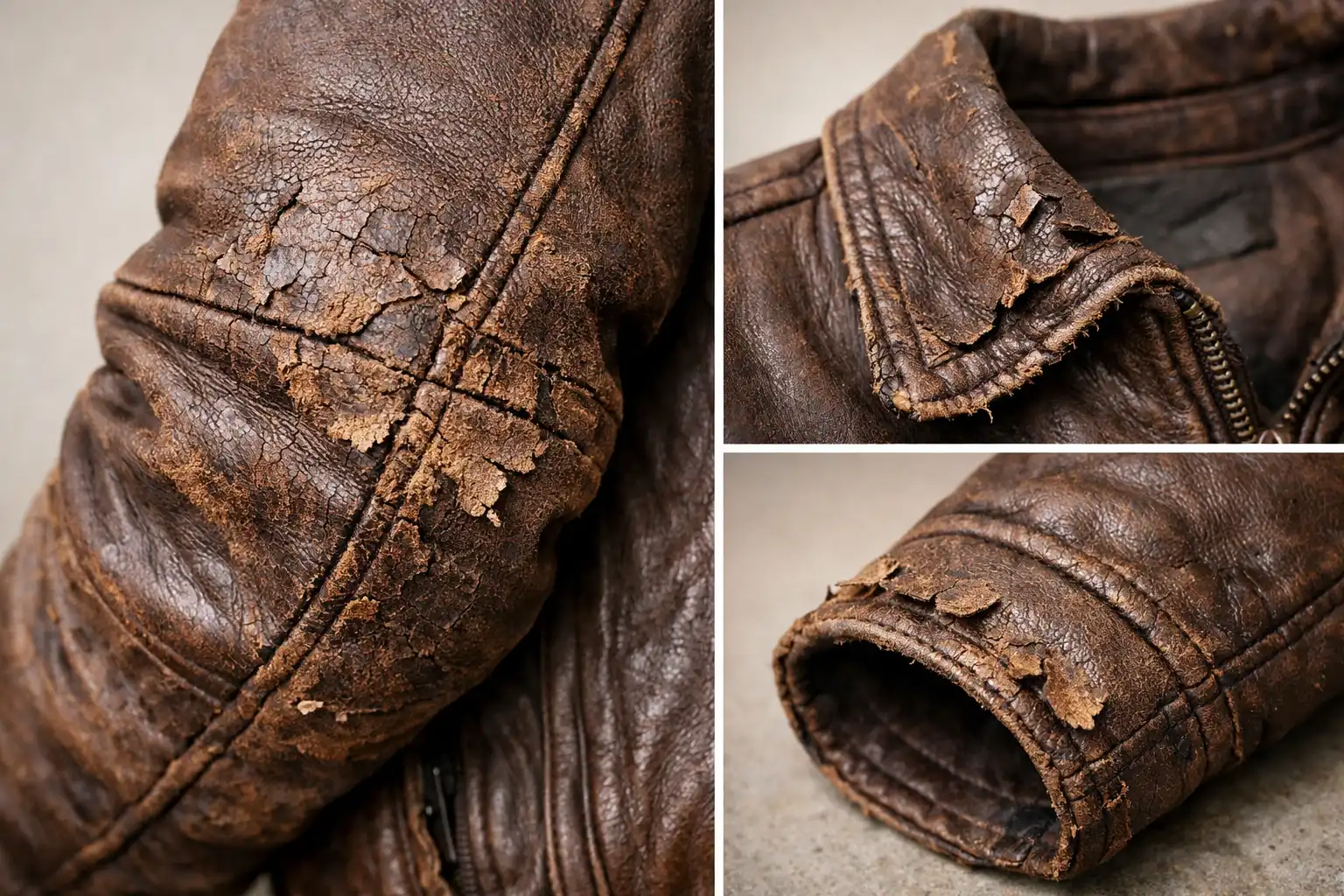
Leather loses flexibility when natural oils dry out. Without regular conditioning, the surface becomes stiff and fragile. Small cracks appear first, then widen into visible peeling, especially in high-movement areas such as elbows, collars, and cuffs.
Sunlight, Heat, and Humidity Exposure
Direct sunlight pulls moisture from leather and weakens surface coatings. Heat accelerates drying, while humidity disrupts the leather structure. Repeated exposure to these conditions often leads to leather jacket coating peeling and uneven surface texture.
Harsh Cleaning Products
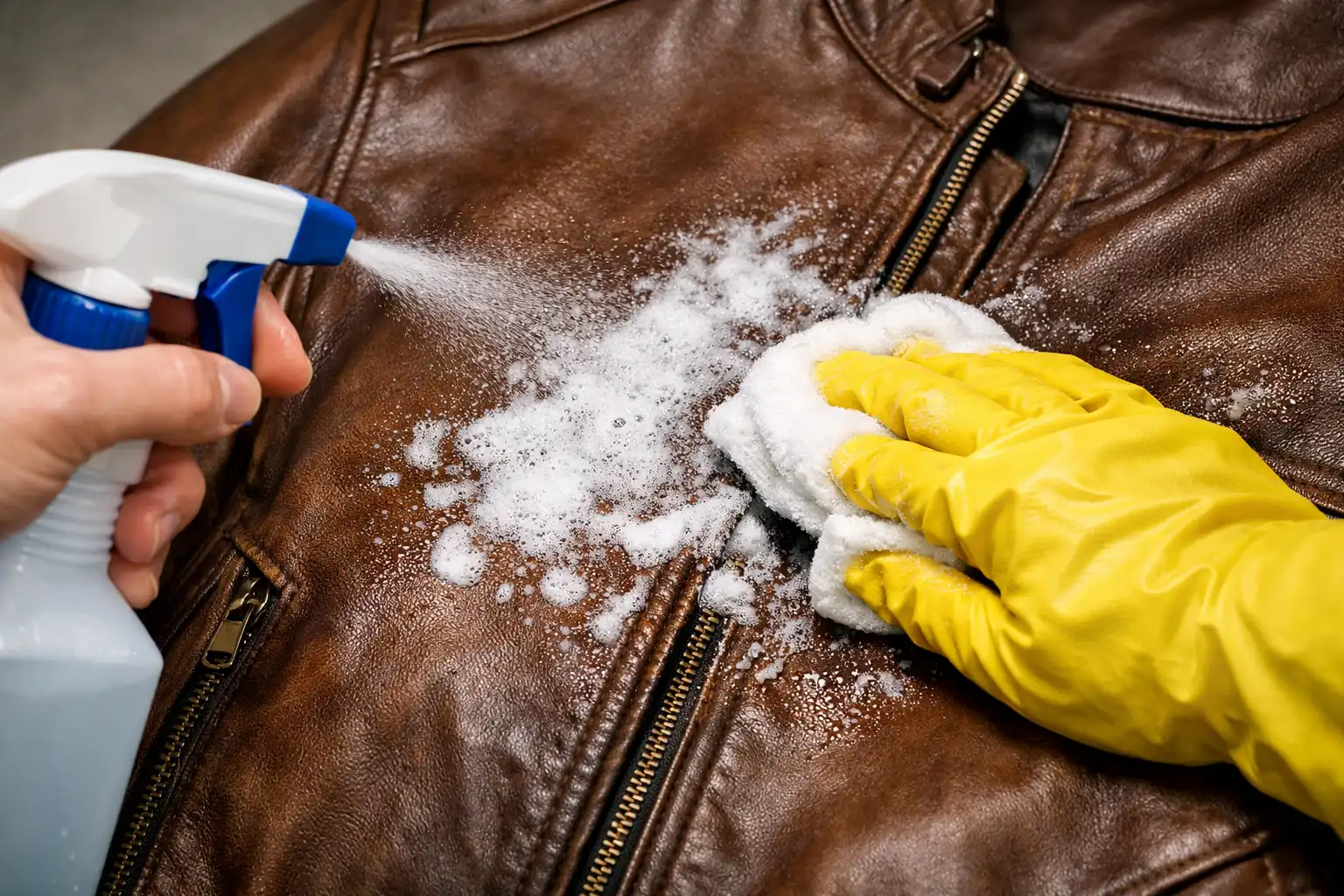
Household cleaners strip protective layers from leather. Alcohol, detergents, and chemical wipes damage finishes and cause premature peeling. Even one incorrect cleaning session can shorten a jacket’s lifespan significantly.
Friction, Wear, and Poor Storage

Frequent rubbing, tight folding, and narrow hangers stress the leather surface. Over time, friction breaks down coatings and fibers, which leads to peeling at seams, shoulders, and pocket edges.
Is Your Jacket Real Leather or Faux Leather?
Correct identification prevents wasted effort and poor results. Each material responds differently to repair.
How to Identify Real Leather
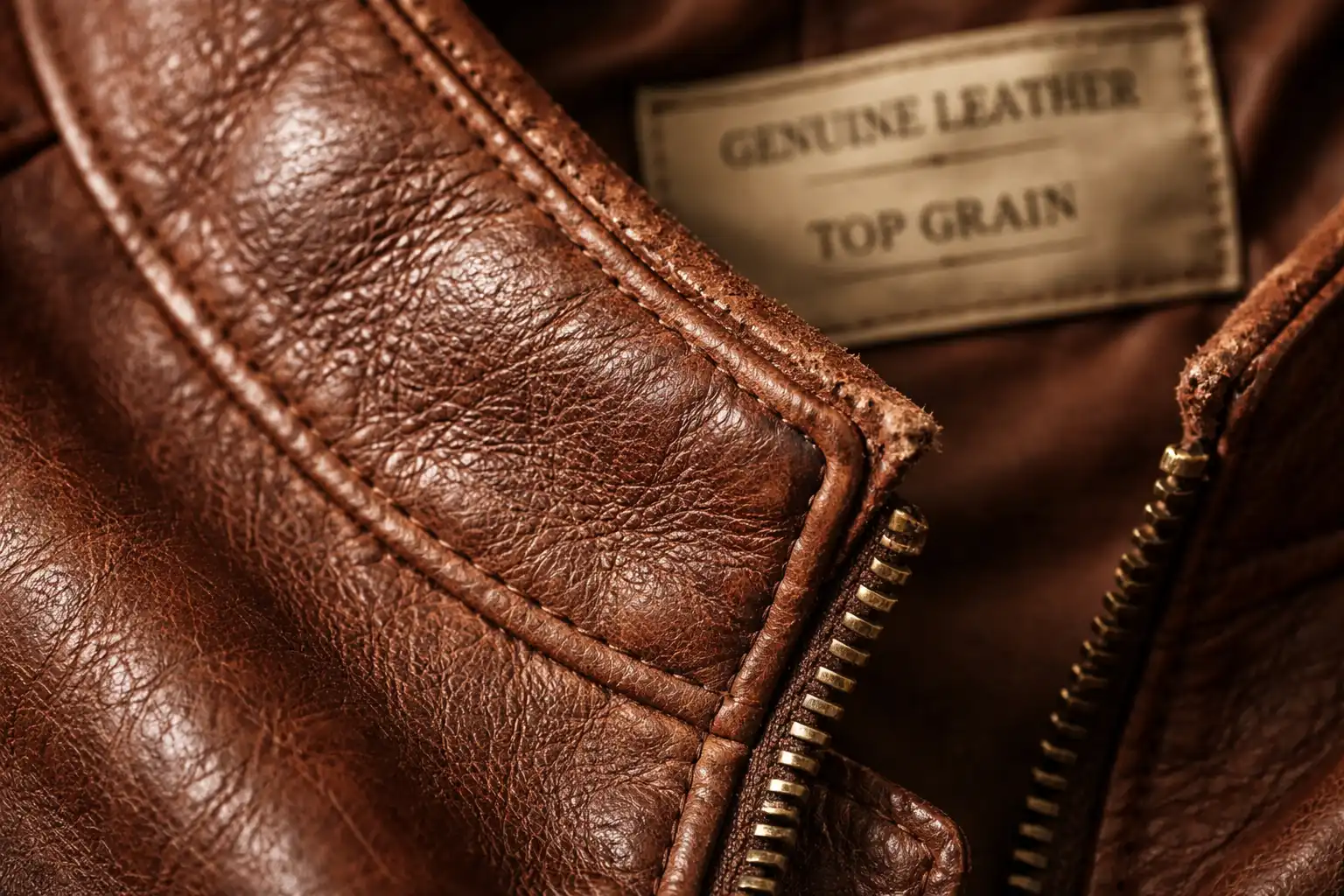
Real leather shows natural grain variation, slight texture inconsistency, and a warm feel. Edges appear fibrous rather than smooth. Labels usually mention “genuine leather,” “top grain,” or “full grain.” Real leather rarely peels in sheets; it cracks or flakes in smaller areas.
How to Identify Faux or Synthetic Leather
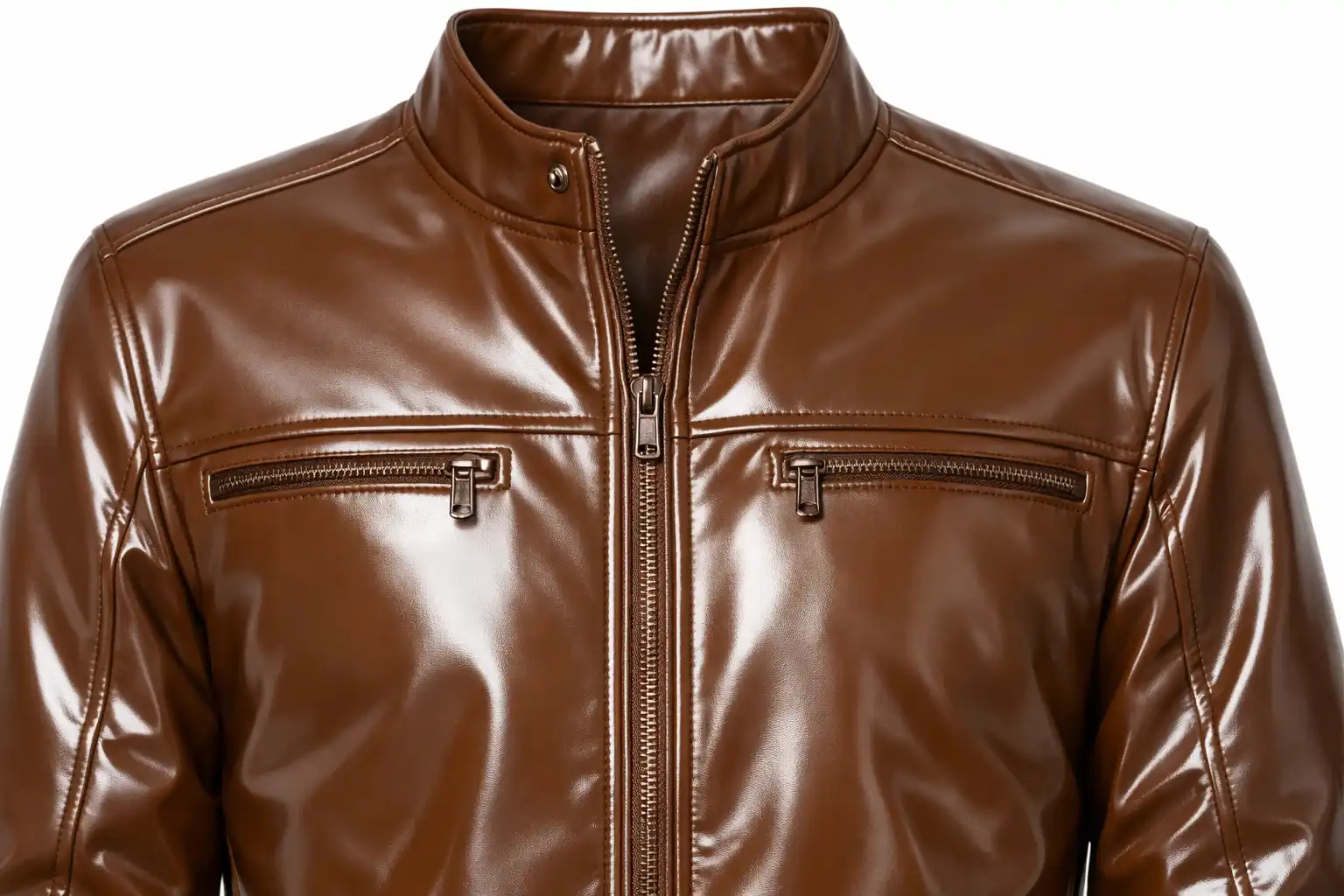
Faux leather has a uniform appearance and a plastic-like surface. Peeling occurs in larger flakes or sheets because the top coating separates from the fabric base. Labels often state PU, PVC, or synthetic materials.
Why Material Type Matters
Real leather allows deeper restoration through filler, dye, and conditioning. Faux leather allows cosmetic improvement only. Mixing repair methods causes further damage and wastes time.
Can You Fix a Peeling Leather Jacket?
Yes, but success depends on damage level and material type.
Minor peeling allows fixing the leather jacket peeling at home with proper products and patience. Severe peeling on synthetic jackets limits results to appearance improvement. Structural damage or wide surface loss often requires professional support for the best outcomes.
Tools and Materials You Need to Fix a Peeling Leather Jacket Peeling
Preparation prevents mistakes and uneven results. You may not need every item, but these tools support proper repair:
- Mild leather cleaner
- Microfiber cloths
- Fine sandpaper
- Leather glue or adhesive
- Leather filler or repair compound
- Matching leather dye or acrylic paint
- Leather conditioner for peeling jackets
A complete leather jacket repair kit often combines these essentials and simplifies the process.
How To Fix Peeling on a Real Leather Jacket
Real leather responds well when treated correctly and patiently.
Clean and Prepare the Surface

Wipe the jacket with a microfiber cloth and leather cleaner. Remove dust, oils, and residue that prevent adhesion. Allow the surface to dry fully before repair. This step ensures even filler and color application.
Remove Loose Surface Damage
Trim only fully detached flakes. Avoid cutting stable leather because this weakens surrounding fibers. Careful removal prevents further tearing and creates a solid repair base.
Apply Leather Filler
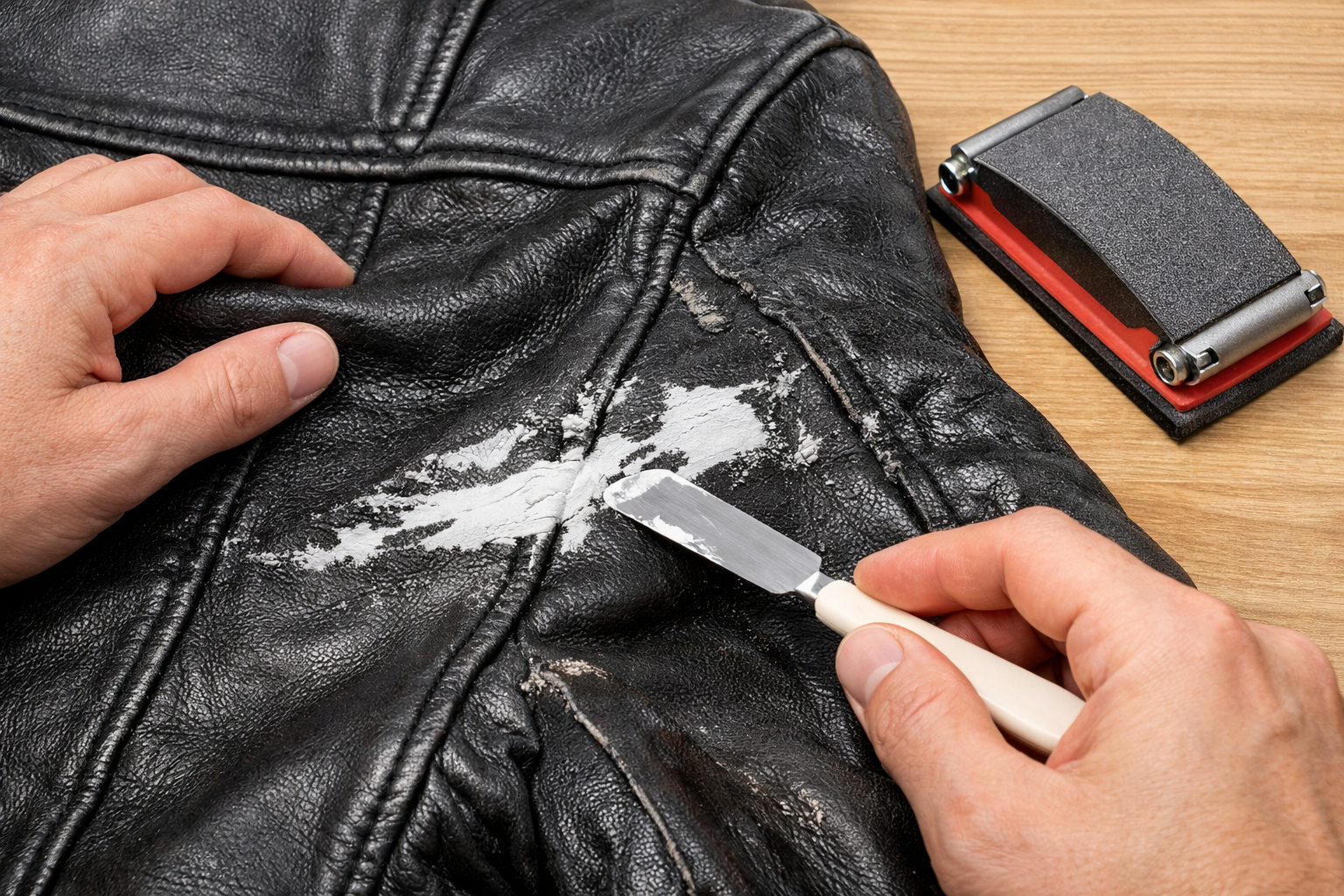
Spread leather filler in thin layers over cracks and peeled sections. Allow each layer to dry before adding another. Light sanding between layers helps level the surface and improve visual consistency.
Restore Color
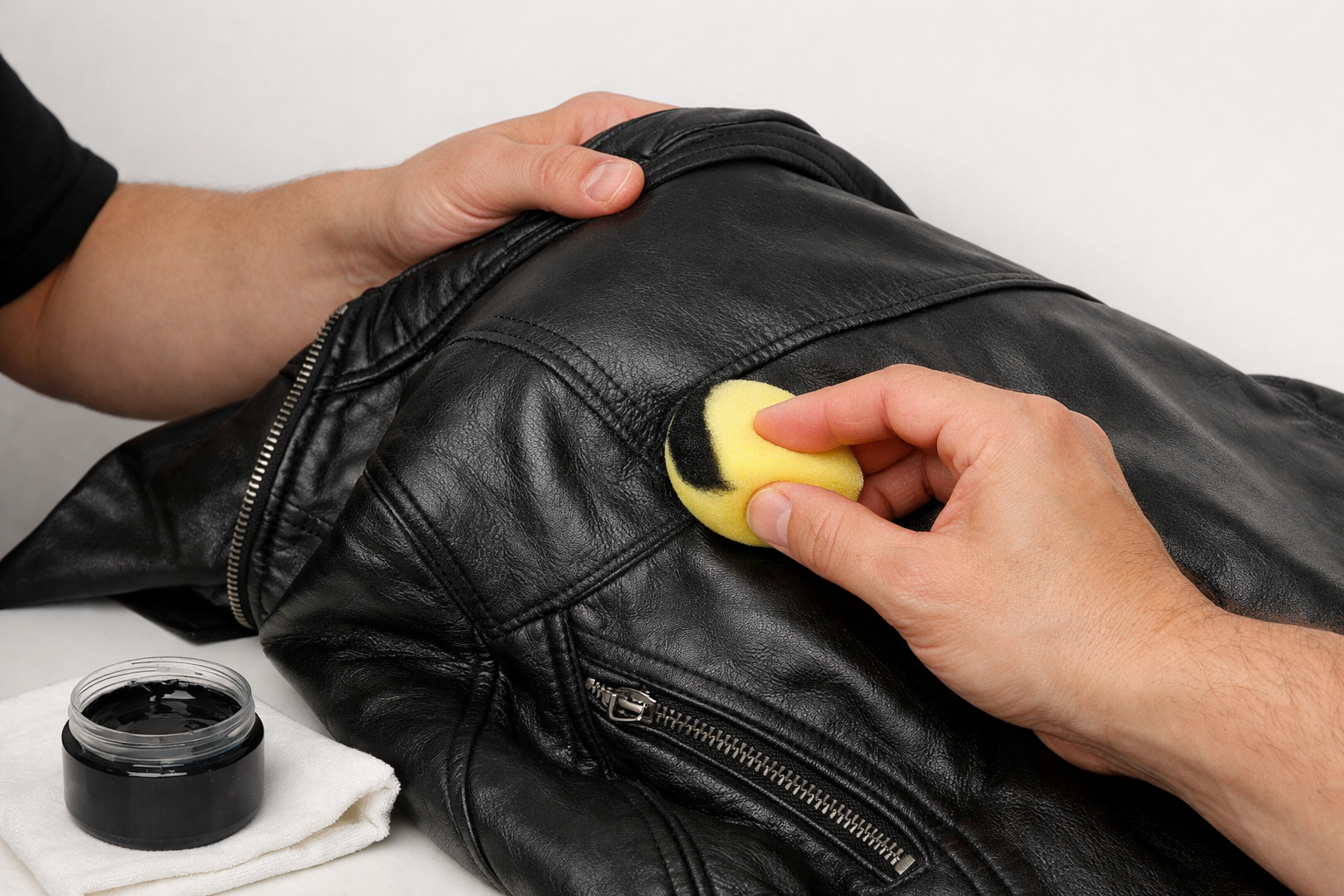
Apply matching leather dye or recoloring balm in light coats. Blend beyond the repaired area to avoid visible edges. This step completes leather jacket restoration and improves overall appearance.
Condition the Leather
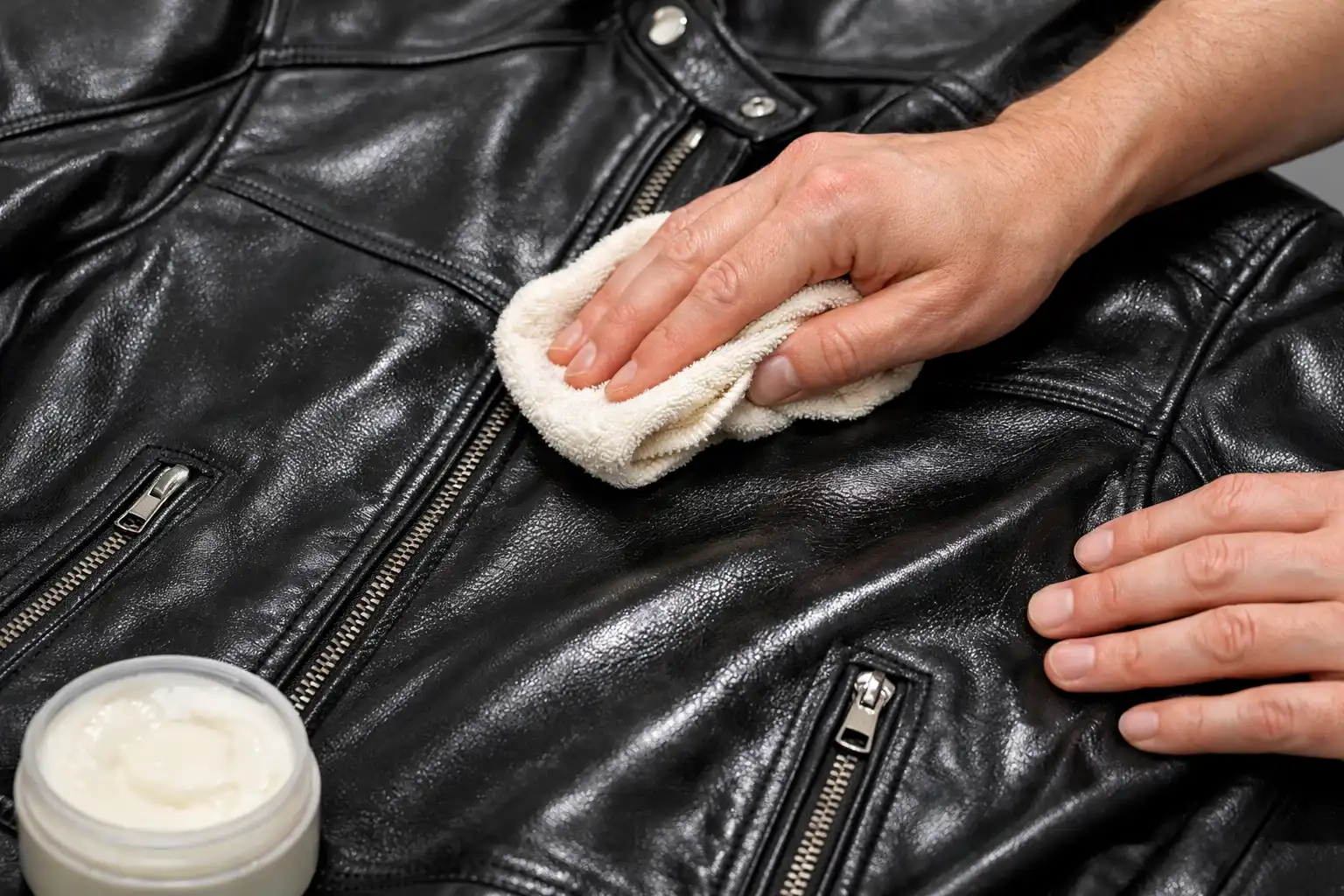
Apply leather conditioner across the entire jacket, not just the repaired sections. Conditioning restores flexibility, reduces stiffness, and protects repaired areas from future cracking.
How To Fix Peeling on Faux, PU, or Bonded Leather Jackets
Synthetic leather requires realistic expectations and careful handling.
Why Faux Leather Peels
Faux leather relies on a surface film that degrades with age, heat, and friction. Once peeling begins, full structural repair remains impossible. Cosmetic improvement remains the primary goal.
Remove Unstable Coating

Gently pull away loose flakes and trim edges where needed. Avoid force because it enlarges damaged areas. Controlled removal stabilizes the surface.
Smooth the Surface
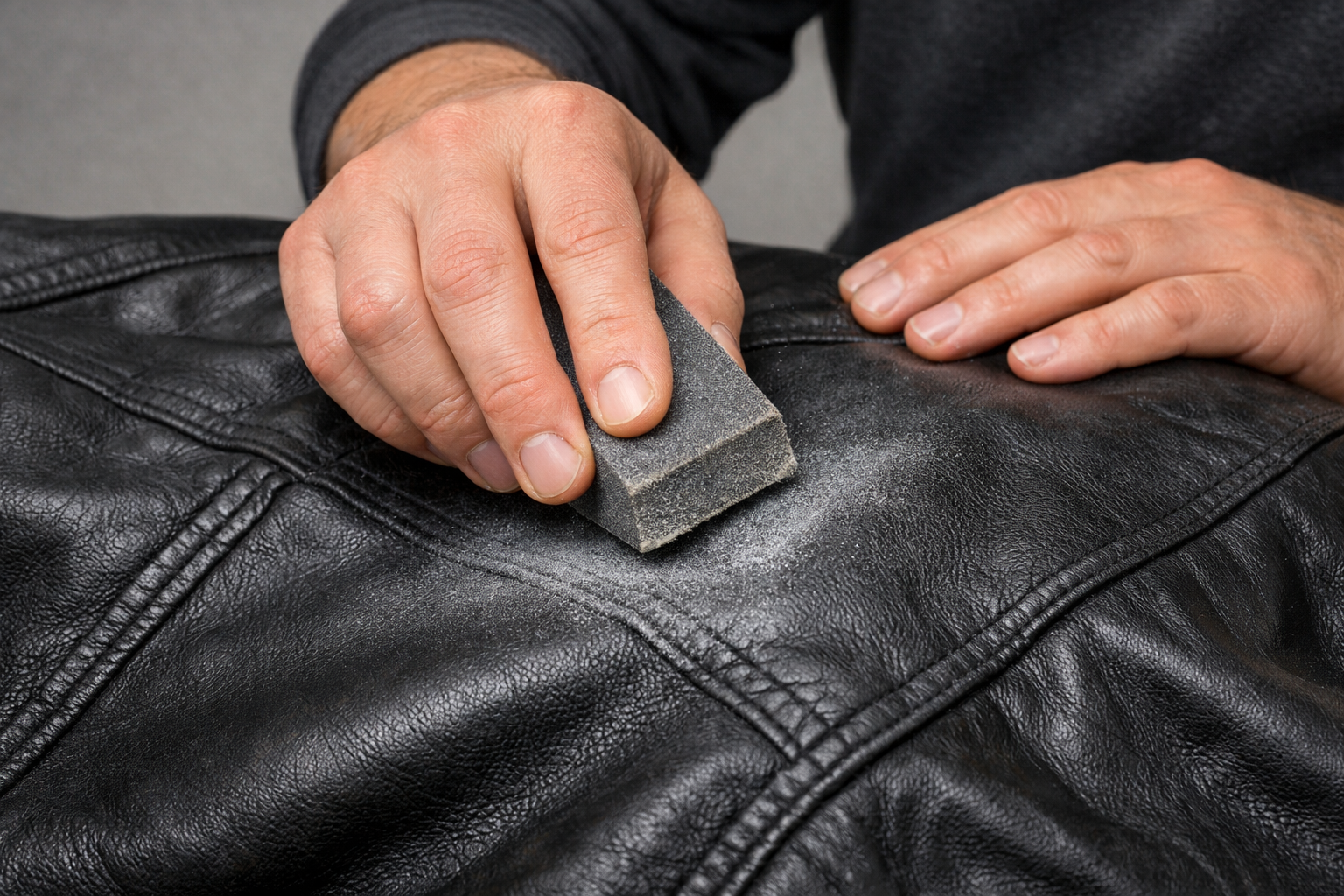
Light sanding reduces sharp edges and uneven transitions. A smoother base improves paint adhesion and visual balance.
Repair Options
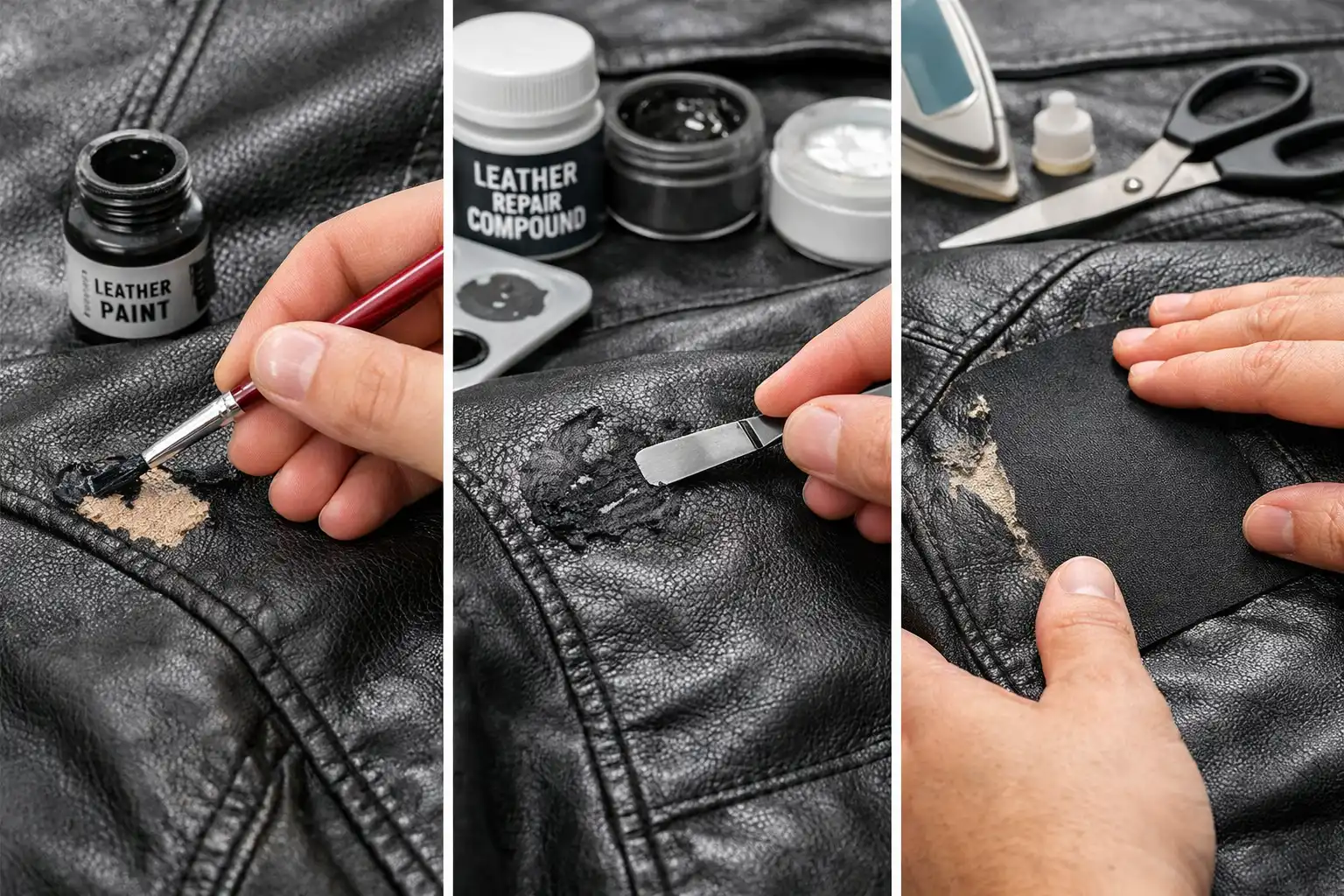
For small areas, acrylic leather paint hides exposed fabric and slows further peeling. Repair compounds provide better texture blending. For large areas, patches offer cleaner visual results. These methods address how to fix faux leather peeling jacket concerns realistically.
Common Mistakes to Avoid When Fixing a Leather Jacket Peeling
Shortcuts often cause permanent damage.
- Household oils clog leather pores and attract dirt
- Super glue hardens surfaces and cracks quickly
- Excess sanding thins leather layers
- Wrong products worsen peeling
Correct tools matter more than speed.
When Should You Take a Peeling Leather Jacket to a Professional?
Professional repair makes sense when peeling covers large panels, affecting seams, or involving complex finishes. Experts handle recoloring, resurfacing, and panel replacement with specialized equipment. This option often saves valuable jackets.
How to Prevent Leather Jacket Peeling in the Future
Consistent care prevents repeat damage and extends lifespan.
Proper Cleaning Routine
Clean leather only when needed. Use leather-safe products and soft cloths. Gentle care preserves protective coatings and surface strength.
Conditioning Schedule
Apply conditioner every few months, depending on the climate and use. Conditioning prevents dryness and cracking.
Storage Practices
Use wide padded hangers. Store jackets in cool, dry spaces away from sunlight and heat sources. Avoid folding leather for long periods.
For deeper maintenance insight, review this leather care products guide and follow these expert-backed Leather jacket care tips.
If you plan a replacement or upgrade, quality options such as brown leather jackets for men and women and biker jackets for men and women reduce peeling risk due to stronger materials.
For precise fit or design control, Maker Of Jacket offer customized leather jackets for long-term value.
Frequently Asked Questions (FAQs)
Why is my leather jacket peeling?
Leather jackets peel due to low-quality material, lack of conditioning, sunlight exposure, heat, humidity, or harsh cleaning products. Faux leather peels faster because its surface coating separates from the fabric base. Poor storage and friction also accelerate damage.
Can you fix a peeling leather jacket at home?
Yes, you can fix minor peeling at home if the jacket uses genuine leather. Cleaning, filler application, recoloring, and conditioning often restore appearance. Faux leather repairs remain cosmetic, but home methods still improve visual condition.
What is the best way to repair a peeling leather jacket?
The best method depends on the material type. Real leather responds well to filler, dye, and conditioner. Faux leather needs paint, repair compounds, or patches. Correct identification ensures effective repair and avoids further damage.
Can faux leather jackets be repaired if they start peeling?
Yes, faux leather jackets allow cosmetic repair. You can remove loose coating, smooth the surface, and apply acrylic paint or repair compounds. These methods improve appearance but do not fully restore structure.
Is it possible to restore a peeling faux leather jacket?
You can restore appearance to a certain extent, but full restoration remains impossible. Faux leather lacks natural fibers, so repairs focus on coverage rather than rebuilding material strength.
How do I fix a leather jacket that has a peeling collar?
Focus on gentle cleaning, careful trimming, filler application, and color blending. Collars experience friction, so conditioning after repair helps reduce repeat damage.
What products should I use to fix a peeling leather jacket?
Use leather cleaner, microfiber cloths, leather filler, dye or acrylic paint, and conditioner. A quality leather jacket repair kit simplifies product selection.
Can I prevent my leather jacket from peeling?
Yes, proper cleaning, conditioning, correct storage, and protection from heat and sunlight significantly reduce peeling risk.
How do I know if my leather jacket is genuine or faux leather?
Check grain texture, edge fibers, surface feel, and label details. Real leather shows natural variation, while faux leather appears uniform and plastic-like.
What should I do if my leather jacket has a large peeling area?
Large peeling areas often require professional repair. Experts handle resurfacing and recoloring more effectively than home methods, especially for valuable jackets.
Final Thoughts
A peeling leather jacket does not automatically require replacement. With correct assessment, suitable tools, and disciplined care, you can restore appearance and extend wear life. Material quality determines repair limits, while maintenance habits decide long-term durability. Treat leather properly, and it rewards you with years of reliable use.


