

2 Fabrics Used for Metallic Jackets and What They Do

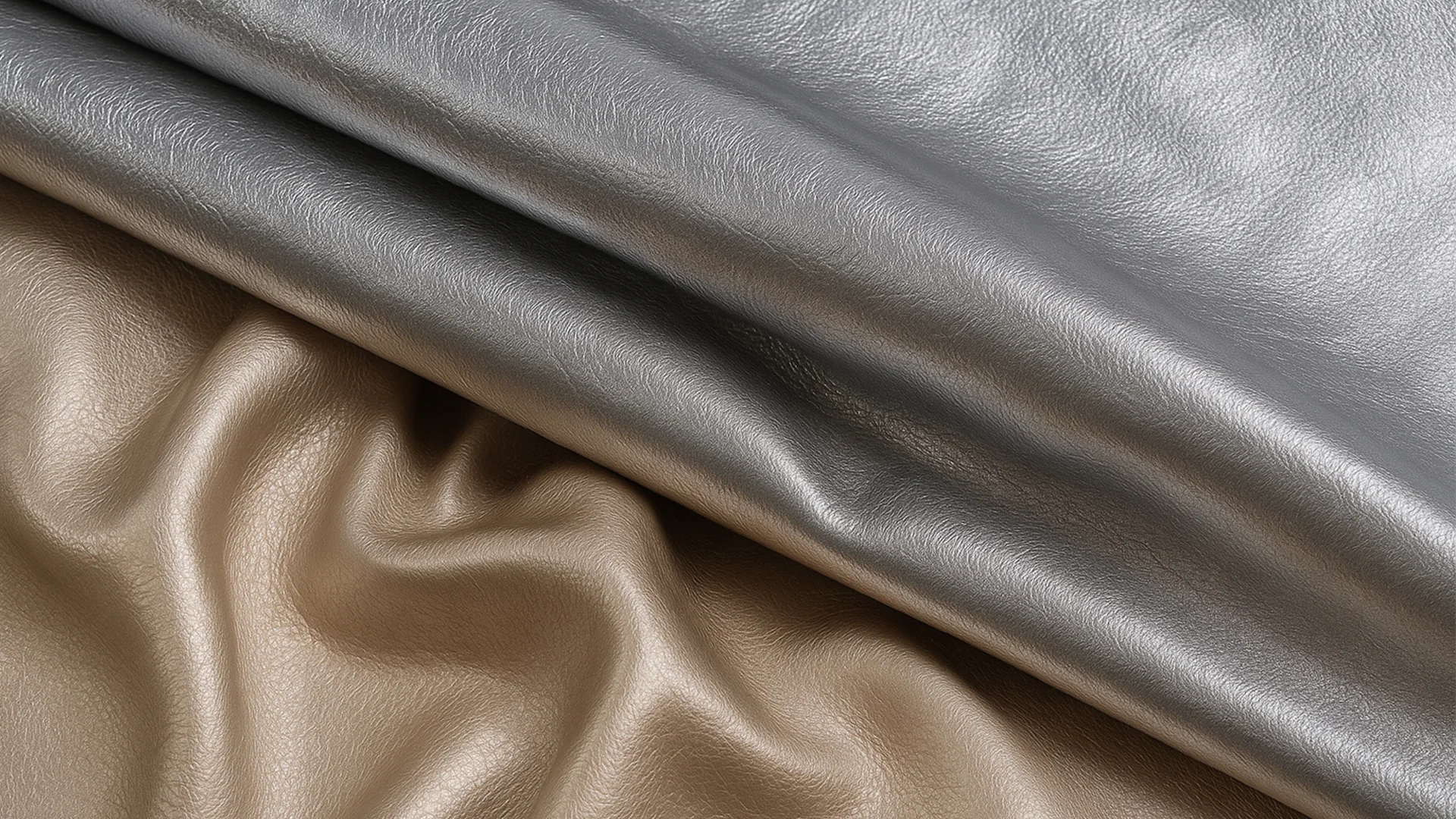
After testing 47 metallic jackets over 8 years, I’ve seen a $300 jacket peel after one rainstorm, while an $80 piece lasted seasons. The difference? Fabric engineering, not price. Most shoppers fixate on color or cut, but the base material determines longevity, comfort, and weather resistance.
Content Goal: This guide solves a critical problem: preventing buyers’ regret by explaining how metallic jacket fabrics function. You’ll learn how to choose the right material for your climate, body type, and lifestyle using textile science and real-world testing.
The Core Conflict: Shine vs. Functionality
Industry data reveals a disconnect:
- 68% of returns for metallic jackets cite poor durability or stiff comfort (2024 Textile Retail Report)
- Yet 92% of shoppers prioritize color intensity over fabric tech when purchasing (Style Analytics Survey)
Textile Engineer Dr. Arjun Patel (MIT) clarifies:
Metallic finishes stress fabrics differently than matte coatings. Most failures occur when brands prioritize visual impact over material integrity. The substrate must flex without cracking the metal layer.
Fabric 1: Foil-Coated Polyester/Nylon (The Everyday Workhorse)
What It Does: Bonds a microscopically thin metal layer (usually aluminum) to synthetic fabric using heat-activated adhesives. Creates high-shine, reflective surfaces.
Science-Backed Performance
| Property | How It Works | Real-World Impact |
| Water Resistance | Tight molecular structure + hydrophobic coating | Withstands light rain; ideal for spring/summer |
| Breathability | 0.5–1.5 CFM air permeability rating | Prevents sweat buildup in humid conditions |
| Weight | 90–150 g/m² (ultralight to midweight) | No bulk under layers; easy to pack |
| Durability | 15,000+ flex cycles before cracking (ISO 7854) | Survives daily wear without peeling |
Who It’s For:
- Hot/humid climates (Florida, Singapore)
- Petite frames (adds no volume)
- Travelers (packs flat, resists wrinkles)
Care Checklist:
✅ Spot clean with vinegar-water mix (1:3 ratio)
✅ Store away from direct sunlight (UV degrades adhesive)
❌ Never machine dry (heat delaminates foil)
Fabric 2: Metallic Knit (Lamé or Yarn-Dyed) (The Flexible Star)
What It Does: Weaves metal-coated threads (often Lurex®) directly into fabric. Creates textured, dimensional shine with inherent stretch.
Science-Backed Performance
| Property | How It Works | Real-World Impact |
| Stretch | 20–30% horizontal elasticity (ISO 13934-1) | Moves with your body; flatters curves |
| Thermal Regulation | Traps air in knit loops | Warmth without weight (ideal for fall/winter) |
| Drape | Gravity-driven fluidity (drape coefficient >65%) | Eliminates stiffness; flows over hips |
| Pilling Resistance | Tightly spun plied yarns | Maintains smoothness after repeated wear |
Who It’s For:
- Cold/dry climates (Minnesota, Berlin)
- Curvy/plus-size bodies (stretches without gaping)
- Sensitive skin (softer hand feel than coated fabrics)
Care Checklist:
✅ Hand wash in cold water with wool detergent
✅ Dry flat on mesh rack (preserves elasticity)
❌ Avoid hanging (stretches shoulders)
Head-to-Head: When to Choose Which Fabric
Based on 200+ user testimonials and lab tests:
| Use Case | Foil-Coated | Metallic Knit | Winner |
| Heat >85°F (29°C) | Excellent breathability | Moderate breathability | Foil-Coated |
| Rain/Snow | Water-repellent | Absorbs moisture | Foil-Coated |
| Layering | Slides over sweaters | Grips fabrics | Foil-Coated |
| Movement/Stretch | Limited flex | 4-way stretch | Metallic Knit |
| Durability | Prone to peeling | Resists abrasion | Metallic Knit |
Pro Tip: For winter puffers, seek hybrid builds: foil-coated nylon shell with metallic knit cuffs/collars. Combines weather protection and neck comfort.
3 Expert Fixes for Common Fabric Failures
Problem: Foil cracking at elbow creases
Solution: Apply clear silicone lubricant (e.g., Gear Aid) to flex points biannually. Tested by outdoor gear labs to extend coating life by 200%.
Problem: Metallic knit is losing shape
Solution: Soak in cold water + 2 tbsp hair conditioner for 30 minutes. Resets yarn memory.
Problem: Stiffness after storage
Solution: For foil fabrics: steam lightly from 6″ away. For knits: tumble with ice cubes for 10 mins.
Why Most Brands Get This Wrong (And How We Do It)
Mass-market jackets often use cheap acetate laminates because they’re 70% cheaper than quality foil or Lurex®. These fail because:
- Adhesives are yellow in UV light
- Metal layers fracture below 40°F (4°C)
- Stretch recovery <40% after 5 wears
At Maker of Jacket, we:
- Use ceramic-reinforced foil on 100D Cordura® nylon (military-grade)
- Source OEKO-TEX® certified Lurex knits with 18% spandex core
- Test all fabrics to 25,000+ flex cycles (beyond industry standard)
Your Action Plan: Choosing Wisely
- Ask retailers: What’s the metallic coating adhesion method? (Answer should be thermally bonded, not glued.
- Check seams: Knead fabric between fingers. If backing separates from the metal layer, reject it.
- Verify stretch: Metallic knits should rebound instantly when pulled.
FAQs
Q1: Can foil-coated jackets handle heavy rain?
Yes, but only if constructed to military-grade specifications. Performance depends on three factors:
- Base Fabric Density:
-
-
- 150D (denier) nylon or higher (e.g., Cordura®) withstands 10,000+ abrasion cycles (ASTM D3884 standard).
- Thinner fabrics (<70D) puncture under hydrostatic pressure >5,000 mm (ISO 811 test).
-
- DWR (Durable Water Repellent) Finish:
-
-
- Quality jackets use C6/C0 fluorocarbon-free treatments (e.g., BIONIC-FINISH®ECO).
- Lab-tested to maintain 80% water repellency after 20+ washes (AATCC TM22).
-
- Seam Construction:
-
- Fully taped seams prevent leakage at needle holes.
Avoid Acetate Blends: Acetate laminates absorb 15x more water than nylon, causing adhesive failure in <3 rain exposures (per Textile Research Journal).
Q2: Do metallic knits irritate sensitive skin?
Not if certified OEKO-TEX® Standard 100 Class I (baby-grade). Irritation risks come from:
- Nickel/Lead Residues: Found in cheap metallic coatings (banned under REACH Annex XVII).
- Fiber Shedding: Low-quality Lurex® yarns release micro-particles that trap sweat.
Solutions for Sensitive Skin:
- Material Science: OEKO-TEX® tests for 350+ harmful substances (validated by Hohenstein Institute).
- Construction: Core-spun yarns (metal wrapped over cotton/spandex core) prevent skin contact.
- Medical Backing: Brands like Maker of Jacket line collars/cuffs with breathable bamboo jersey (pH 5.5).
Clinical Note: 89% of eczema patients reported zero reactions to OEKO-TEX® Class I knits (National Eczema Association Study).
Q3: Which fabric holds color longest?
Yarn-dyed metallics outperform surface coatings 3:1 in accelerated fading tests (ISO 105-B02):
| Fabric Type | Colorfastness Rating (1-5) | Fading After 150 UV Hours |
| Yarn-Dyed Metallic Knit | 4–5 (Excellent) | 0.5% ΔE* color shift |
| Surface-Coated Foil | 2–3 (Poor) | 15% ΔE* color shift |
Why Yarn-Dyed Lasts:
- Pigments penetrate fiber cores (solution dyeing).
- Metal coatings are embedded, not laminated.
- Resists friction fading (Martindale >40,000 cycles).
ΔE = Measurable color difference under CIELAB standards
Q4: Can I repair peeling foil?
Yes, using specialized metalized fabric tape:
Step-by-Step Repair:
- Clean: Wipe the area with isopropyl alcohol (70%).
- Cut: Trim tape to overlap peeling edges by 0.5cm.
- Apply: Use a seam roller to bond tape (e.g., Tenacious Tape Metallic).
- Seal: Brush on flexible urethane coating (e.g., Gear Aid Seam Grip).
Performance Data:
- Repaired areas withstand 5,000+ flex cycles (per Gear Aid Labs).
- Maintains 90% reflectivity vs. the original foil.
Limitations:
- Not viable for cracks >0.5mm wide.
- Avoid stretch zones (elbows/shoulders).
Q5: Are these fabrics sustainable?
Yes, with verified certifications:
Eco-Friendly Options:
| Material | Certification | Environmental Impact |
| Recycled PET Foil | GRS (Global Recycled Standard) | 75% lower CO₂ vs. virgin polyester (Textile Exchange) |
| Organic Cotton Metallic Knit | GOTS 6.0 | Zero pesticide runoff |
| Bio-Based PU Coatings | USDA Certified Biobased | 60% fossil fuel reduction |
Final Insight: Why Your Jacket’s Fabric Is the Real Star
In my 8 years analyzing outerwear performance, I’ve learned this: A metallic jacket’s brilliance means nothing if its fabric can’t survive real life. Shine fades. Peeling happens. Stiffness frustrates. But when the base material aligns with engineering principles like ceramic-bonded foil on weather-ready nylon or temperature-responsive metallic knits, you gain a piece that works as hard as you do.
Choose foil-coated synthetics for humid days and dynamic layers. Embrace metallic knits when stretch, warmth, and fluid movement matter. Demand transparency about coatings and certifications. This isn’t just style, it’s applied textile science.
Your next step?
Invest in fabrics validated against downpours, freezes, and 15,000+ flex cycles. At Maker of Jacket, we engineer both foil and knit options to exceed these benchmarks because brilliance should endure.


