

Faux Leather vs Vegan Leather: Understanding the Differences


Faux leather and vegan leather are taking center stage as alternatives to traditional animal leather, popping up everywhere from high-end handbags to car interiors. But while both promise a cruelty-free edge, they are not created equal. Here is the real shocker. Some vegan leathers are made entirely from pineapple leaves or apple peels instead of plastic or petroleum, making them even more eco-friendly than standard faux leather. Ready to have your assumptions turned upside down about what these materials truly mean for ethics, style, and the planet?
Table of Contents
- Defining Faux Leather And Vegan Leather
- The Materials Behind Faux Leather Vs Vegan Leather
- Environmental And Ethical Considerations
- Practical Applications In Fashion And Beyond
- Choosing The Right Option For Your Needs
Quick Summary
| Takeaway | Explanation |
|---|---|
| Faux leather is synthetic and cost-effective | Faux leather is made from PVC or polyurethane, offering a lower cost compared to genuine leather while mimicking its appearance. |
| Vegan leather prioritizes sustainability and ethics | Made from plant-based materials, vegan leather aims to reduce environmental impact and avoid animal exploitation. |
| Both leathers have distinct environmental impacts | Faux leather uses petroleum-based materials, raising concerns, while vegan leather sources from biodegradable and sustainable origins. |
| Material choice reflects personal values | Consumers are increasingly choosing leather types based on ethical beliefs, animal welfare concerns, and sustainability goals. |
| Consider application and performance when choosing | Evaluate durability and weather resistance of faux and vegan leather based on intended use to make an informed decision. |
Defining Faux Leather and Vegan Leather
Understanding the nuanced world of synthetic leather materials requires diving into their unique compositions, origins, and characteristics. Faux leather and vegan leather represent two innovative alternatives to traditional animal-based leather, each with distinctive manufacturing processes and ethical considerations.
What Exactly is Faux Leather?
Faux leather, also known as artificial leather, is a synthetic material engineered to mimic the look and feel of genuine animal leather. According to Encyclopædia Britannica, these materials are typically constructed from polyvinyl chloride (PVC) or polyurethane (PU), which are petroleum-based synthetic substances. The manufacturing process involves coating fabric backing with plastic-like polymers to create a texture resembling animal hide.
Key characteristics of faux leather include:
- Significantly lower production cost compared to genuine leather
- Consistent texture and appearance
- Greater resistance to water and staining
- Available in multiple colors and finishes
Understanding Vegan Leather
Vegan leather distinguishes itself as a broader category of animal-free leather alternatives specifically designed with ethical and environmental considerations in mind. Unlike traditional faux leather, vegan leather explores innovative materials sourced from sustainable and plant-based resources such as cork, pineapple leaves (Piñatex), apple peels, recycled plastics, and mushroom mycelium.
The primary goal of vegan leather is not just mimicking leather’s aesthetic but also reducing environmental impact and avoiding animal exploitation. Sustainable Brands reports that these alternative leather materials are gaining significant traction in fashion and design industries worldwide.
While both faux and vegan leather serve as alternatives to traditional leather, they differ fundamentally in their philosophical approach and material composition.
Here is a comparison table highlighting the key differences between faux leather and vegan leather based on their materials, environmental impact, ethical aspects, and practical considerations.
| Feature | Faux Leather | Vegan Leather |
|---|---|---|
| Main Materials | PVC or polyurethane (petroleum-based plastics) | Plant-based sources (pineapple leaves, apple peels, cork, mushrooms) or recycled plastics |
| Environmental Impact | Petroleum-dependent, non-biodegradable, concerns over plastic waste | Can be biodegradable and sustainable, often lower environmental footprint when plant-based |
| Ethical Considerations | Animal-free but relies on plastics | Prioritizes cruelty-free practices and sustainability |
| Durability & Performance | Water-resistant, uniform texture | May offer breathability, biodegradability, and comparable durability depending on material |
| Cost | Often more affordable than genuine leather | Can vary depending on innovation and sourcing |
The Materials Behind Faux Leather vs Vegan Leather
The world of synthetic leather materials is complex and continuously evolving, with innovative solutions emerging that challenge traditional manufacturing approaches. Understanding the intricate materials that compose faux and vegan leather reveals fascinating insights into sustainability, technological advancement, and environmental consciousness.
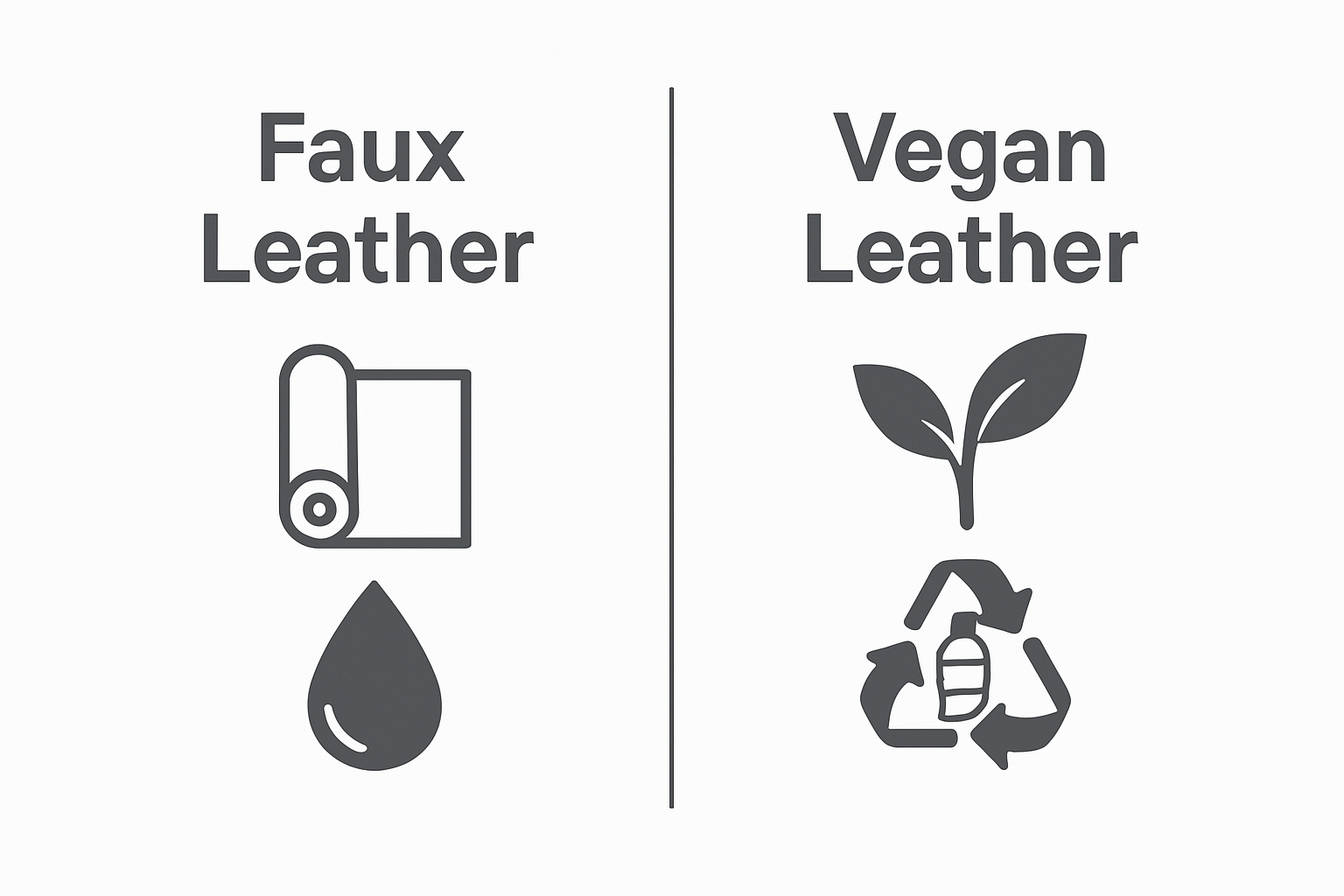
Synthetic Origins of Faux Leather Materials
Traditional faux leather primarily relies on petroleum-based synthetic polymers to create its distinctive texture and appearance. Materials Science Journal indicates that polyvinyl chloride (PVC) and polyurethane (PU) remain the most common base materials. These petroleum-derived substances are processed through sophisticated manufacturing techniques that involve:
- Coating fabric backings with plastic-like polymers
- Applying heat and pressure to create uniform textures
- Adding chemical treatments for durability and water resistance
- Implementing color and finish variations
The petroleum dependency of these materials raises significant environmental concerns, prompting researchers and manufacturers to explore more sustainable alternatives.
Plant-Based and Innovative Vegan Leather Compositions
Vegan leather represents a revolutionary approach to material development, focusing on sustainable and biodegradable resources. According to Sustainable Materials Research, contemporary vegan leather materials are derived from diverse organic sources such as:
- Pineapple leaf fibers (Piñatex)
- Apple waste and fruit peels
- Cork
- Mushroom mycelium
- Recycled plastic bottles
- Cactus leaves
These innovative materials not only minimize environmental impact but also provide unique textural qualities that challenge traditional leather manufacturing.
This table summarizes the most common materials used in the production of faux leather and vegan leather, showcasing the diversity and innovation present in each category.
| Type | Common Materials Used | Source Type |
|---|---|---|
| Faux Leather | Polyvinyl chloride (PVC), Polyurethane (PU) | Petroleum-based |
| Vegan Leather | Pineapple leaf fibers (Piñatex) | Plant-based |
| Vegan Leather | Apple waste and fruit peels | Plant-based |
| Vegan Leather | Cork | Plant-based |
| Vegan Leather | Mushroom mycelium | Plant-based |
| Vegan Leather | Recycled plastic bottles | Synthetic/Recycled |
| Vegan Leather | Cactus leaves | Plant-based |
Read our comprehensive guide on sustainable jacket materials to explore how these groundbreaking materials are transforming the fashion and apparel industry.
Environmental and Ethical Considerations
The rise of faux and vegan leather represents more than just a materials innovation. It reflects a profound shift in consumer consciousness, addressing critical environmental and ethical challenges associated with traditional leather production. Understanding these considerations reveals the deeper motivations driving synthetic leather alternatives.
Carbon Footprint and Environmental Impact
Traditional leather production carries significant environmental consequences. Environmental Science Reports reveals that animal leather manufacturing generates substantial greenhouse gas emissions, water pollution, and deforestation. In contrast, synthetic leather alternatives offer potential environmental advantages:
- Reduced direct animal agriculture involvement
- Lower water consumption during production
- Decreased chemical treatment requirements
- Potential for recycled and biodegradable material usage
- Minimized land use compared to animal farming
However, petroleum-based synthetic leathers also present environmental challenges, particularly regarding non-biodegradable plastic components and long-term waste management.
Ethical Dimensions of Material Selection
Beyond environmental metrics, synthetic leather addresses profound ethical considerations surrounding animal welfare. Animal Welfare International highlights that traditional leather production involves significant animal suffering, with billions of animals processed annually for fashion and industrial purposes.
Vegan leather emerges as a compassionate alternative, reflecting growing consumer demands for:
- Cruelty-free material options
- Transparent manufacturing processes
- Respect for animal rights
- Alignment with personal ethical standards
- Sustainable consumption practices
Explore our guide to sustainable jacket materials to understand how ethical material choices can transform fashion consumption.
Practical Applications in Fashion and Beyond
Synthetic leather materials have transcended their original purpose, revolutionizing multiple industries with their versatile properties and innovative design potential. From high-fashion runways to industrial applications, faux and vegan leather demonstrate remarkable adaptability and functional diversity.
Fashion and Apparel Innovations
Fashion Technology Institute reports that synthetic leather has become a cornerstone of contemporary fashion design. Modern designers embrace these materials for their flexibility, durability, and ethical implications. Key application areas include:
- Motorcycle and racing jackets
- High-performance athletic wear
- Luxury accessories and handbags
- Trendsetting footwear collections
- Avant-garde runway designs
Unique properties like lightweight construction, water resistance, and diverse texture options make synthetic leathers particularly attractive for designers seeking innovative material solutions.
Industrial and Technical Applications
Beyond fashion, synthetic leather materials find critical uses in numerous technical and industrial contexts. Materials Engineering Quarterly highlights diverse implementation areas such as:
- Automotive interior manufacturing
- Medical equipment covering
- Protective workwear
- Marine and outdoor equipment
- Furniture upholstery
The adaptability of these materials allows manufacturers to create products that balance performance, sustainability, and aesthetic appeal. Check out our comprehensive guide to functional fashion materials to explore the cutting-edge potential of synthetic leather technologies.
Choosing the Right Option for Your Needs
Selecting between faux and vegan leather requires careful consideration of personal values, practical requirements, and environmental impact. Consumers today face a nuanced decision that extends beyond mere aesthetic preferences into broader ethical and functional domains.
Personal Values and Ethical Alignment
Consumer Sustainability Research indicates that material selection increasingly reflects individual ethical commitments. When choosing between faux and vegan leather, consumers should evaluate their priorities across multiple dimensions:
- Personal environmental consciousness
- Animal welfare perspectives
- Budget considerations
- Performance requirements
- Long-term sustainability goals
Understanding that each material carries unique environmental implications allows for more informed decision making. Petroleum-based faux leather differs significantly from plant-derived vegan leather options in terms of ecological footprint.
Performance and Practical Considerations
Beyond ethical dimensions, practical performance remains crucial in material selection. Material Performance Institute suggests evaluating synthetic leather alternatives through several critical lenses:
- Durability and longevity
- Maintenance requirements
- Weather resistance
- Comfort and flexibility
- Intended usage context
Some vegan leather alternatives offer superior breathability and biodegradability, while traditional faux leather might provide enhanced water resistance and uniform texture. The optimal choice depends entirely on specific user requirements and intended application.

Explore our comprehensive guide to selecting the perfect jacket material to make an informed decision tailored to your unique needs.
Bring Your Leather Vision to Life—Ethically and Stylishly
Struggling to choose between faux leather and vegan leather for your next jacket? Whether you are focused on ethical values, sustainability, or want that perfect blend of style and durability, you should not have to compromise. The choices you learned about in our article come to life in our Maker of Jacket’s collection, where every material and finish matches your values and wardrobe goals.
Why wait to turn knowledge into action? At Maker of Jacket, you can browse a wide range of premium faux and vegan leather options or even request a truly customized piece. Find a jacket that fits your ethical choices and personal style, order with confidence using our size guides, and enjoy worldwide shipping. Start exploring now and redefine your leather experience.
Frequently Asked Questions
What is the main difference between faux leather and vegan leather?
Faux leather, also known as artificial leather, is primarily made from petroleum-based synthetic materials like PVC and PU, whereas vegan leather is derived from plant-based sources and designed with ethical considerations in mind.
Is faux leather environmentally friendly?
Faux leather has lower production costs and better water resistance, but it often relies on non-biodegradable petroleum products, raising concerns about its long-term environmental impact.
Can vegan leather be as durable as genuine leather?
Yes, many plant-based vegan leather alternatives are designed to be durable and can offer similar wear resistance as genuine leather, making them suitable for various applications in fashion and other industries.
What are the ethical implications of choosing vegan leather over faux leather?
Vegan leather is typically viewed as a more ethical choice as it avoids animal exploitation and can be made from sustainable materials, appealing to consumers who prioritize animal welfare and environmental sustainability.


